
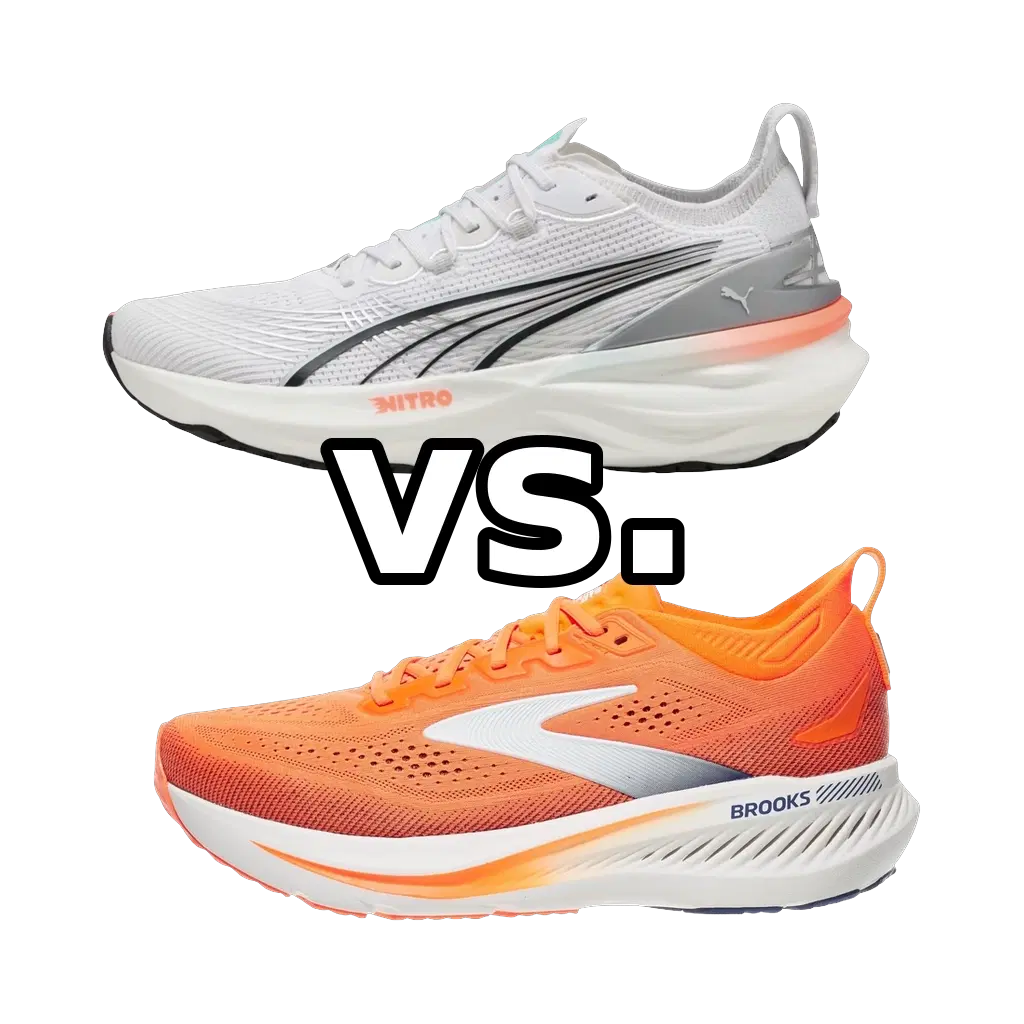
Puma ForeverRun Nitro 2 vs Brooks Glycerin GTS 23:
Which to Choose
Verdict
These are close cousins, so it comes down to two things: how soft you like your ride and how far you want to go. If you want the plushest, most protective easy-mile cushion and mostly run 10K-and-under to half distances, take the Brooks Glycerin GTS 23. If you want a lighter, more composed stability trainer that still handles long runs and stretches comfortably to the marathon, take the Puma ForeverRun Nitro 2.
Pace
3 of 6
Cushioning
4 of 6
Responsiveness
4 of 6
Stability
5 of 6
Drop
10 mm
Support
Stability
Plate
None
Distances
10KHalfMarathon
Pace
3 of 6
Cushioning
5 of 6
Responsiveness
4 of 6
Stability
5 of 6
Drop
10 mm
Support
Stability
Plate
None
Distances
10KHalf
At a Glance
Puma ForeverRun Nitro 2Brooks Glycerin GTS 23
Who Should Choose Each Shoe
Choose
Puma ForeverRun Nitro 2
Choose the ForeverRun Nitro 2 if you want one stability shoe to cover the whole range from easy miles up to a half- or full-marathon build, and you'd rather have a lighter, more composed ride than the plushest possible one. It's the better pick for runners doing steady efforts and long runs who occasionally want to lift the pace without feeling like they're dragging extra shoe, and for anyone who finds very soft stability trainers a bit wallowy underfoot.
Choose
Brooks Glycerin GTS 23
Choose the Glycerin GTS 23 if your priority is maximum soft, joint-protecting comfort on daily and recovery runs, and your longest outings are 10Ks and half marathons taken at a relaxed effort. Its deeper, pillowier stack is the one to pick if you value plush impact protection over weight or versatility — ideal for the everyday mileage runner who wants gentle guidance and a cushioned cruiser, and isn't chasing tempo splits.
Head-to-Head
Start with what's genuinely shared: both run a 10mm heel-forward geometry, both lean on sidewall/guidance structure (Puma's RunGuide, Brooks' GuideRails) instead of a medial post or a plate, and both are tuned for guided, planted landings rather than snap. The real separation is cushioning feel and mass. The Glycerin GTS 23 is the softer, more max-cushioned of the two — a dual-cell DNA Tuned midsole that lands pillowy and firms up slightly at toe-off, on a taller 38mm heel / 28mm forefoot platform, and it weighs around 306g in a men's US 9. The ForeverRun Nitro 2 is lighter at roughly 283g and sits lower, around a 35mm heel, with a Nitro foam that reads as composed and supportive — softer than firm, but tighter and less pillowy than the Brooks. That plays out in use: the Brooks is happiest at conversational daily and recovery paces (optimal ~5:00–6:00 min/km) and gets vague if you push past about 4:45 min/km, and the catalog tops it out at 10K and half. The Puma carries a little more pace range (optimal ~4:45–5:45, comfortable down to about 4:30 min/km) and is rated all the way to the marathon, making it the more versatile long-run and steady-effort tool. Neither is a speed shoe, and at easy pace the ride difference is subtle — but push the distance or the tempo and the lighter, firmer Puma pulls ahead, while slow-and-soft comfort favors the Brooks.
Similar Comparisons
Asics Gel-Kayano 32 vs Brooks Glycerin GTS 23
Puma ForeverRun Nitro 2 vs Asics GT-2000 15
Asics Gel-Kayano 33 vs Brooks Glycerin GTS 23
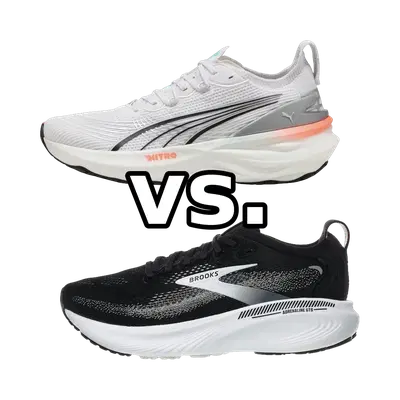
Puma ForeverRun Nitro 2 vs Brooks Adrenaline GTS 25

Brooks Glycerin 22 vs Brooks Glycerin GTS 23
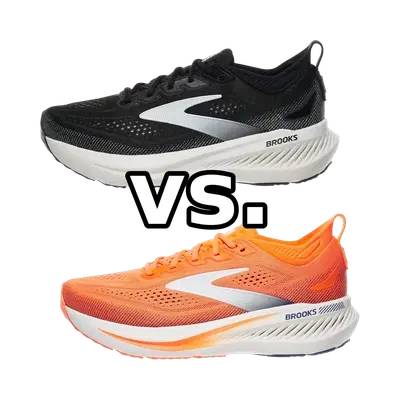
Brooks Glycerin 23 vs Brooks Glycerin GTS 23
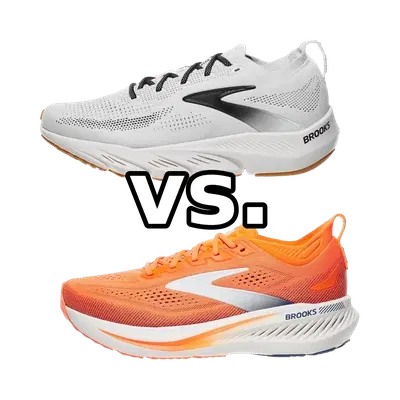
Brooks Glycerin Flex vs Brooks Glycerin GTS 23
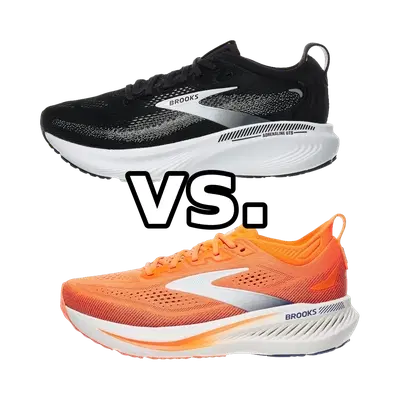
Brooks Adrenaline GTS 25 vs Brooks Glycerin GTS 23
© 2026 longrunshoes.ai | All rights reserved.
Use of materials from this site is permitted only with proper attribution and a link to longrunshoes.ai.