
Brooks Glycerin Flex vs Brooks Glycerin GTS 23:
Which to Choose
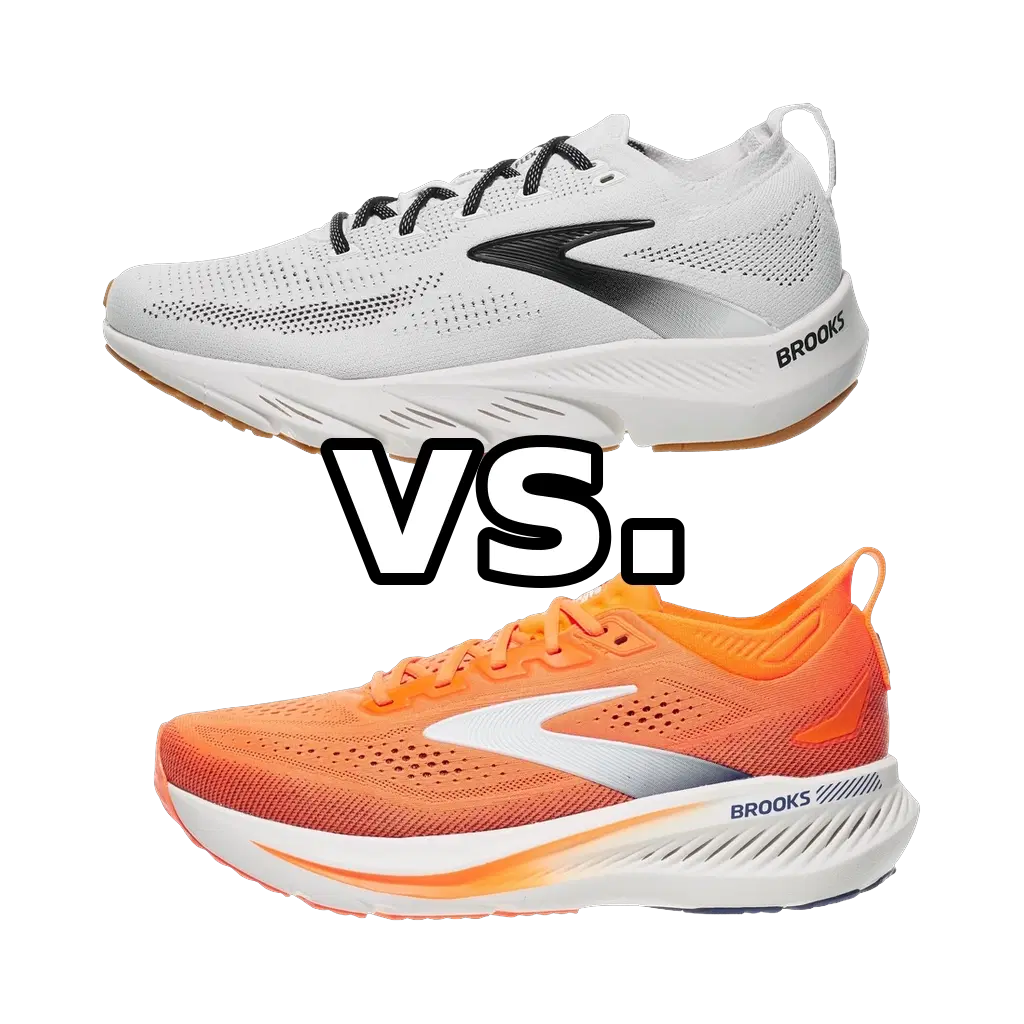
Verdict
It genuinely depends on one thing: whether you need stability. Pick the Glycerin GTS 23 for its GuideRails guidance and extra cushioning if you're a mild overpronator or just want the most planted, protective cruiser; pick the lighter, more flexible neutral Glycerin Flex if your gait is neutral and you'd rather have a freer, less structured ride. Both are plush, plateless daily trainers for easy-to-steady efforts up to the half — so let your arches and your preference for structure, not raw specs, make the call.
Pace
3 of 6
Cushioning
4 of 6
Responsiveness
3 of 6
Stability
3 of 6
Drop
9 mm
Support
Neutral
Plate
None
Distances
10KHalf
Pace
3 of 6
Cushioning
5 of 6
Responsiveness
4 of 6
Stability
5 of 6
Drop
10 mm
Support
Stability
Plate
None
Distances
10KHalf
At a Glance
Brooks Glycerin FlexBrooks Glycerin GTS 23
Who Should Choose Each Shoe
Choose
Brooks Glycerin Flex
Choose the Glycerin Flex if you're a neutral runner who wants a soft, forgiving daily trainer that stays out of the way — no guidance rails, just a flexible platform that bends with your foot. It's the lighter, lower-profile of the two, so it suits runners building weekly volume who value a nimbler, more natural-feeling easy-day ride and don't need pronation support. If your stride is neutral and you dislike any hint of structure underfoot, this is the pick.
Choose
Brooks Glycerin GTS 23
Choose the Glycerin GTS 23 if you're a mild overpronator, or simply someone who likes feeling planted and guided, and you want maximum plushness for recovery and long steady miles. Its GuideRails, wider base, and taller, softer stack prioritize joint protection and stability over speed, making it ideal for runners who put comfort and a controlled stride ahead of low weight. If you've enjoyed supportive daily trainers before and don't mind carrying a bit more shoe, this is the better fit.
Head-to-Head
The single most important difference is support: the Glycerin Flex is a fully neutral trainer with a broad, flexible platform and no pronation guidance, while the GTS 23 adds Brooks' GuideRails and a wider, well-sidewalled base to gently rein in mild overpronation. That guidance comes with mass — the GTS 23 weighs about 306 g (men's US 9) versus roughly 264 g for the Flex, a real ~42 g gap you'll feel over a long run. The GTS 23 also sits taller and softer, on a 38 mm heel / 28 mm forefoot stack against the Flex's 35 mm / 26 mm, which is why it rates a notch higher on cushioning (5/6 vs 4/6) and feels a touch more protective at landing. Drop is effectively a wash at the foot — about 10 mm measured on the GTS 23 and 9 mm on the Flex (both lower than Brooks' marketed figures) — so both keep a traditional heel-forward geometry that eases the calves and Achilles. Neither is a speed shoe: both are plateless, both go vague if you force the pace, and both are happiest at conversational efforts over distances up to a 10K or half at relaxed effort. Where they diverge in feel is the transition — the Flex's deep flex grooves let the shoe bend naturally with your foot for a smooth, unstructured roll, whereas the GTS 23 delivers a slightly firmer, more supportive toe-off from its smaller front cells while the GuideRails keep everything planted.
Similar Comparisons

Asics Gel-Kayano 32 vs Brooks Glycerin GTS 23

Brooks Glycerin 23 vs Brooks Glycerin Flex

Asics Gel-Kayano 33 vs Brooks Glycerin GTS 23

Brooks Glycerin Max 2 vs Brooks Glycerin Flex

Brooks Glycerin 22 vs Brooks Glycerin GTS 23

Brooks Glycerin 23 vs Brooks Glycerin GTS 23

Brooks Adrenaline GTS 25 vs Brooks Glycerin GTS 23

Brooks Beast GTS 26 vs Brooks Glycerin GTS 23
© 2026 longrunshoes.ai | All rights reserved.
Use of materials from this site is permitted only with proper attribution and a link to longrunshoes.ai.