
Brooks Glycerin 22 vs Brooks Glycerin Flex:
Which to Choose
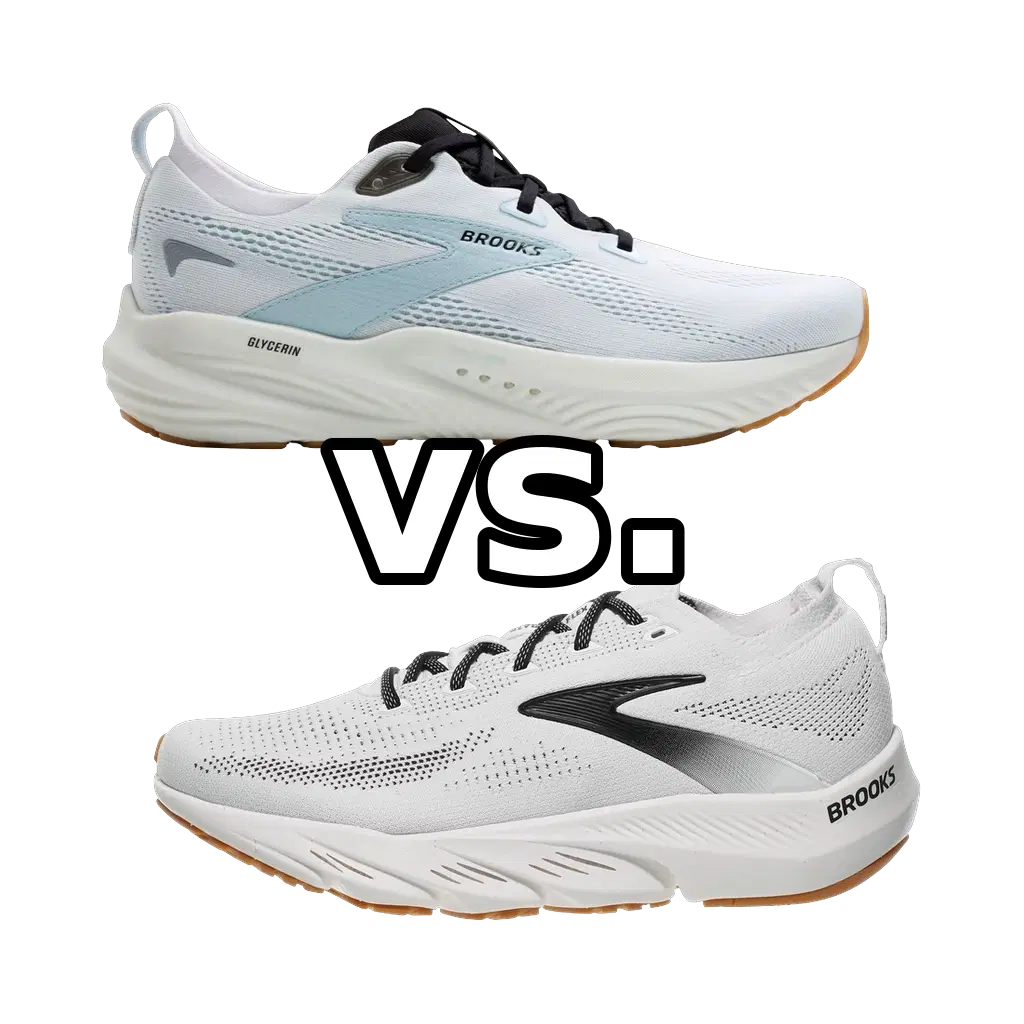
Verdict
It genuinely depends on how you want your cushioning delivered, not on which is "better." Go with the Glycerin 22 for the tallest, most stable, most protective ride and for stepping up to marathon-distance mileage; go with the Glycerin Flex for a lighter, lower, more flexible daily trainer that moves with your foot on easy and steady runs. Both are comfort-first cruisers, so if you ever want snap for tempo or intervals, neither is your answer.
Pace
3 of 6
Cushioning
5 of 6
Responsiveness
4 of 6
Stability
4 of 6
Drop
10 mm
Support
Neutral
Plate
None
Distances
10KHalfMarathon
Pace
3 of 6
Cushioning
4 of 6
Responsiveness
3 of 6
Stability
3 of 6
Drop
9 mm
Support
Neutral
Plate
None
Distances
10KHalf
At a Glance
Brooks Glycerin 22Brooks Glycerin Flex
Who Should Choose Each Shoe
Choose
Brooks Glycerin 22
Choose the Glycerin 22 if you want maximum plush protection for long, easy, high-mileage running and you value a stable, structured, planted ride — it's the better pick for beginners, heavier or joint-conscious runners, and anyone regularly logging half and full marathons. Its taller stack, wider supportive base, and higher 10mm drop favor heel strikers and runners who want the shoe to do the cushioning work rather than move with their foot. This is the one to buy if steadiness and long-haul comfort matter more than a light, flexible feel.
Choose
Brooks Glycerin Flex
Choose the Glycerin Flex if you want that same soft DNA Tuned comfort in a lighter, lower, more flexible package that bends naturally with your foot for easy and steady daily miles. It suits runners building weekly volume who prefer a fluid, ground-connected ride over a tall, structured one, and who mostly stay in the 10K-to-half range rather than routinely running marathons. If the classic Glycerin has ever felt too stiff or bulky underfoot, the Flex is the more forgiving, natural-moving alternative.
Head-to-Head
Start with what they share: nitrogen-infused DNA Tuned foam, no plate, a neutral platform, and a happy pace band of roughly 5:30–6:30 min/km for easy and steady miles. The differences are in structure and weight. The Glycerin 22 is the taller, more substantial shoe — a stack of about 38mm and a 10mm drop, weighing around 289g in a men's US 9 — and it delivers plushness through a wide, sidewall-supported, comparatively stiff base that keeps transitions composed and predictable. The Glycerin Flex takes the opposite approach to comfort: a lower platform (roughly 35mm heel / 26mm forefoot), a slightly lower drop, and about 264g on the foot, with deep flex grooves and a more segmented forefoot that let the shoe bend and move with your stride for a fluid, ground-connected feel. In practice the 22 feels firmer through the midfoot and more overtly protective, trading some natural motion for stability and stack; the Flex feels softer and more forgiving underfoot but more damped, giving up a touch of the 22's steadiness for flexibility and a lighter, more natural gait. Responsiveness is modest on both — neither returns real pop when you try to accelerate — and the 22 rates a step higher on cushioning, responsiveness, and stability in our metrics, which matches its taller, more structured build. On distance, both cover 10K and the half comfortably at relaxed efforts; the 22's extra stack and support give it a genuine edge for stepping up to the marathon and long, high-mileage weeks.


© 2026 longrunshoes.ai | All rights reserved.
Use of materials from this site is permitted only with proper attribution and a link to longrunshoes.ai.