
Brooks Glycerin 23 vs Brooks Glycerin Flex:
Which to Choose
Verdict
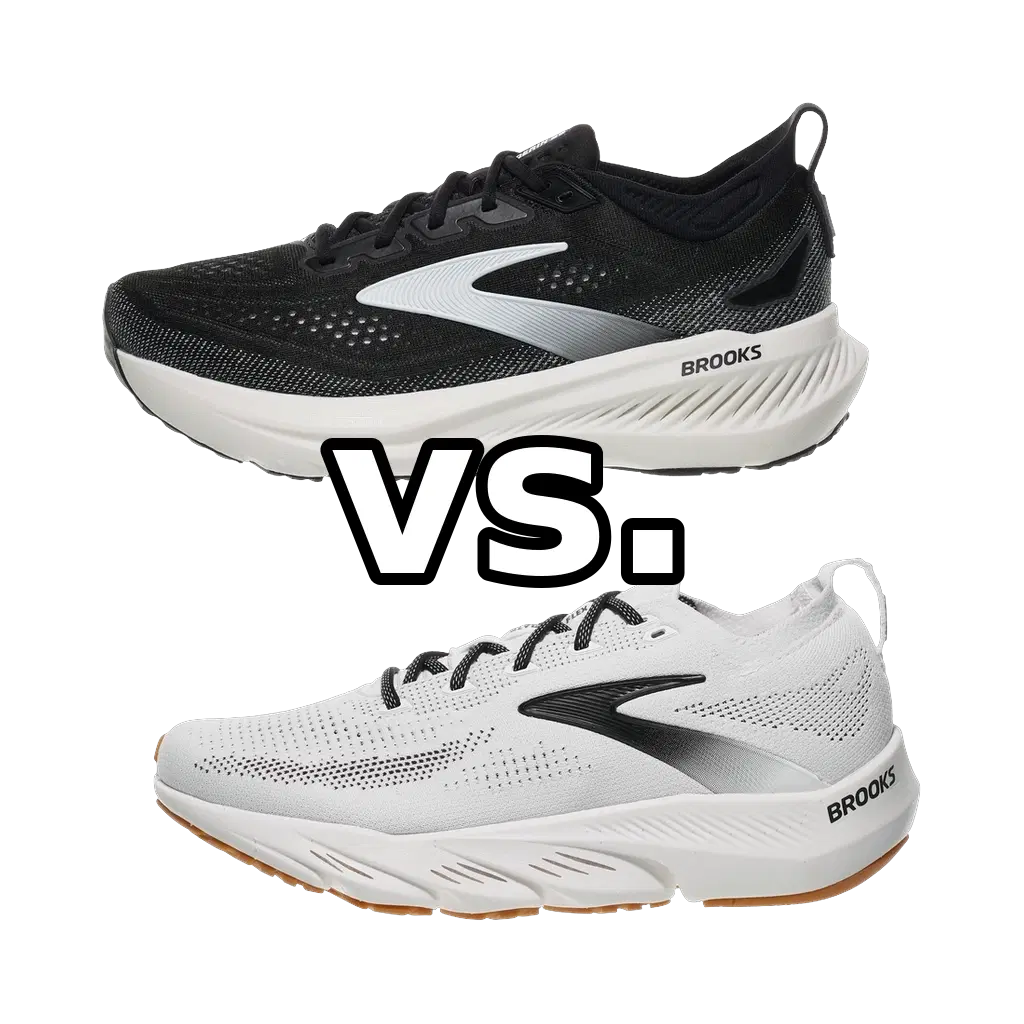
These are close cousins with the same foam and the same soft, unplated, comfort-over-pop character, so it comes down to how much shoe you want. Go with the Glycerin 23 for more cushioning, a more stable platform, and the range to handle marathon-distance long runs; go with the Glycerin Flex if you'd rather have a lighter, more flexible ride for easy and steady miles up to the half. Neither is a speed tool — pick based on stack, weight, and flexibility, not turnover.
Pace
3 of 6
Cushioning
5 of 6
Responsiveness
3 of 6
Stability
4 of 6
Drop
8 mm
Support
Neutral
Plate
None
Distances
10KHalfMarathon
Pace
3 of 6
Cushioning
4 of 6
Responsiveness
3 of 6
Stability
3 of 6
Drop
9 mm
Support
Neutral
Plate
None
Distances
10KHalf
At a Glance
Brooks Glycerin 23Brooks Glycerin Flex
Who Should Choose Each Shoe
Choose
Brooks Glycerin 23
Choose the Glycerin 23 if you want a genuine do-everything daily trainer that can absorb high weekly volume and carry you through long marathon-distance efforts on soft, protective foam. It's the better pick for heavier or higher-mileage runners who prioritize deep cushioning and a stable, planted platform, and for anyone who wants a single plush shoe that covers recovery days, easy miles, and long runs alike. If you don't mind a heavier shoe in exchange for maximum comfort and a more premium upper, this is the one.
Choose
Brooks Glycerin Flex
Choose the Glycerin Flex if you're a recreational runner who wants a softer, more flexible everyday shoe with a lighter, less bulky feel underfoot. It's ideal for easy and steady runs up to about the half marathon, especially if you like a natural, bendable toe-off and find fully maximal trainers too stiff or heavy for your relaxed mileage. Runners building volume who value forgiveness and a nimble on-foot feel over maximum stack will be happiest here.
Head-to-Head
Start with the foam and construction and the two look like siblings: the same DNA Tuned nitrogen-infused midsole with dual-sized cells (larger, softer heel cells and smaller, firmer forefoot cells), no plate in either, and a neutral platform on both. From there they diverge in feel. The Glycerin 23 is the plusher, more substantial of the two — it carries more cushioning (5/6 vs 4/6), a taller stack at roughly 37 mm heel / 29 mm forefoot versus about 35 mm / 26 mm on the Flex, and a broader, more planted base that earns it a higher stability rating (4/6 vs 3/6). That extra material comes at a weight cost: the Glycerin 23 is about 303 g in a men's US 9, while the Flex is noticeably lighter at around 264 g, a roughly 40 g gap you feel on the leg over long miles. The Flex's identity is its deep flex grooves, which let the shoe bend with your foot for a more natural, easygoing toe-off, where the Glycerin 23 gives a smoother but more damped, unhurried roll. Drop is close and effectively the same ride geometry — an 8 mm measured offset on the Glycerin 23 and about 9 mm on the Flex (Brooks markets it as 6 mm). Neither is springy: responsiveness is medium (3/6) on both, and each turns vague if you push much past a steady conversational pace, with the Glycerin 23 having a slightly higher effective ceiling. The uppers differ in polish too — the Glycerin 23 uses a premium triple-jacquard warp-knit hold, while the Flex runs a simpler engineered flat-knit. Tellingly, the Glycerin 23 is rated for 10K through the marathon, while the Flex tops out comfortably around the half.


© 2026 longrunshoes.ai | All rights reserved.
Use of materials from this site is permitted only with proper attribution and a link to longrunshoes.ai.