
Brooks Glycerin 23 vs Brooks Glycerin GTS 23:
Which to Choose
Verdict
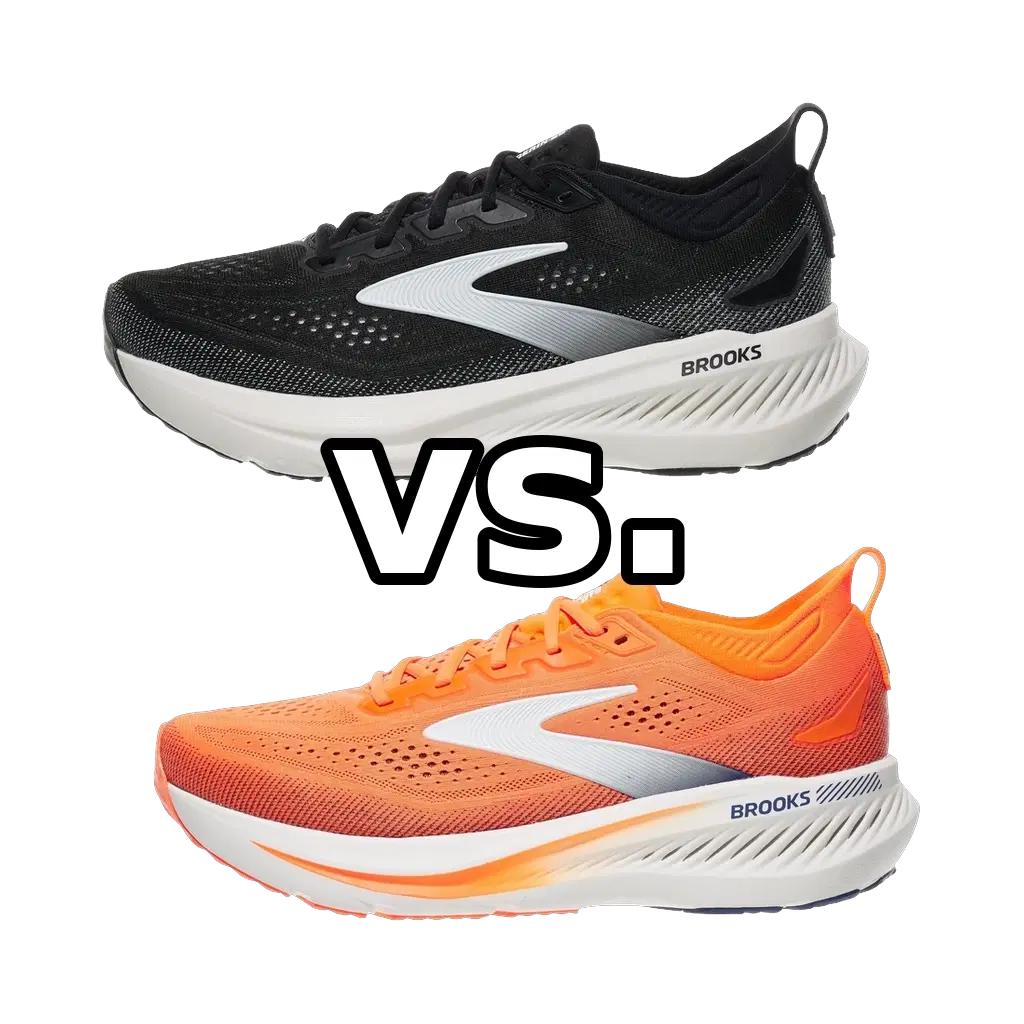
It genuinely depends — but on your gait, not on which shoe is "better." These are the same soft, comfort-first Glycerin ride in two flavors, nearly identical in weight, stack, and cushioning. If your stride is neutral, take the Glycerin 23 and enjoy the unguided platform (and its longer-distance range); if you overpronate mildly or want a little stability insurance for long, tired miles, the GTS 23 adds GuideRails guidance and a touch more drop for essentially the same plush feel. Match the shoe to your feet and you can't go wrong with either.
Pace
3 of 6
Cushioning
5 of 6
Responsiveness
3 of 6
Stability
4 of 6
Drop
8 mm
Support
Neutral
Plate
None
Distances
10KHalfMarathon
Pace
3 of 6
Cushioning
5 of 6
Responsiveness
4 of 6
Stability
5 of 6
Drop
10 mm
Support
Stability
Plate
None
Distances
10KHalf
At a Glance
Brooks Glycerin 23Brooks Glycerin GTS 23
Who Should Choose Each Shoe
Choose
Brooks Glycerin 23
Choose the Glycerin 23 if you're a neutral runner — no meaningful pronation, or you already run comfortably in neutral shoes — who wants maximum plush comfort without any guidance getting in the way. It's the pick for beginners building mileage, high-volume runners who value soft landings, and anyone planning to take a cushioned daily trainer up to marathon distance at conversational effort, where its slightly lower 8 mm drop and neutral platform feel natural and unforced.
Choose
Brooks Glycerin GTS 23
Choose the Glycerin GTS 23 if you're a mild overpronator, or your stride tends to collapse inward on tired long runs, and you want that same Glycerin plushness with a gentle hand keeping you tracking straight. The GuideRails and wider base offer joint protection and stability without a heavy-handed medial post, and the slightly steeper 10 mm drop suits runners with tight calves or Achilles who like a more heel-forward feel for steady daily and recovery miles up to a relaxed half marathon.
Head-to-Head
Underfoot these two are close cousins: the same DNA Tuned dual-cell midsole (soft, larger heel cells for cushioned landings, smaller firmer forefoot cells for a hint of push), the same plateless, comfort-tuned character, and near-identical proportions — the neutral Glycerin sits on roughly a 37 mm heel / 29 mm forefoot stack at about 303 g, the GTS on 38 mm / 28 mm at about 306 g. That 3 g difference is negligible, so this isn't a case of one being meaningfully lighter or more cushioned; the plushness and the "happy at conversational pace, vague if you force it" ride carry over to both. The two genuine differences are guidance and geometry. The GTS 23 adds GuideRails support and a wider, more sidewalled base, pushing its stability from the standard Glycerin's already-planted-but-neutral feel up to a firmly supportive one that gently reins in a collapsing stride without feeling corrective or clunky. It also rides on a slightly steeper 10 mm measured drop versus the Glycerin's 8 mm, a touch more heel-forward geometry that eases the calves and Achilles. The GTS reads as marginally more responsive at toe-off thanks to that support structure, but neither is a snappy shoe. One practical consequence: the neutral Glycerin's best-distance range stretches to the marathon at relaxed effort, while the GTS is happiest capping out around the half — both are strongest as steady daily and long-run trainers, not tempo tools.
Similar Comparisons

Asics Gel-Kayano 32 vs Brooks Glycerin GTS 23

Nike Vomero Plus vs Brooks Glycerin 23

Asics Gel-Kayano 33 vs Brooks Glycerin GTS 23

Brooks Glycerin 23 vs Brooks Glycerin Flex

Brooks Glycerin 22 vs Brooks Glycerin GTS 23

Brooks Ghost 18 vs Brooks Glycerin 23

Brooks Glycerin Flex vs Brooks Glycerin GTS 23

Brooks Glycerin 23 vs Hoka Clifton 11
© 2026 longrunshoes.ai | All rights reserved.
Use of materials from this site is permitted only with proper attribution and a link to longrunshoes.ai.