
Brooks Glycerin 22 vs Brooks Glycerin GTS 23:
Which to Choose
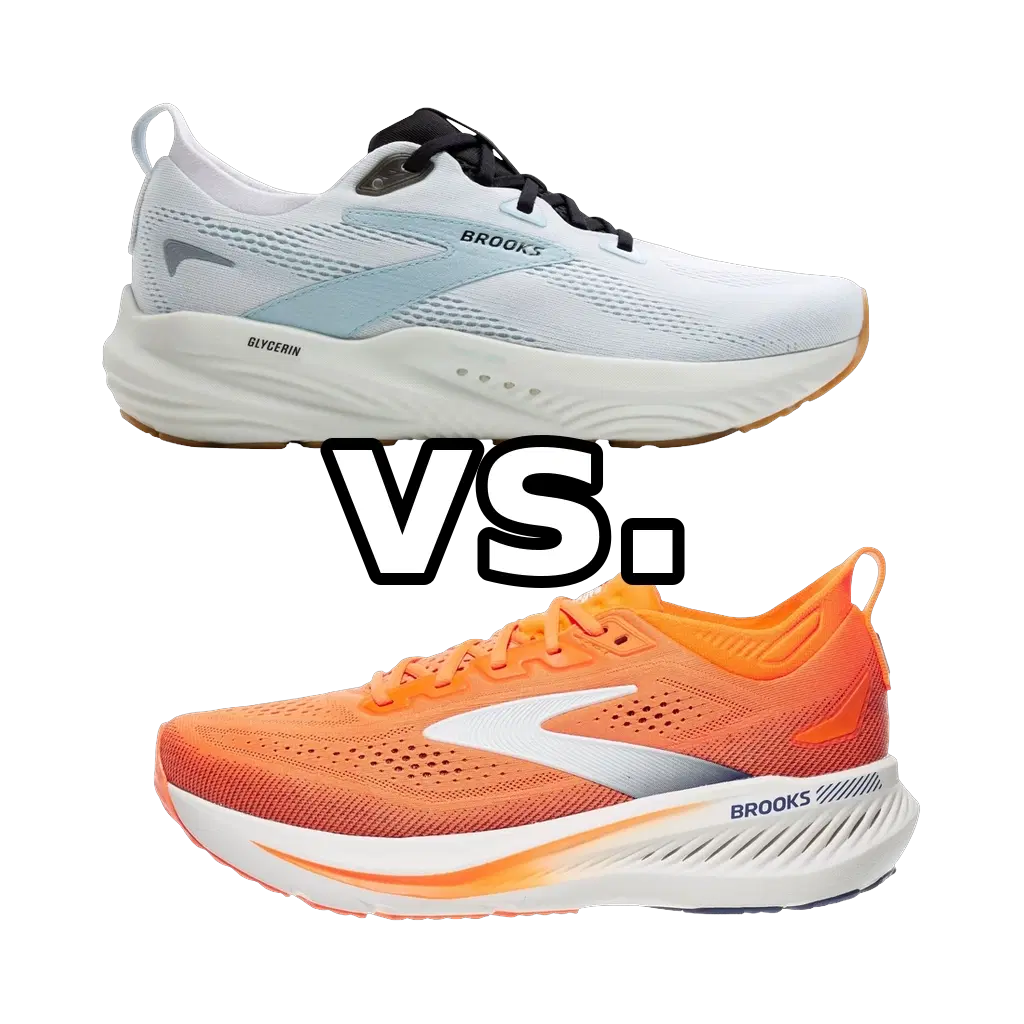
Verdict
It comes down to one thing: gait, not gear. If you're neutral and want the plushest, lightest, longest-legged version of this ride, take the Glycerin 22. If you overpronate mildly or just like a shoe that gently keeps your stride in line, the newer GTS 23 gives you the same soft platform with added guidance for a modest weight penalty. Both are cruisers, not racers — pick based on whether you want support, and everything else stays comfortingly similar.
Pace
3 of 6
Cushioning
5 of 6
Responsiveness
4 of 6
Stability
4 of 6
Drop
10 mm
Support
Neutral
Plate
None
Distances
10KHalfMarathon
Pace
3 of 6
Cushioning
5 of 6
Responsiveness
4 of 6
Stability
5 of 6
Drop
10 mm
Support
Stability
Plate
None
Distances
10KHalf
At a Glance
Brooks Glycerin 22Brooks Glycerin GTS 23
Who Should Choose Each Shoe
Choose
Brooks Glycerin 22
Choose the Glycerin 22 if you have a neutral gait and don't need any guidance — you'll get the same pillowy DNA Tuned ride a little lighter on the foot and with a broader distance range that stretches all the way to the marathon. It's the pick for high-mileage recreational runners, beginners, and comfort-first daily trainers who want maximal joint protection without the extra structure (or grams) of a stability system.
Choose
Brooks Glycerin GTS 23
Choose the Glycerin GTS 23 if your stride mildly overpronates or you simply prefer a more planted, guided feel underfoot — the GuideRails quietly steady your landing and push-off without feeling like a motion-control shoe. It's ideal for the everyday runner logging steady daily and recovery miles up to about a half marathon who values that extra sense of stability and doesn't mind carrying a bit more weight to get it.
Head-to-Head
Underfoot these two feel remarkably alike: both ride on roughly 38–39mm of soft, high-cushion DNA Tuned foam with a traditional 10mm heel-to-toe drop, no plate, and a moderate-not-propulsive spring that rewards relaxed rhythm and dulls when you force the pace. The differences are structural rather than dramatic. The GTS 23 threads GuideRails support into that same platform, pushing its stability from moderate to high — it stays planted and gently checks excess motion without ever feeling corrective or clunky, which is exactly what a mild overpronator wants. That support (plus a dual-cell midsole with a slightly firmer, more supportive forefoot push at toe-off) adds weight: the GTS 23 comes in around 306g in a men's US 9 versus roughly 289g for the neutral Glycerin 22, so the 22 feels a touch lighter and freer on the foot. Range differs slightly too — the Glycerin 22 stretches comfortably from easy miles up through the marathon, while the GTS 23 is happiest on steady daily and recovery runs and tops out around the half. Neither is a tempo or race shoe; both go vague if you push much past easy-steady effort.
Similar Comparisons

Asics Gel-Kayano 32 vs Brooks Glycerin GTS 23

Brooks Glycerin 22 vs Brooks Glycerin Flex
Asics Gel-Kayano 33 vs Brooks Glycerin GTS 23

Brooks Glycerin 22 vs Salomon Aero Glide 3

Brooks Glycerin 23 vs Brooks Glycerin GTS 23

Puma Magnify Nitro 3 vs Brooks Glycerin 22
Brooks Glycerin Flex vs Brooks Glycerin GTS 23

Brooks Glycerin 22 vs Saucony Ride 19
© 2026 longrunshoes.ai | All rights reserved.
Use of materials from this site is permitted only with proper attribution and a link to longrunshoes.ai.