
Salomon DRX Defy vs Brooks Glycerin Flex:
Which to Choose

Verdict
It genuinely comes down to the feel you want, not the spec sheet, since cushioning, stability, stack and drop are all close. Pick the DRX Defy if you want a lighter, livelier shoe that can shift into tempo gear; pick the Glycerin Flex if you want a softer, more damped cruiser for easy and long runs. Firm and quick versus soft and smooth — choose the ride that matches how you actually run.
Pace
3 of 6
Cushioning
4 of 6
Responsiveness
4 of 6
Stability
3 of 6
Drop
8 mm
Support
Neutral
Plate
None
Distances
10KHalf
Pace
3 of 6
Cushioning
4 of 6
Responsiveness
3 of 6
Stability
3 of 6
Drop
9 mm
Support
Neutral
Plate
None
Distances
10KHalf
At a Glance
Salomon DRX DefyBrooks Glycerin Flex
Who Should Choose Each Shoe
Choose
Salomon DRX Defy
Choose the Salomon DRX Defy if you want one trainer that can handle easy miles but still come alive for a tempo session or a faster finish — a natural-strider who values versatility and a responsive, slightly firm feel over plushness. At 239g with a lively TPU midsole, it rewards runners who like to feel the ground and occasionally push the pace, and it's the better pick if your weeks mix steady running with the odd quicker 10K or half effort. If soft, sink-in cushioning feels mushy and uninspiring to you, this is the one.
Choose
Brooks Glycerin Flex
Choose the Brooks Glycerin Flex if your running is mostly easy and steady and you prioritize a soft, forgiving, shock-absorbing ride over snap — a runner building weekly volume who wants comfort and smooth, flexible transitions at conversational paces. Its plush DNA Tuned foam and deep flex grooves make it the more protective-feeling cruiser for recovery days and long relaxed miles. It's the right call if you have no interest in tempo work and simply want legs-friendly cushioning for day-after-day mileage.
Head-to-Head
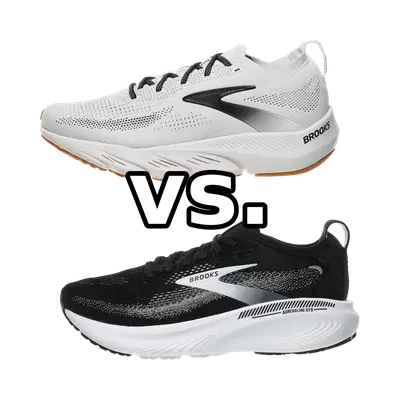
The clearest divide is ride character. The DRX Defy's energyFOAM is a TPU-based compound tuned medium-firm and lively, so it gives a touch of springback and firms up pleasantly when you push the tempo; its responsiveness rates 4/6 and it stays comfortable well into tempo work, roughly 4:30–5:00 min/km. The Glycerin Flex goes the other way: its nitrogen-infused DNA Tuned foam with deep flex grooves is plush and shock-absorbing, rating 3/6 for responsiveness, and the energy return is modest — it feels damped rather than springy, happiest at conversational efforts around 5:30 min/km and vague if you try to sharpen the pace. Weight reinforces this split: the Defy is a nimble 239g in the men's size, while the Glycerin Flex is noticeably heavier, which suits its cushioned-cruiser remit but blunts top-end speed. Stack and drop are close — both carry a moderate heel stack in the mid-30s mm with a roughly 26mm forefoot, and drops are near each other at 8mm for the Defy versus an effective ~9mm for the Glycerin (Brooks markets it as 6mm) — so neither is a dramatically more or less protective platform than the other. Stability is a wash too: both are neutral 3/6 platforms with no pronation support and no plate, built for natural striders rather than correction. In short, these aren't firm-versus-max-cushion opposites in height; they're firm-and-quick versus soft-and-smooth at a similar stack.




© 2026 longrunshoes.ai | All rights reserved.
Use of materials from this site is permitted only with proper attribution and a link to longrunshoes.ai.