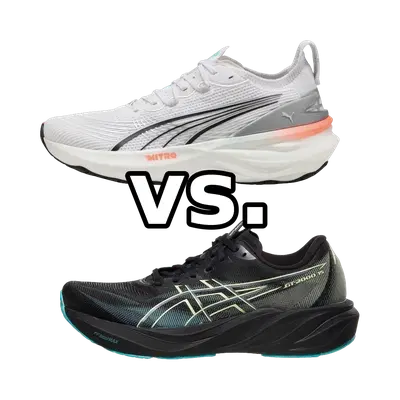
Puma ForeverRun Nitro 2 vs Nike Structure 26:
Which to Choose
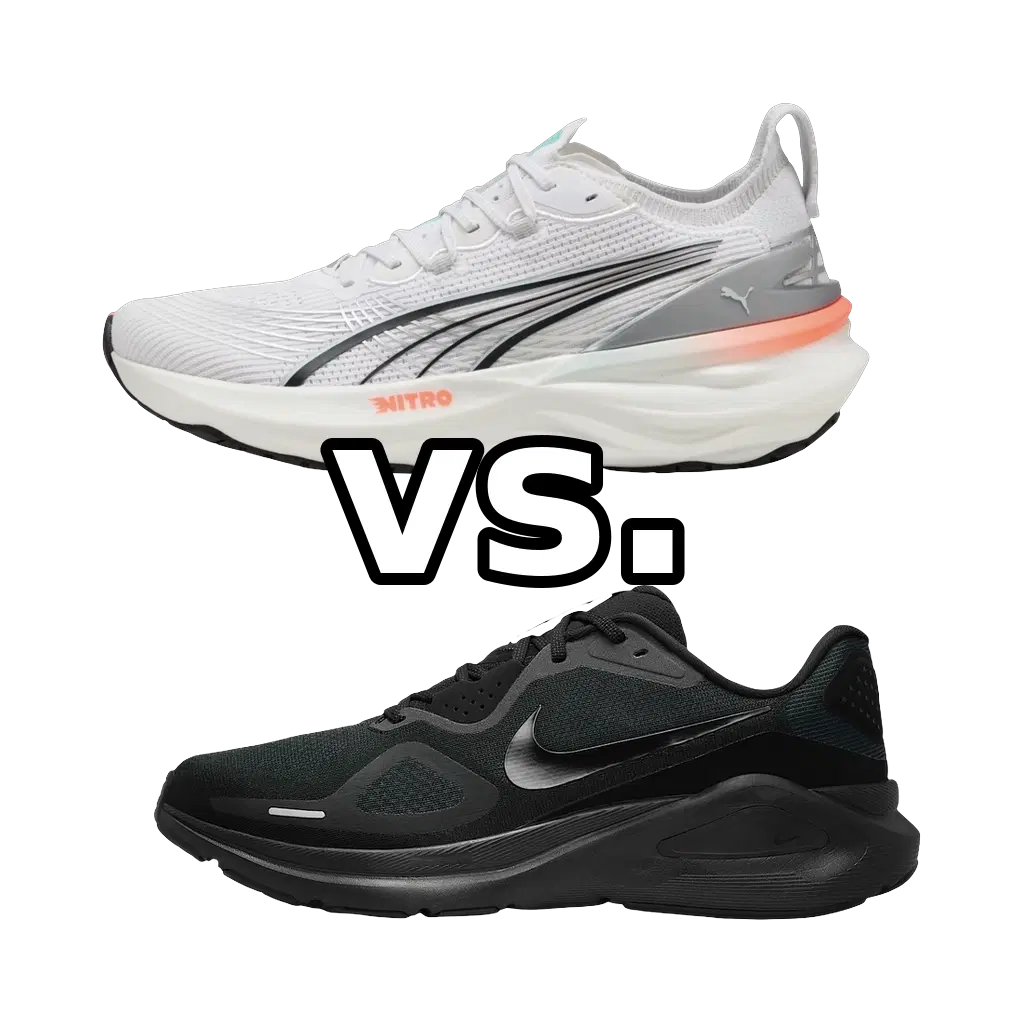
Verdict
These two are near-twins in weight, stack, drop, and intent, so there's no wrong answer — it comes down to how you like your cushioning to feel. Go Puma for a softer, livelier ride with a touch of spring; go Nike for a firmer, more grounded, locked-in stable feel. If you can, try both on, because the Nitro foam and ReactX are the only things that truly separate them.
Pace
3 of 6
Cushioning
4 of 6
Responsiveness
4 of 6
Stability
5 of 6
Drop
10 mm
Support
Stability
Plate
None
Distances
10KHalfMarathon
Pace
3 of 6
Cushioning
4 of 6
Responsiveness
4 of 6
Stability
5 of 6
Drop
10 mm
Support
Stability
Plate
None
Distances
10KHalfMarathon
At a Glance
Puma ForeverRun Nitro 2Nike Structure 26
Who Should Choose Each Shoe
Choose
Puma ForeverRun Nitro 2
Choose the Puma ForeverRun Nitro 2 if you want stability without a dead, firm ride — the Nitro foam gives you a softer, slightly springier underfoot feel that stays composed over long runs. It's the better pick for the mild-overpronating marathon-builder who still wants a little life and forgiveness in a daily trainer, and for runners coming off a plush neutral shoe who don't want guidance to cost them all their cushioning.
Choose
Nike Structure 26
Choose the Nike Structure 26 if you value a firm, planted, maximally-controlled ride — the ReactX foam and dual guide rails keep your foot tracking dead-straight and feel reassuringly solid under load. It's ideal for heel strikers and mild overpronators who want a no-nonsense, secure daily trainer for easy and long efforts, and especially for runners who historically prefer a firmer, more supportive shoe over a soft one.
Head-to-Head
The spec sheets are strikingly close. Weights land within a hair of each other — roughly 291g for the ForeverRun Nitro 2 versus about 298g for the Structure 26 in a men's US 9 — and so do the stacks, at about 35mm heel / 26.5mm forefoot on the Puma against roughly 36mm / 26mm on the Nike, with both carrying a 10mm drop. Both corral the foot with sidewall-style guidance (Puma's RunGuide walls, Nike's dual guide rails) that quietly resists inward roll without feeling corrective, and neither uses a propulsion plate, so energy return comes from the foam alone. The one difference that actually decides it is that foam. Puma's nitrogen-infused Nitro midsole runs softer and livelier — cushioned but composed, with a touch more spring underfoot — while Nike's ReactX is firmer and more planted, delivering a controlled, locked-down ride that prioritizes a secure, straight-tracking feel over any bounce. In practice the Puma feels a shade more energetic and forgiving at steady effort, and the Nike feels more deliberately grounded and stable. Neither rewards hard acceleration; both are happiest in the easy-to-steady zone, roughly 4:45–6:00 min/km, and start to feel like a lot of shoe when pushed quicker.



© 2026 longrunshoes.ai | All rights reserved.
Use of materials from this site is permitted only with proper attribution and a link to longrunshoes.ai.