
Nike Structure 26 vs Brooks Adrenaline GTS 25:
Which to Choose
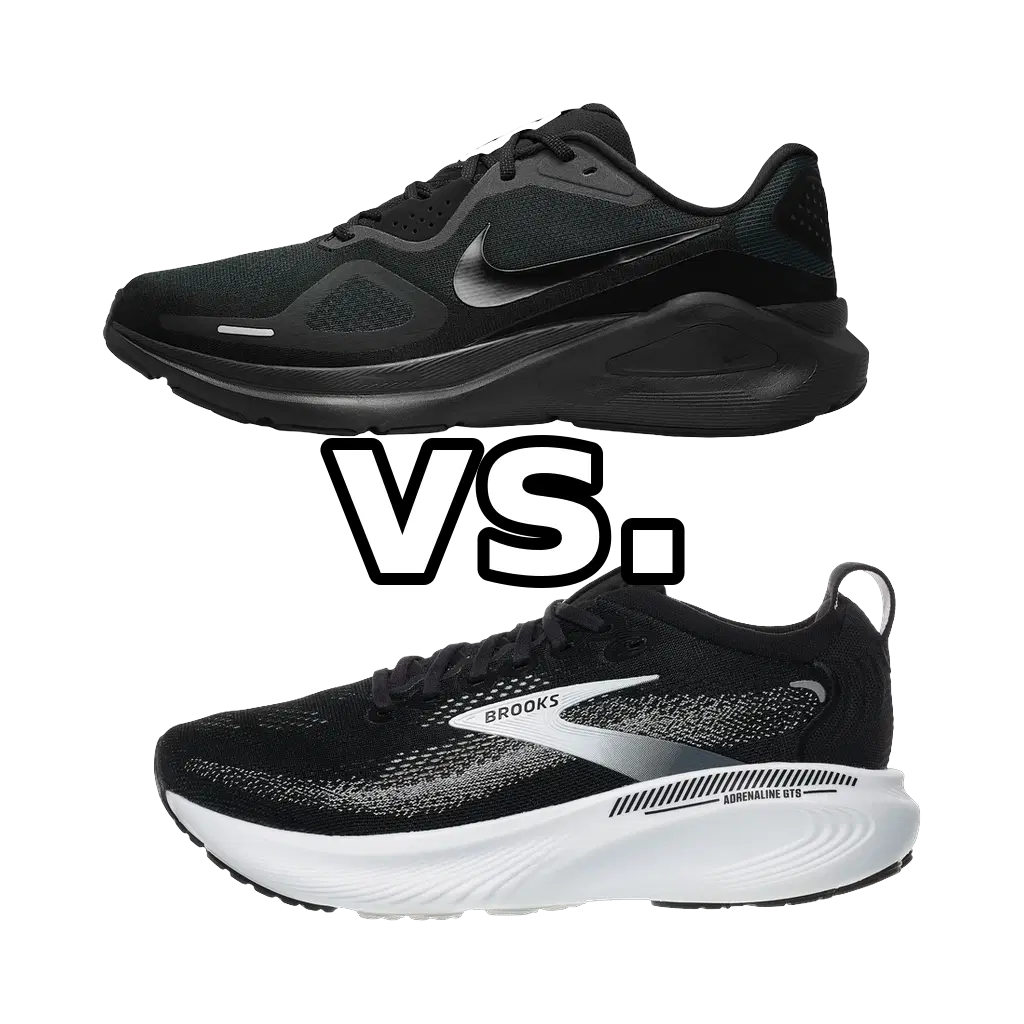
Verdict
These are genuinely close twins — same drop, same stack, same weight class, same rail-guided stability, same best distances — so there's no wrong answer, only a preference. It comes down to foam feel: choose the Structure 26 for a firmer, more planted, slightly more responsive ride, and the Adrenaline GTS 25 for a softer, more cushioned, comfort-first one. If you can, try both on and run a few strides; your feet will tell you which character you want long before the spec sheet will.
Pace
3 of 6
Cushioning
4 of 6
Responsiveness
4 of 6
Stability
5 of 6
Drop
10 mm
Support
Stability
Plate
None
Distances
10KHalfMarathon
Pace
3 of 6
Cushioning
4 of 6
Responsiveness
3 of 6
Stability
5 of 6
Drop
10 mm
Support
Stability
Plate
None
Distances
10KHalfMarathon
At a Glance
Nike Structure 26Brooks Adrenaline GTS 25
Who Should Choose Each Shoe
Choose
Nike Structure 26
Pick the Nike Structure 26 if you want your stability shoe to feel firm, planted, and obviously supportive — the kind of controlled ride that keeps a heel striker tracking straight through steady 10K-to-marathon training, with the half marathon as its sweet spot. It's the better match if you like a slightly firmer, marginally more responsive platform and tend to run your easy days a touch quicker (around 5:00–6:00 min/km). Choose it over the Brooks if "secure and solid" appeals to you more than "soft and forgiving."
Choose
Brooks Adrenaline GTS 25
Pick the Brooks Adrenaline GTS 25 if you prioritize a softer, more forgiving underfoot feel for high-volume easy and long runs, and want overpronation support that stays quiet until you fatigue. It's the comfort-first workhorse of the two — ideal for the overpronating heel striker logging relaxed steady miles at 5:30–6:30 min/km who values cushioning and all-day comfort over any sense of pop. If you've worn previous Adrenalines and liked the dependable, roll-controlling ride, the 25 continues that lineage with a softer foam and a slightly roomier toe box.
Head-to-Head
Start with how close they are: identical 10mm drop, identical 36/26mm stack, no plate in either, and weights of 298g (Structure 26) versus 295g (Adrenaline GTS 25) — a 3g gap you will never feel, so treat them as the same weight. Both rate 5/6 for stability and 4/6 for cushioning, and crucially both have moved away from an intrusive medial post in favor of guardrail-style guidance (Nike's dual guide rails, Brooks' GuideRails) that only steps in as your stride wobbles or you fatigue. The real split is the foam. Nike's full-length ReactX is the firmer, more planted of the two — it delivers a controlled, secure, track-straight feel that some runners read as reassuringly solid and others as a touch dead underfoot. Brooks' DNA Loft v3, a nitrogen-infused EVA, is the softer and more forgiving platform; it cushions impact more pillowingly even though it is still a firm-ish ride with little spring back. Neither is bouncy or propulsive — but the Structure edges ahead slightly on responsiveness (4/6 vs 3/6) and feels a hair more willing at moderate efforts, with a comfortable zone around 5:00–6:00 min/km versus the Adrenaline's more relaxed 5:30–6:30 min/km. Both start to feel heavy and flat if you push toward 5:00 min/km or faster; neither is a tempo or race tool. Fit is the other deciding factor: the Adrenaline GTS 25 runs true to size with a roomier toe box than its predecessor but a slightly tapered front, and both models come in multiple widths, so wide-footed runners are covered either way.
Similar Comparisons
Brooks Adrenaline GTS 24 vs Brooks Adrenaline GTS 25

Adidas Adizero Evo SL vs Nike Structure 26
Brooks Ghost 18 vs Brooks Adrenaline GTS 25
Nike Structure 26 vs Nike Structure Plus
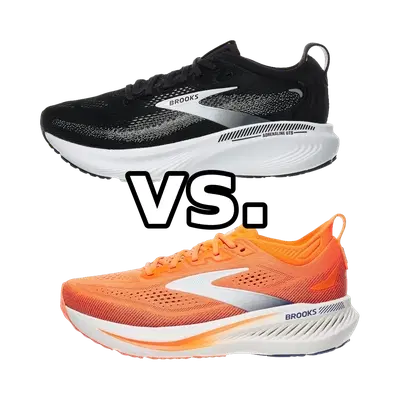
Brooks Adrenaline GTS 25 vs Brooks Glycerin GTS 23
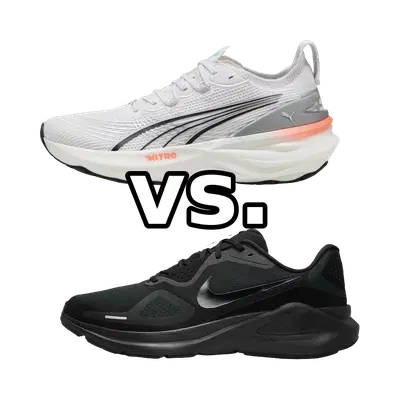
Puma ForeverRun Nitro 2 vs Nike Structure 26
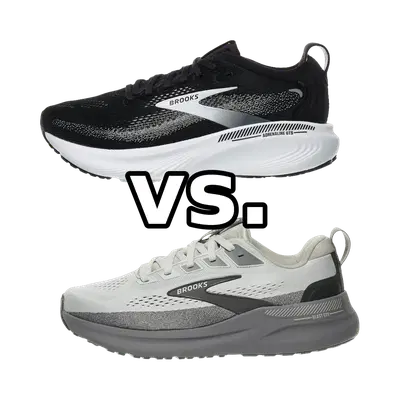
Brooks Adrenaline GTS 25 vs Brooks Beast GTS 26
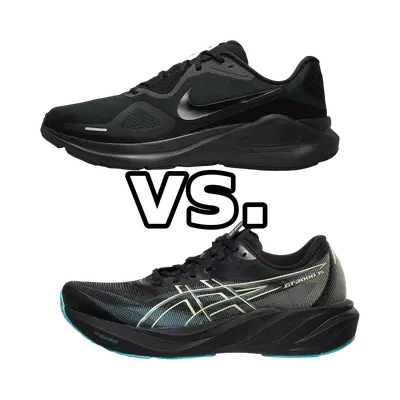
Nike Structure 26 vs Asics GT-2000 15
© 2026 longrunshoes.ai | All rights reserved.
Use of materials from this site is permitted only with proper attribution and a link to longrunshoes.ai.