
Nike Structure 26 vs Nike Structure Plus:
Which to Choose
Verdict
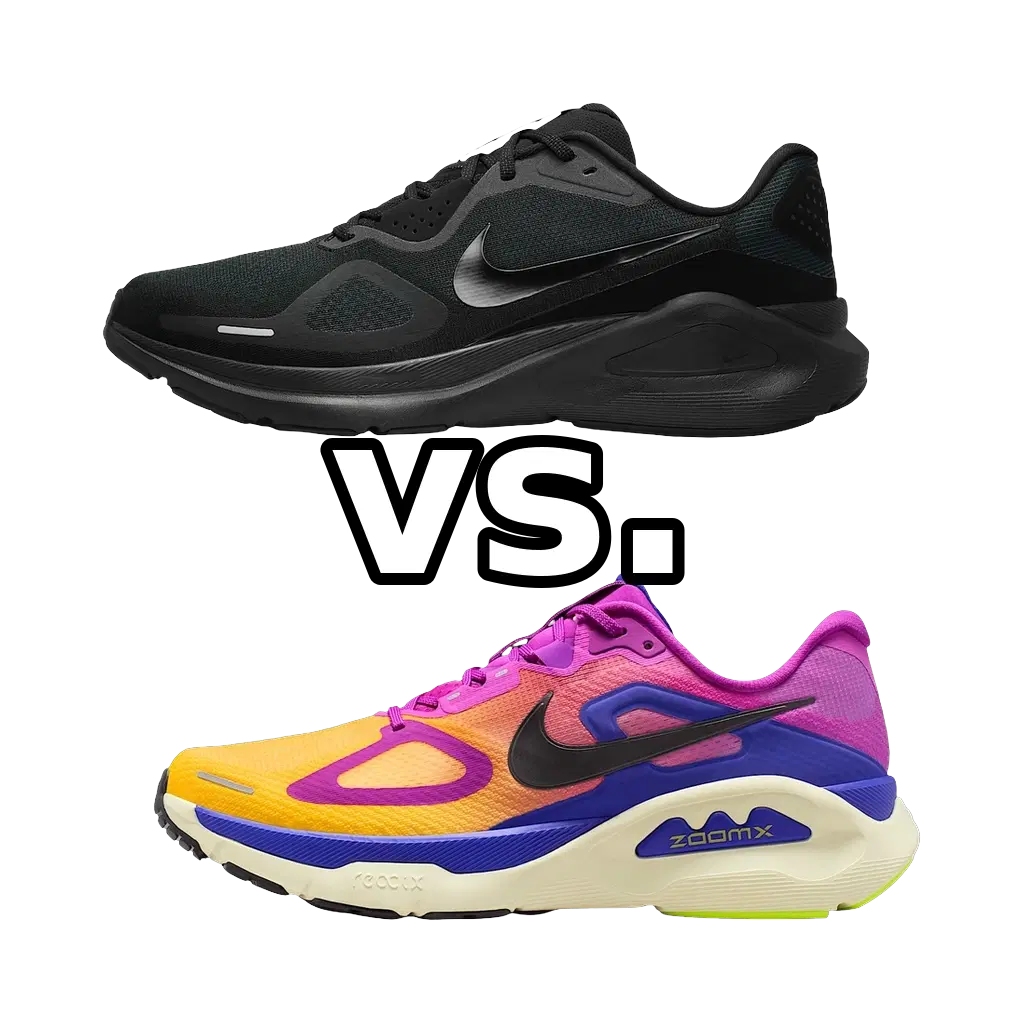
It comes down to how much shoe you want under a stable platform: pick the Structure 26 for a firmer, lower, more traditional guided trainer that shines at the half, and the Structure Plus for a taller, softer, marathon-leaning ride with maximum cushioning. Both are stability shoes without a plate and neither is built for speed, so let cushioning preference and long-run mileage — not pace ambitions — make the call.
Pace
3 of 6
Cushioning
4 of 6
Responsiveness
4 of 6
Stability
5 of 6
Drop
10 mm
Support
Stability
Plate
None
Distances
10KHalfMarathon
Pace
3 of 6
Cushioning
6 of 6
Responsiveness
4 of 6
Stability
5 of 6
Drop
11 mm
Support
Stability
Plate
None
Distances
10KHalfMarathon
At a Glance
Nike Structure 26Nike Structure Plus
Who Should Choose Each Shoe
Choose
Nike Structure 26
Choose the Structure 26 if you want a classic, planted stability trainer with a firmer, more connected feel underfoot and don't need a towering stack. It's the better pick for heel strikers and mild overpronators logging steady 10K-to-half efforts who prefer ground feel and predictable transitions to maximum softness, and who like the reassurance of guide rails over a plush ride.
Choose
Nike Structure Plus
Choose the Structure Plus if your priority is maximum cushioning and protection for high-volume weeks and long runs, especially building toward the marathon. The ZoomX-over-ReactX stack gives a softer, taller ride while staying grounded through the sidewall guidance — and despite the extra height it's the lighter of the two — making it ideal for runners who want a supportive, pillowy trainer for easy-paced miles rather than a firmer, lower-profile feel.
Head-to-Head
The clearest split is cushioning and stack height. The Structure 26 uses a full-length ReactX midsole measuring 36 mm at the heel and 26 mm at the forefoot, and it feels firm and controlled — above-average protection that keeps the foot tracking straight without much softness. The Structure Plus adds a ZoomX PEBA top layer over a firmer ReactX carrier and rises to 41 mm heel / 30 mm forefoot, giving a soft, pillowy first impression on top of a grounded base; its cushioning rates a full 6/6 against the 26's 4/6. Counterintuitively, the taller Plus is also the lighter shoe — about 292 g in a men's US 9 versus roughly 298 g for the 26 — because the ZoomX superfoam offsets the extra stack. Drops are nearly identical at 11 mm (Plus) and 10 mm (26), both favoring heel strikers. Neither shoe is bouncy: both sit at 4/6 responsiveness, and both dampen rebound rather than spring you forward, so acceleration isn't the strength of either. They even guide the foot differently — the 26 relies on dual guide rails that quietly correct wobble, while the Plus uses the Midfoot Support System's high medial and lateral sidewalls to cradle the foot. On use case, the 26's sweet spot is the half marathon and steady training, while the Plus leans toward the marathon and long-run volume, and it's tuned for a slightly easier pace (optimal around 5:30–6:30 min/km versus the 26's 5:00–6:00).


© 2026 longrunshoes.ai | All rights reserved.
Use of materials from this site is permitted only with proper attribution and a link to longrunshoes.ai.