
Nike Pegasus 42 vs Hoka Clifton 11:
Which to Choose
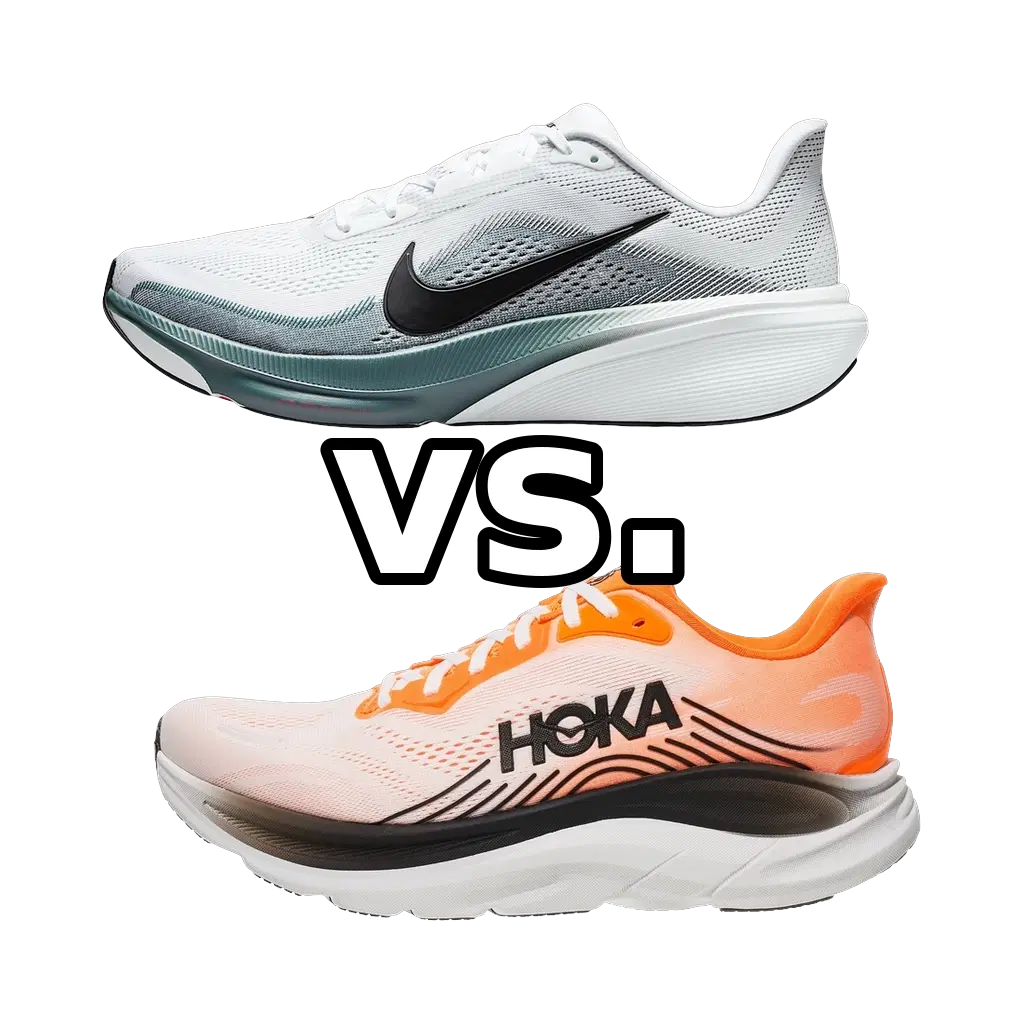
Verdict
It genuinely depends — but on ride preference, not quality, since both are capable neutral daily trainers over the same distances. Go Clifton 11 if you want more cushioning, a lower drop, and a lighter, smoother cruiser for long easy miles; go Pegasus 42 if you want a high-drop, heel-friendly platform with the extra pop of Air Zoom to liven up your moderate and tempo days. Match the drop and the ride feel to how you land and how you like to train, and either will serve you well.
Pace
4 of 6
Cushioning
4 of 6
Responsiveness
4 of 6
Stability
4 of 6
Drop
14 mm
Support
Neutral
Plate
None
Distances
10KHalfMarathon
Pace
3 of 6
Cushioning
5 of 6
Responsiveness
3 of 6
Stability
4 of 6
Drop
8 mm
Support
Neutral
Plate
None
Distances
10KHalfMarathon
At a Glance
Nike Pegasus 42Hoka Clifton 11
Who Should Choose Each Shoe
Choose
Nike Pegasus 42
Choose the Pegasus 42 if you're a heel striker who likes a high, pronounced offset and wants a bit of life in the ride — the Air Zoom pop makes moderate tempo efforts and progression runs feel snappier than a plain foam trainer. It suits runners who mix in some faster steady work rather than only cruising, and who don't mind a firmer, businesslike feel at truly slow paces. If you've gotten along with previous high-drop Pegasus models and want that familiar heel-biased platform, this is the natural pick.
Choose
Hoka Clifton 11
Choose the Clifton 11 if your priority is maximum protection on long, easy miles and you'd rather have a taller, more cushioned platform with a smooth rockered roll. Its lower 8mm drop and lighter weight suit runners who prefer a midfoot-leaning transition and want to keep things relaxed rather than lively, and its generous stack is kinder to the joints over marathon-length efforts. It's the better home for a runner who wants one composed daily cruiser and doesn't need the Nike's added pop.
Head-to-Head
On paper they overlap heavily — both neutral, both plateless, both rated for the same 10K-to-marathon range with above-average stability for their category — but the ride personalities diverge sharply. The Pegasus 42 runs a dramatic 14mm heel-to-toe drop against the Clifton's 8mm, so the Nike sits clearly on the heel and rewards heel strikers, while the Hoka's lower ramp nudges you toward a midfoot landing. Cushioning is the Clifton's advantage: it stacks roughly 41mm heel / 30mm forefoot of CMEVA versus the Pegasus's lower, firmer 36mm / 22mm, giving the Hoka more underfoot protection for long, slow grinds. Despite carrying more foam, the Clifton is the lighter shoe at about 258g (men's US 9) to the Pegasus's 286g — the Nike's full-length Air Zoom unit and taller heel add mass. That Air Zoom is also where the Pegasus claws value back: it delivers a distinct pop and a livelier, more connected feel as you pick up the pace, whereas the Clifton's plateless EVA offers reliable, standard rebound that rewards a relaxed cruising rhythm rather than surges. Fittingly, the Pegasus's effective fast zone runs a touch quicker (roughly 4:45–5:15 min/km) while the Clifton settles into a truer daily-training pace (around 5:15–5:30 min/km at its quickest). Both are firm rather than soft, both go flat if you push them into genuine speed work, and both prioritize durability over top-tier bounce.
Similar Comparisons

Hoka Clifton 10 vs Hoka Clifton 11
Brooks Ghost 17 vs Nike Pegasus 42
Asics Novablast 6 vs Hoka Clifton 11

Hoka Clifton 10 vs Nike Pegasus 42

Brooks Ghost 18 vs Hoka Clifton 11
Asics Novablast 6 vs Nike Pegasus 42

Brooks Glycerin 23 vs Hoka Clifton 11

Nike Pegasus Premium vs Nike Pegasus 42
© 2026 longrunshoes.ai | All rights reserved.
Use of materials from this site is permitted only with proper attribution and a link to longrunshoes.ai.