
Hoka Clifton 10 vs Nike Pegasus 42:
Which to Choose
Verdict
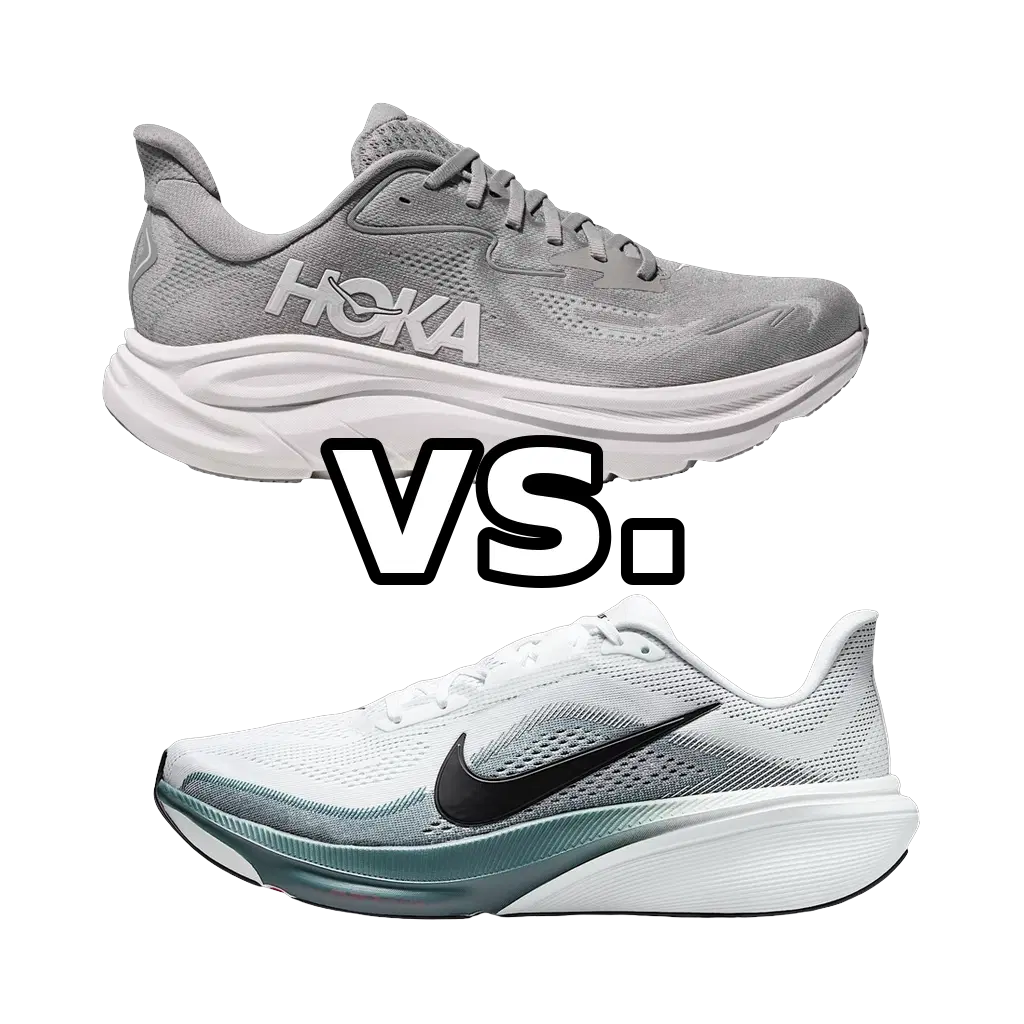
It genuinely depends on ride preference, not on which shoe is "more shoe." Go Clifton 10 for the softest, most cushioned long-run cruiser with a balanced 8mm drop; go Pegasus 42 for a firmer, livelier, higher-drop trainer that rewards a bit of pace and holds its feel longer. If you're between them, let cushioning feel and drop decide: soft-and-protective points to the Clifton, firm-and-poppy to the Pegasus.
Pace
3 of 6
Cushioning
5 of 6
Responsiveness
3 of 6
Stability
4 of 6
Drop
8 mm
Support
Neutral
Plate
None
Distances
10KHalfMarathon
Pace
4 of 6
Cushioning
4 of 6
Responsiveness
4 of 6
Stability
4 of 6
Drop
14 mm
Support
Neutral
Plate
None
Distances
10KHalfMarathon
At a Glance
Hoka Clifton 10Nike Pegasus 42
Who Should Choose Each Shoe
Choose
Hoka Clifton 10
Choose the Clifton 10 if your priority is soft, protective cushioning for easy and long runs — beginners who want maximum impact protection, or experienced runners logging high aerobic mileage who value a smooth, quiet, rolling ride over ground feel. It's also the better pick if you prefer a more moderate 8mm drop and plenty of forefoot foam, and you're happy to trade a little pop for all-day comfort on your feet.
Choose
Nike Pegasus 42
Choose the Pegasus 42 if you want a firmer, more connected trainer that comes alive at moderate and steady efforts rather than feeling vague when you press the pace. It suits heel strikers who get on well with a tall 14mm drop, runners who want a single versatile workhorse with a bit more snap from its Air Zoom unit, and anyone who wants a durable ride that will hold its feel through many miles rather than softening off early.
Head-to-Head
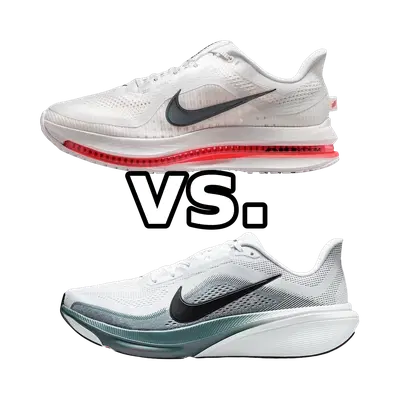
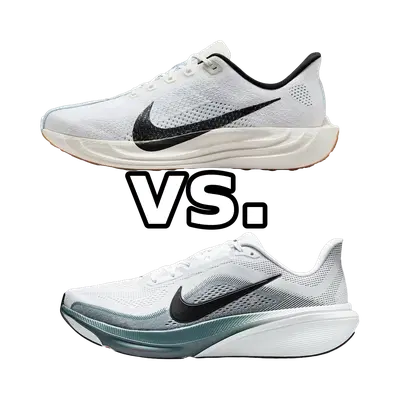
The clearest split is cushioning character. The Clifton 10 leans max-soft: deep, compression-molded EVA (rated 5/6 for cushioning) that soaks up impact for a quiet, forgiving ride, with roughly 32mm of foam under the forefoot to keep long miles comfortable. The Pegasus 42 is deliberately firmer (4/6), pairing ReactX foam with a full-length Air Zoom unit over a lower forefoot stack of about 22mm, so you sit closer to the ground and get a distinct pop that wakes up as you lift the pace. That difference shows up in responsiveness too — the Pegasus edges it at 4/6 versus the Clifton's 3/6, because the Clifton's soft EVA is protective rather than springy and tends to flatten out when you push, while the Air Zoom stays lively at tempo. Geometry is the other big divider: the Clifton runs a balanced 8mm drop with a smooth meta-rocker that rolls you heel-to-toe, whereas the Pegasus sits at a tall 14mm, a heel-biased offset you feel on every footstrike and one that favors committed heel strikers. Weights are close, with the Clifton around 278g and the Pegasus around 286g (both men's US 9), and both use breathable engineered mesh uppers over wide, planted, equally stable (4/6) platforms. One practical note on longevity: the Clifton's plush EVA tends to compress and lose its softness over high mileage, while the Pegasus's firmer foam and Air unit are built to hold their feel for the long haul.
© 2026 longrunshoes.ai | All rights reserved.
Use of materials from this site is permitted only with proper attribution and a link to longrunshoes.ai.