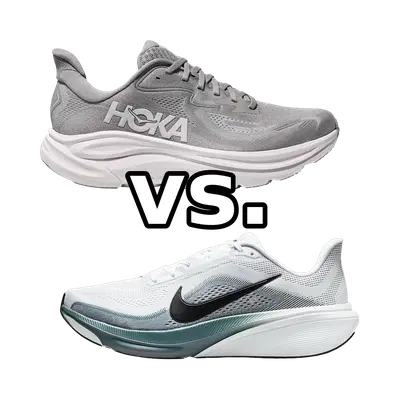
Hoka Clifton 10 vs Saucony Endorphin Azura:
Which to Choose
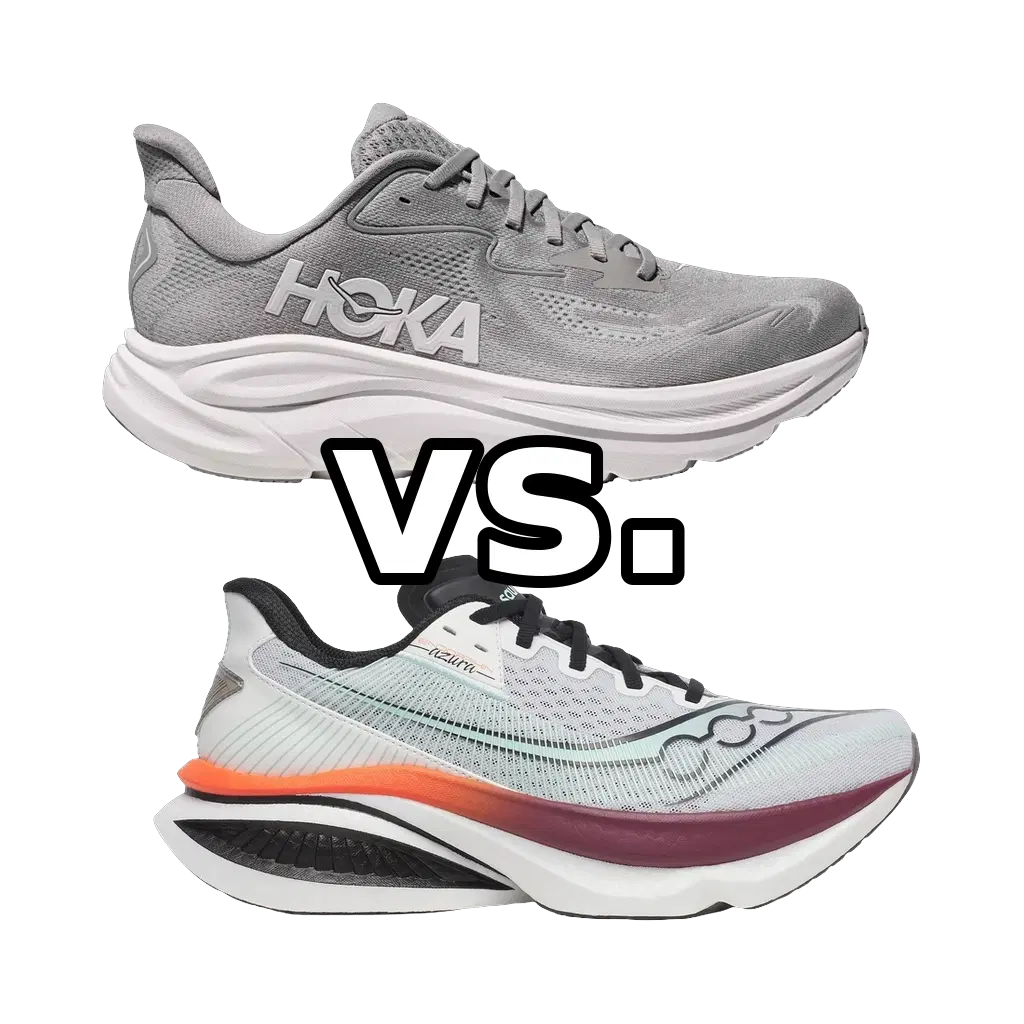
Verdict
These two overlap heavily — same distances, same 8mm drop, same cushioning rating, both neutral and plateless — so the decision hinges on pace and priorities, not on which is "better." Go with the Clifton 10 for maximum comfort and stability on easy and long days, and the Endorphin Azura for a lighter, springier shoe that can also push the pace. If you want one shoe to do most of your training, including the faster stuff, the Azura is the more versatile answer; if your running is mostly relaxed mileage where a soft, stable ride wins, the Clifton 10 is the safer bet.
Pace
3 of 6
Cushioning
5 of 6
Responsiveness
3 of 6
Stability
4 of 6
Drop
8 mm
Support
Neutral
Plate
None
Distances
10KHalfMarathon
Pace
4 of 6
Cushioning
5 of 6
Responsiveness
5 of 6
Stability
3 of 6
Drop
8 mm
Support
Neutral
Plate
None
Distances
10KHalfMarathon
At a Glance
Hoka Clifton 10Saucony Endorphin Azura
Who Should Choose Each Shoe
Choose
Hoka Clifton 10
Pick the Clifton 10 if most of your week is steady, easy aerobic mileage and long runs where comfort and a planted, forgiving ride matter more than pop. It's the stronger choice for beginners and recreational runners who cruise around 5:00–6:00 min/km, want a calm and stable platform under a neutral foot, and don't plan to chase intervals or sharp tempo work in the same shoe. If your priority is impact protection and quiet, drama-free miles, this is the one.
Choose
Saucony Endorphin Azura
Choose the Endorphin Azura if you want a single trainer that covers daily miles but also comes alive for tempo runs, progressions, and faster long efforts. It suits intermediate to experienced neutral runners who like a soft-yet-springy PEBA ride, run at quicker paces (comfortably down to about 4:15 min/km), and value the lighter weight and energy return — and who won't mind that the tall, soft stack feels slightly less planted at a slow jog. If you're the kind of runner who regularly shifts gears within a run, the Azura is the more flexible pick.
Head-to-Head
Both shoes land at the same 5/6 cushioning level, both are neutral with no plate, both run an 8mm drop, and both stack up in the low-40s of millimeters at the heel — so on paper they occupy almost identical territory. The real split is in foam and intent. The Clifton 10 uses compression-molded EVA: deep, quiet, and protective, but it flattens under pressure and gives back less the harder you push, which is why its pace window sits around 5:00–6:00 min/km and starts to feel vague past 4:45. The Azura runs a full slab of PWRRUN PB beaded PEBA superfoam, which is noticeably livelier — it rewards leaning into a faster gear, holds up to roughly 4:15 min/km, and treats the 4:30–5:15 range as home. Weight reinforces the divide: the Azura is 241g in a men's US9 versus 278g for the Clifton 10, a real difference you feel when the pace lifts. The trade-off flips on stability. The Clifton's broad meta-rocker platform earns an above-average 4/6 for a neutral shoe and stays calm and planted even at a slow jog, whereas the Azura's tall, soft PEBA stack rates a 3/6 and can feel a touch tippy at very easy speeds, only settling once you're moving with purpose. In short: same category, same distances, but the Clifton is the more protective, more stable easy-day specialist and the Azura is the lighter, more energetic, more versatile up-tempo option.
Similar Comparisons

Adidas Adizero Evo SL vs Saucony Endorphin Azura
Saucony Endorphin Trainer vs Saucony Endorphin Azura
Saucony Endorphin Pro 4 vs Saucony Endorphin Azura
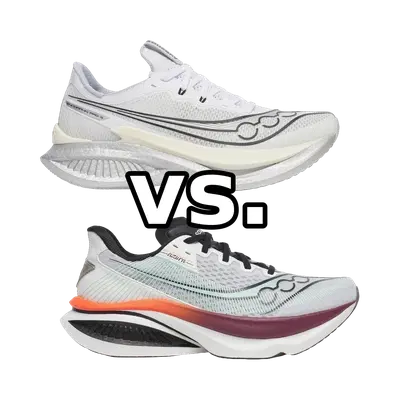
Saucony Endorphin Pro 5 vs Saucony Endorphin Azura
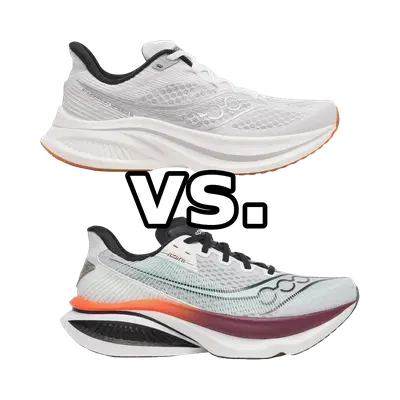
Saucony Endorphin Speed 5 vs Saucony Endorphin Azura
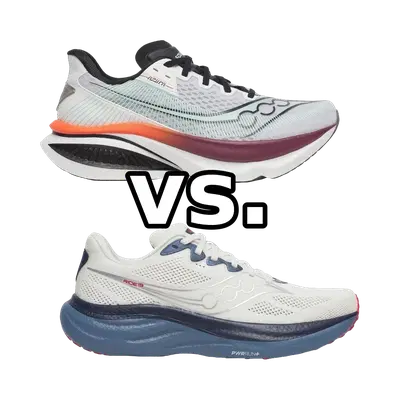
Saucony Endorphin Azura vs Saucony Ride 19
© 2026 longrunshoes.ai | All rights reserved.
Use of materials from this site is permitted only with proper attribution and a link to longrunshoes.ai.