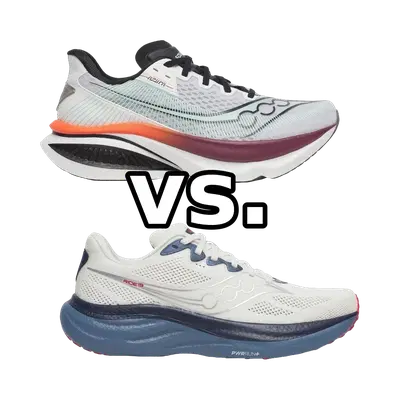
Saucony Endorphin Pro 5 vs Saucony Endorphin Azura:
Which to Choose
Verdict
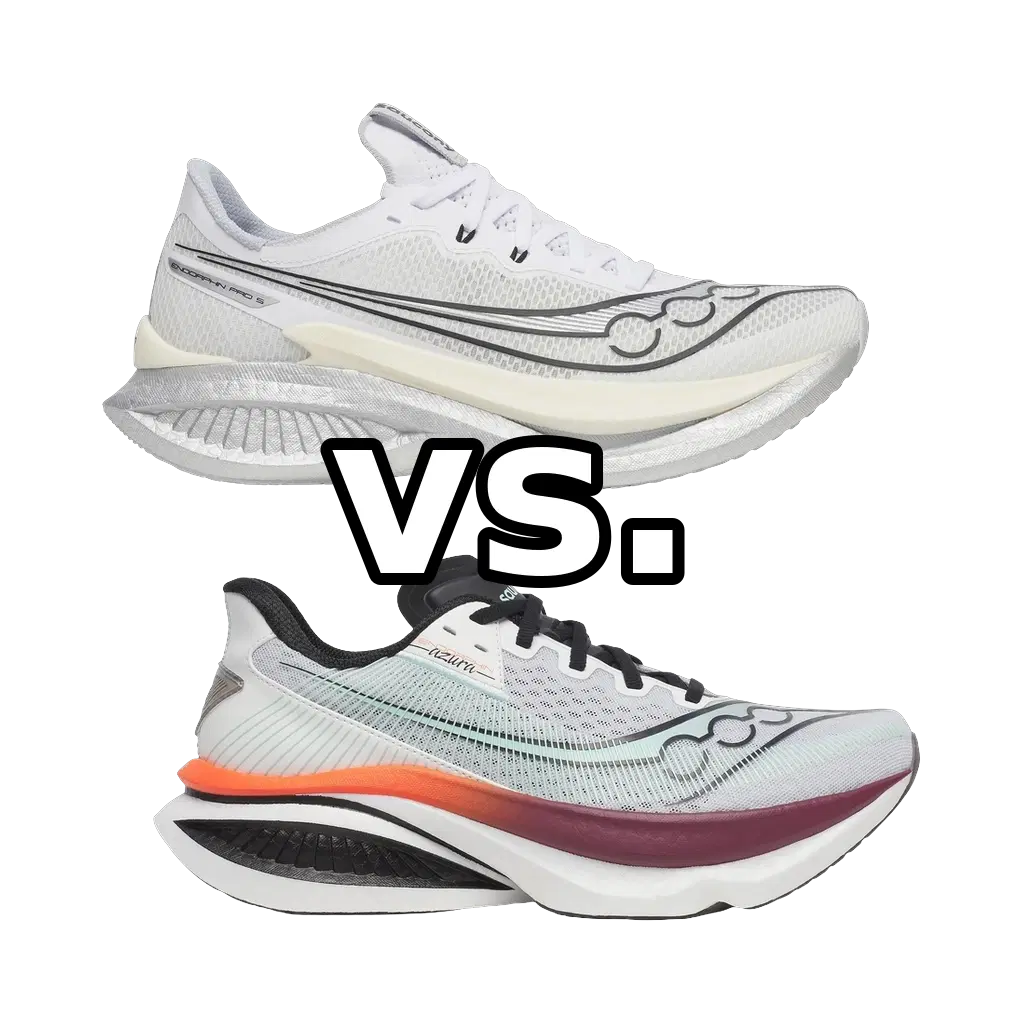
It comes down to how you'll use the shoe, not which is "better." Pick the Pro 5 if you want a genuine carbon racer for chasing fast times from 5K to marathon; pick the Azura if you want a softer, taller, plateless trainer that covers daily miles and tempo runs and can still stretch to the half and full. The clean move for many runners is to see them as complements — the Azura for training volume, the Pro 5 for race day — but if you can only have one, let your primary goal (racing fast versus training versatile) make the call.
Pace
6 of 6
Cushioning
5 of 6
Responsiveness
6 of 6
Stability
2 of 6
Drop
9 mm
Support
Neutral
Plate
Carbon
Distances
5K10KHalfMarathon
Pace
4 of 6
Cushioning
5 of 6
Responsiveness
5 of 6
Stability
3 of 6
Drop
8 mm
Support
Neutral
Plate
None
Distances
10KHalfMarathon
At a Glance
Saucony Endorphin Pro 5Saucony Endorphin Azura
Who Should Choose Each Shoe
Choose
Saucony Endorphin Pro 5
Choose the Endorphin Pro 5 if you're a competitive or aspiring-fast neutral runner who wants a single shoe to race everything from a 5K to a marathon and you're comfortable with a firm, aggressive, plated setup. It's the pick if you value the carbon-driven toe-off and a lighter, lower-profile racing feel, and you can commit to a quick cadence rather than ambling — this is a shoe that comes alive at goal pace and feels underused when you slow down. If your goal is a personal best on race day, this is the sharper tool.
Choose
Saucony Endorphin Azura
Choose the Endorphin Azura if you want one shoe to handle most of your week — steady daily miles, uptempo work, and long runs — without the rigid, all-or-nothing feel of a carbon racer. It suits intermediate to experienced neutral runners who like a soft, bouncy ride and want the extra stack height and protection (41/33) for higher mileage, accepting a bit more weight and less top-end snap in exchange for versatility. It's the better call if you'd rather have a do-everything trainer than a dedicated race-day shoe.
Head-to-Head
The defining difference is the plate: the Pro 5 runs a forked full-length carbon plate over a PWRRUN PB top layer and a supercritical PWRRUN HG base, which snaps you onto your toes with real urgency, while the Azura has no plate at all and leans purely on a full PWRRUN PB midsole for a soft, rolling rebound rather than a rigid pop. That changes the ride character completely — the Pro 5 is snappy and aggressive and genuinely wants to be run fast (it's dialed in around 3:00–3:30 min/km), whereas the Azura's transitions are smooth and relaxed and it feels most natural in the 4:30–5:15 min/km range for tempo and progression work. Stack and weight reinforce the split: the Azura sits taller and more protective at 41 mm heel / 33 mm forefoot, while the Pro 5 is lower and more connected at 37/28, yet it's still the lighter of the two at about 215 g versus the Azura's 241 g, thanks to its thin racing upper. Drop is effectively the same — a nominal 8 mm on both (the Pro 5 measuring closer to 9 mm) — so heel-to-toe geometry isn't a real differentiator. Both are neutral shoes with no added pronation control and both feel a touch tippy at slow jogging speeds because of their tall, soft platforms, though the Azura's slightly wider, plateless base is marginally more planted. On use case they overlap in the half and full marathon, but the Pro 5 extends down to the 5K and rewards a committed, quick cadence, while the Azura tops out as a "quick but relaxed" shoe rather than a razor-sharp racer.
Similar Comparisons
Hoka Clifton 10 vs Saucony Endorphin Azura
Nike Vaporfly 4 vs Saucony Endorphin Pro 5
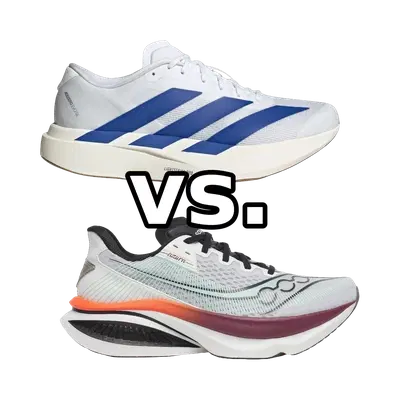
Adidas Adizero Evo SL vs Saucony Endorphin Azura
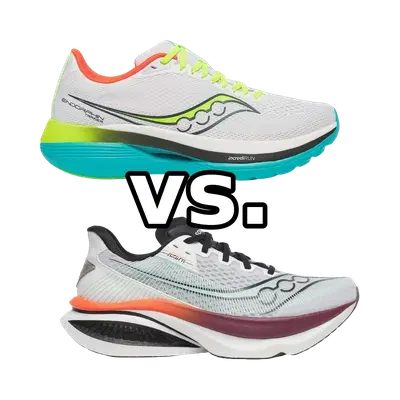
Saucony Endorphin Trainer vs Saucony Endorphin Azura
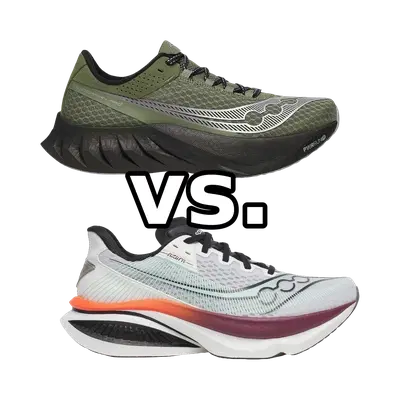
Saucony Endorphin Pro 4 vs Saucony Endorphin Azura
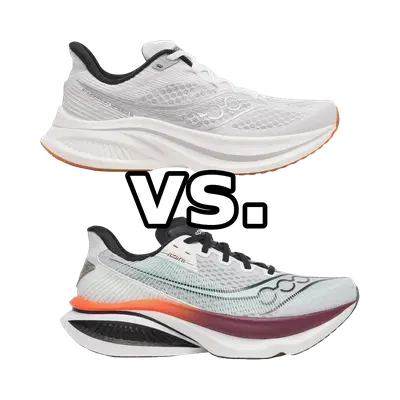
Saucony Endorphin Speed 5 vs Saucony Endorphin Azura
Saucony Endorphin Azura vs Saucony Ride 19
© 2026 longrunshoes.ai | All rights reserved.
Use of materials from this site is permitted only with proper attribution and a link to longrunshoes.ai.