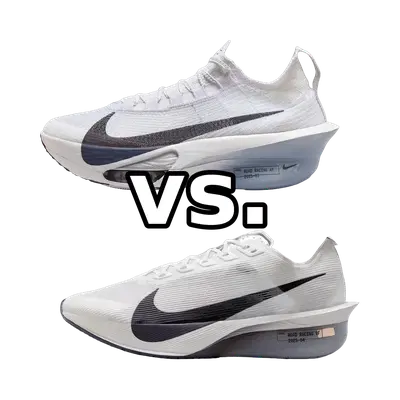
Nike Vaporfly 4 vs Saucony Endorphin Pro 5:
Which to Choose
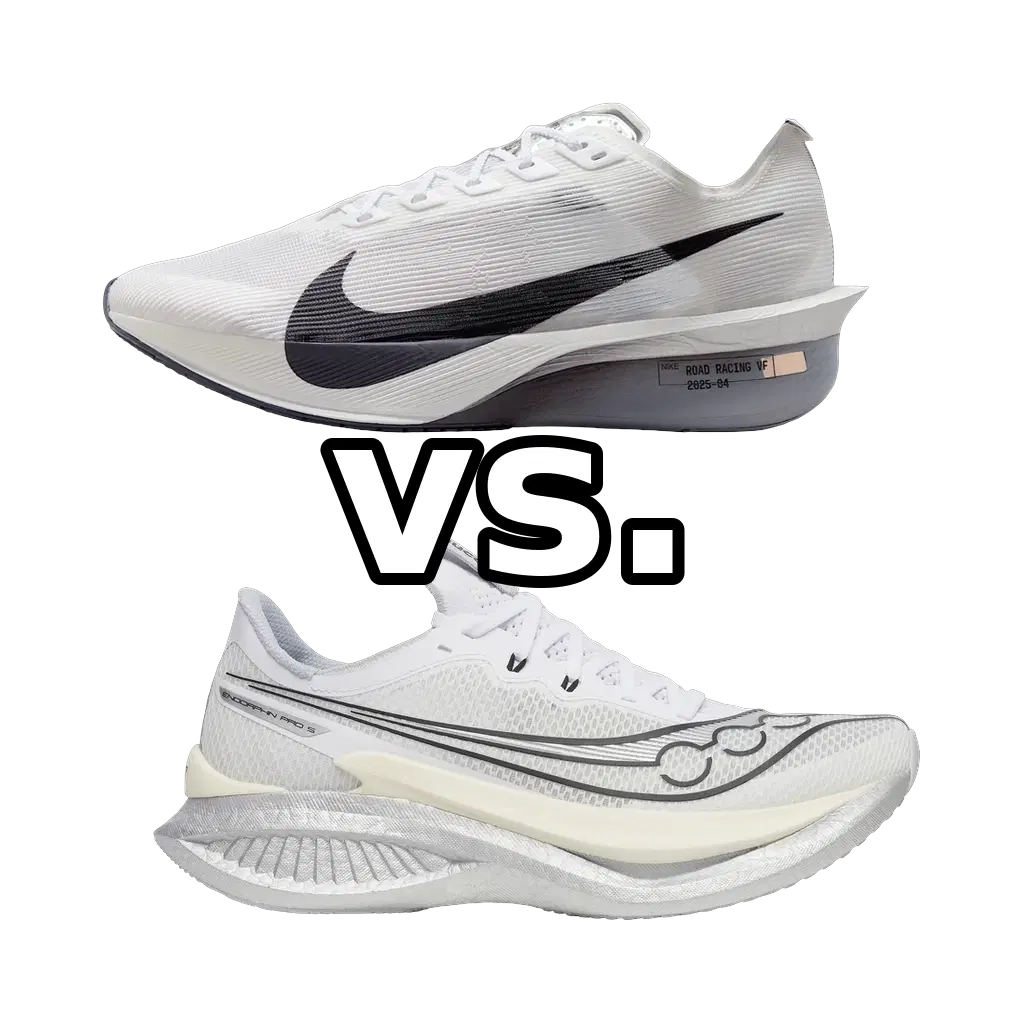
Verdict
It genuinely depends — but on ride character and distance, not on which is "better." Both are elite neutral carbon racers that will do the same jobs. Go Vaporfly 4 if you want the lightest shoe and a softer, springier ride tuned for the 10K-to-half; go Endorphin Pro 5 if you want a firmer, more rockered, one-shoe-does-everything racer that peaks over the half and full. If you can't decide, let weight preference break the tie: the Vaporfly is the noticeably lighter, plusher-feeling option, the Endorphin the firmer, more planted one.
Pace
6 of 6
Cushioning
5 of 6
Responsiveness
6 of 6
Stability
2 of 6
Drop
8 mm
Support
Neutral
Plate
Carbon
Distances
5K10KHalfMarathon
Pace
6 of 6
Cushioning
5 of 6
Responsiveness
6 of 6
Stability
2 of 6
Drop
9 mm
Support
Neutral
Plate
Carbon
Distances
5K10KHalfMarathon
At a Glance
Nike Vaporfly 4Saucony Endorphin Pro 5
Who Should Choose Each Shoe
Choose
Nike Vaporfly 4
Choose the Vaporfly 4 if outright lightness and a soft-but-snappy, springy ride are your priorities — it's the pick for the runner who lives in the 5K-to-half range, wants the most propulsive turnover at genuinely fast efforts, and doesn't mind that the featherweight upper and outsole trade away some durability. It especially suits someone who has raced in previous ZoomX Vaporflies and wants that plush, forward-rolling PEBA feel in its lightest, firmest iteration yet.
Choose
Saucony Endorphin Pro 5
Choose the Endorphin Pro 5 if you want one shoe to race everything and prefer a firmer, more aggressively rockered platform that rewards a committed, quick cadence — its dual PWRRUN PB and PWRRUN HG foams and forked plate feel most effortless over the half and full marathon. It's the better fit for the runner who likes a stiffer, more mechanically "driven" toe-off and is willing to carry a little more weight in exchange for that planted, urgent roll-through.
Head-to-Head
These two are genuinely close, so the differences that exist matter. The clearest gap is weight: the Vaporfly 4 comes in around 166–167g in a men's sample, while the Endorphin Pro 5 sits closer to 215g — a real, noticeable margin that makes the Nike feel more overtly featherweight underfoot and helps explain why it's often pitched as the purer 10K-to-half specialist. Drop is effectively a wash: roughly 8mm on the Vaporfly and 9mm on the Endorphin (Saucony markets it as 8mm), so neither will feel meaningfully more heel- or forefoot-biased than the other. The bigger character difference is in the midsole. Nike keeps it simple with a single slab of soft, lively ZoomX PEBA over a full-length carbon Flyplate, giving a plush-yet-springy, forward-tipping roll that comes alive at your fastest sustainable efforts. Saucony runs a dual-foam stack — a PWRRUN PB (PEBA) top layer over a supercritical PWRRUN HG base — paired with a forked, slotted full-length carbon plate, which reads as a touch firmer and more aggressively rockered, snapping you onto the toes with real urgency. Both share the same racing DNA: tall, narrow, low-stability neutral platforms that feel tippy and vague at jog pace and only make sense when you're pushing. Where they diverge is the sweet spot — the Vaporfly is most efficient in the 10K-to-half band, while the Endorphin's rocker feels most effortless over the half and full — but both are fully capable across all four distances.
© 2026 longrunshoes.ai | All rights reserved.
Use of materials from this site is permitted only with proper attribution and a link to longrunshoes.ai.