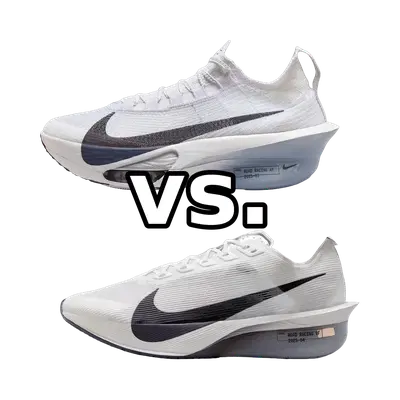
Nike Vaporfly 4 vs Hoka Rocket X 3:
Which to Choose
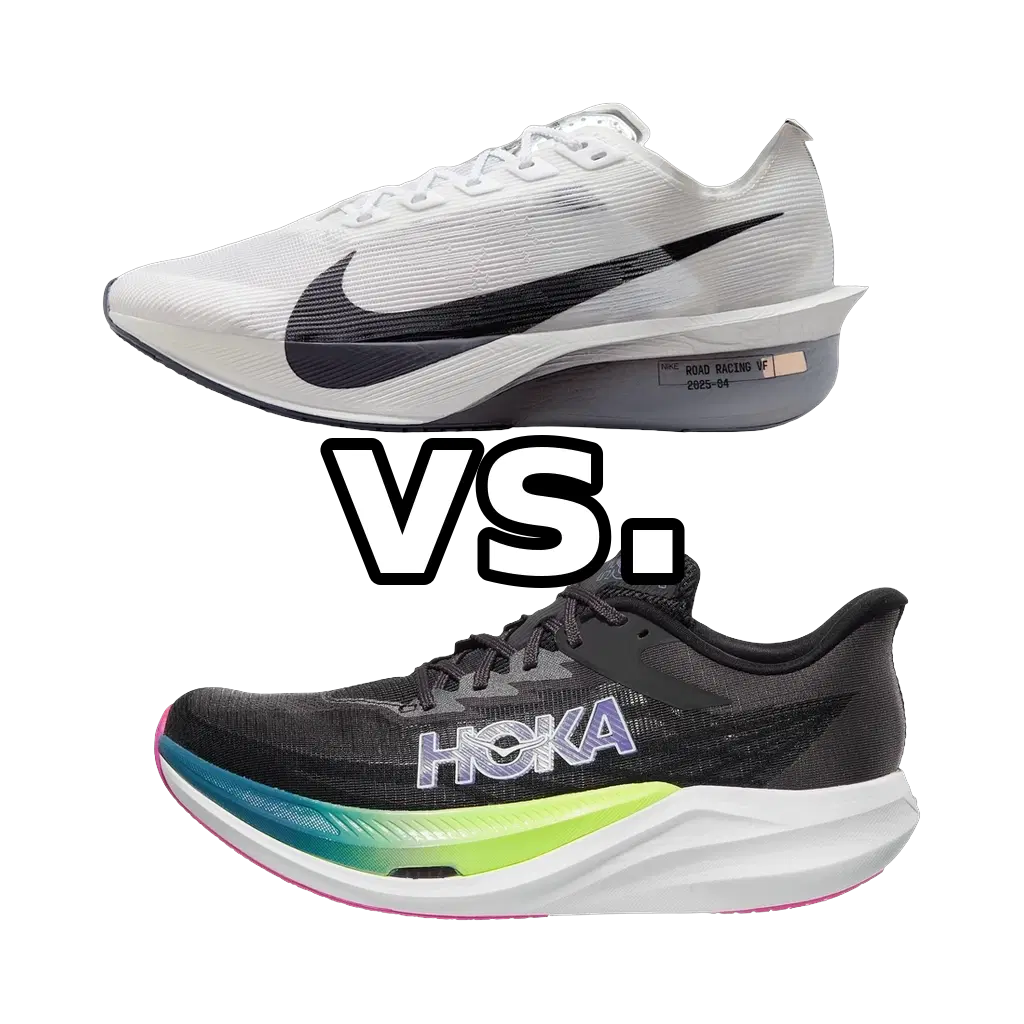
Verdict
It genuinely depends on distance and how much shoe you want. Go Vaporfly 4 if your racing skews shorter and you prioritize minimal weight and a firm, direct, close-to-the-ground feel; go Rocket X 3 if you want a taller, more protective, more versatile plate racer that covers the full 5K-to-marathon spread on a single pair — with the marathon in particular tilting toward the Hoka's extra cushioning, and the 5K–half toward the Nike's lightness.
Pace
6 of 6
Cushioning
5 of 6
Responsiveness
6 of 6
Stability
2 of 6
Drop
8 mm
Support
Neutral
Plate
Carbon
Distances
5K10KHalfMarathon
Pace
6 of 6
Cushioning
5 of 6
Responsiveness
6 of 6
Stability
2 of 6
Drop
7 mm
Support
Neutral
Plate
Carbon
Distances
5K10KHalfMarathon
At a Glance
Nike Vaporfly 4Hoka Rocket X 3
Who Should Choose Each Shoe
Choose
Nike Vaporfly 4
Choose the Vaporfly 4 if you're a competitive, efficient runner who wants the lightest possible race-day weapon and leans toward shorter, sharper efforts — 5K, 10K and half — where its sub-170 g weight and firm, snappy ZoomX feel let you turn over quickly. It's the pick if you prefer a lower, more grounded platform and a moderate, less aggressive rocker rather than a shoe that forces you into its roll. Runners who already trust a classic Vaporfly ride and want the fastest, most stripped-down option will feel right at home.
Choose
Hoka Rocket X 3
Choose the Rocket X 3 if you want one racer that does everything from 5K to marathon and you value long-run protection and a wider range of usable paces over ultimate lightness. Its taller 40/30 mm stack and dual-density PEBA give you more cushion for the back half of a marathon, and its firm, aggressively rockered ride suits runners who thrive on a strong, propulsive plate and a committed, forward-leaning midfoot-to-forefoot strike. It's the more versatile everyday racer of the two — ideal if you'd rather own a single super shoe for every distance.
Head-to-Head
Start with the platform, because that's the clearest difference. The Rocket X 3 is the taller, more substantial shoe at a 40/30 mm stack, while the Vaporfly 4 runs lower and leaner at 35/29 mm — so the Hoka gives you more foam and more long-run protection, and the Nike sits you closer to the ground with a more grounded, classic feel. Weight goes the other way and it's a real gap, not a rounding difference: the Vaporfly 4 comes in around 167 g in a men's US 9 versus roughly 220 g for the Rocket X 3 in the same size, making the Nike one of the lightest racers on the market and the more obviously eager shoe when you want to turn the legs over fast. Drop is close — 8 mm for the Vaporfly, 7 mm for the Rocket X 3 — so neither will feel dramatically more heel- or forefoot-biased. The bigger ride distinction is geometry and firmness: the Rocket X 3 uses a dual-density PEBA setup and a winged carbon plate that produce an aggressive, longitudinally stiff rocker that snaps into place once you hit tempo, whereas the Vaporfly's ZoomX is the softer, livelier foam paired with a more moderate toe spring and gentler roll. Both are low-stability, tall-and-narrow race platforms that feel tippy and vague at easy jogging paces and demand sound form — this is a common trait, not a knock on either. Where the Rocket X 3 edges ahead is versatility across a range of paces and long-haul protection thanks to the extra stack; where the Vaporfly 4 pulls ahead is outright lightness and a firmer, more direct short-course feel, with its sweet spot in the 10K-to-half range against the Rocket X 3's half-marathon sweet spot. Both trade some outsole and upper durability for speed, so neither is the shoe you rack up easy miles in.
Similar Comparisons
Hoka Rocket X 2 vs Hoka Rocket X 3
Nike Vaporfly 4 vs Saucony Endorphin Pro 5
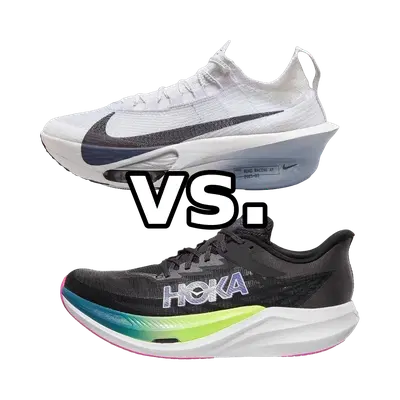
Nike Alphafly 3 vs Hoka Rocket X 3
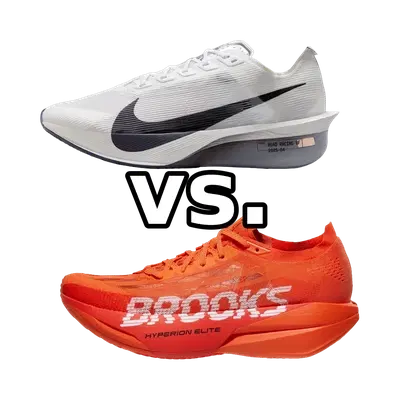
Nike Vaporfly 4 vs Brooks Hyperion Elite 6
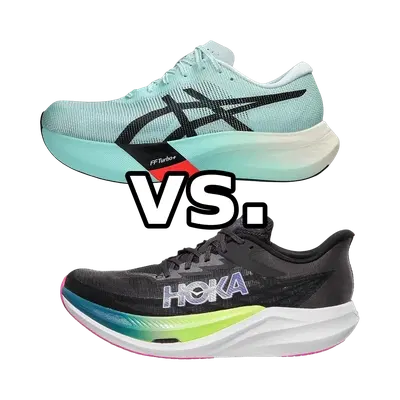
Asics Metaspeed Edge Paris vs Hoka Rocket X 3
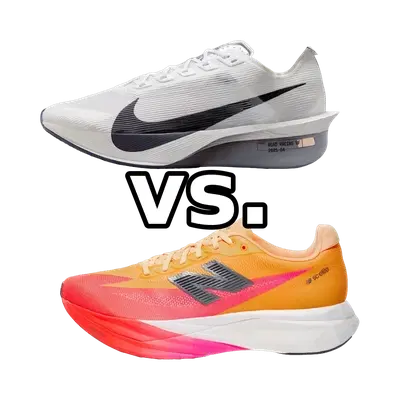
Nike Vaporfly 4 vs New Balance FuelCell SuperComp Elite v5
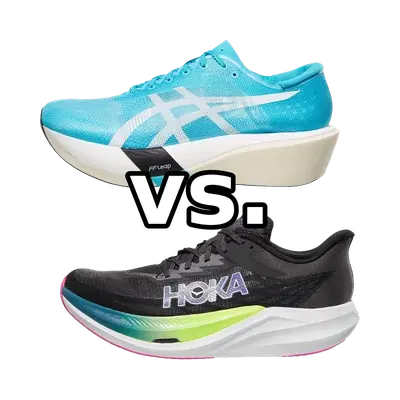
Asics Metaspeed Edge Tokyo vs Hoka Rocket X 3
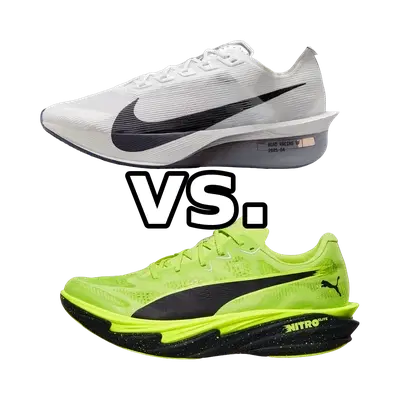
Nike Vaporfly 4 vs Puma Deviate Nitro Elite 4
© 2026 longrunshoes.ai | All rights reserved.
Use of materials from this site is permitted only with proper attribution and a link to longrunshoes.ai.