
Hoka Rocket X 2 vs Hoka Rocket X 3:
Which to Choose
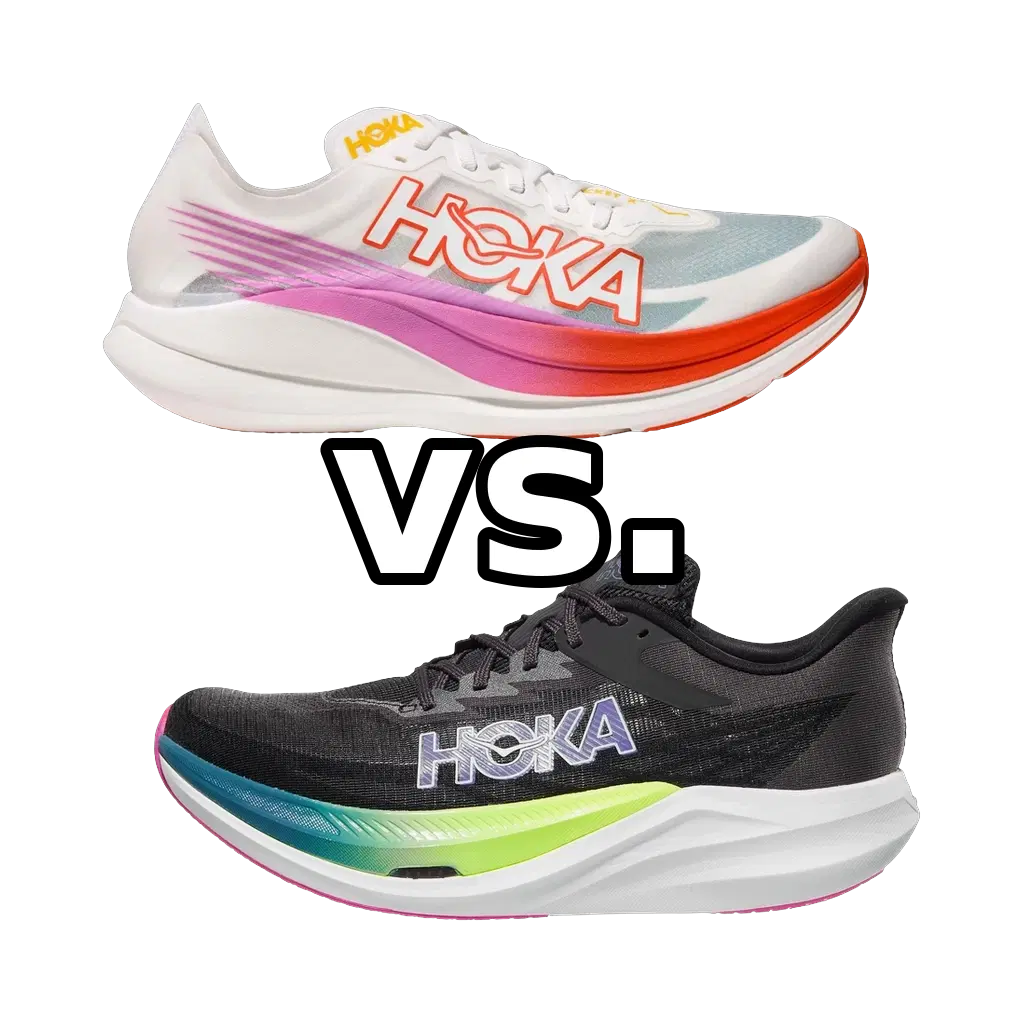
Verdict
This upgrade is about character, not capability — both are elite-level carbon racers with the same neutral platform, and neither replaces a daily trainer. If your X 2 still feels great and you love its firm, aggressive snap for 10K-to-half racing, there's no urgent reason to switch. Upgrade to the X 3 if you want more cushioning and comfort for long efforts, broader range down to the 5K, a slightly lighter shoe, and better grip and durability — at the cost of a milder rocker and a softer, less urgent ride.
Pace
6 of 6
Cushioning
4 of 6
Responsiveness
6 of 6
Stability
2 of 6
Drop
5 mm
Support
Neutral
Plate
Carbon
Distances
10KHalfMarathon
Pace
6 of 6
Cushioning
5 of 6
Responsiveness
6 of 6
Stability
2 of 6
Drop
7 mm
Support
Neutral
Plate
Carbon
Distances
5K10KHalfMarathon
At a Glance
Hoka Rocket X 2Hoka Rocket X 3
Who Should Choose Each Shoe
Choose
Hoka Rocket X 2
Choose the Rocket X 2 if you're a fast, efficient racer who prizes a firm, snappy, immediate rocker and wants the most propulsive, urgent feel underfoot for 10K to marathon efforts, with the half as its sweet spot. It rewards a confident, quick-turnover stride and runners who prefer a lower 5 mm drop that keeps them planted over the plate. If you already own and love the X 2 and race primarily at those distances, its firmer ride is a specific character you may not want to give up.
Choose
Hoka Rocket X 3
Choose the Rocket X 3 if you want one racer that covers everything from a fast 5K to marathon day, and you value a little more cushioning (40 mm heel, 5/6), a plusher upper, and better outsole grip and durability. It suits runners who want a softer, slightly more forgiving ride for longer efforts without abandoning the plated pop, and who don't mind a milder rocker and a slightly higher 7 mm drop. It's also the better pick for X 2 owners who found the older shoe a touch harsh over marathon distance.
Head-to-Head
Start with what's identical: both are neutral (stability 2/6), both feel tippy and unsettled at easy paces on their tall, narrow platforms, and both come alive only once you're at a genuine racing effort around 3:00–3:20 min/km. From there they diverge. The X 3 carries a taller heel (a 40 mm stack versus roughly 36 mm on the X 2) and a higher cushioning rating (5/6 vs 4/6), so there's more foam underfoot for long efforts, and it does this while coming in a touch lighter (the X 3 lands at about 220 g for a men's US 9). The plate is the biggest change in character: the X 2 uses a stiffer plate that snaps back hard and drives a more prominent, faster-feeling rocker, whereas the X 3's redesigned winged plate is more flexible, giving a milder, more relaxed rocker and a softer overall ride. Drop climbs from 5 mm on the X 2 to 7 mm on the X 3, easing you into the forefoot a bit more gently. The X 3 also gets a plusher warp-knit upper and a fuller sticky-rubber outsole for better grip and durability, where the X 2 leaves more foam exposed to save weight and wears faster. Net effect: the X 2 feels firmer and more urgent underfoot — ideal when you want maximum snap — while the X 3 trades a little of that raw pop for cushioning, comfort, and range, extending its sweet spot down to the 5K and up through the marathon (the X 2 starts at the 10K).

© 2026 longrunshoes.ai | All rights reserved.
Use of materials from this site is permitted only with proper attribution and a link to longrunshoes.ai.