Asics Metaspeed Edge Tokyo vs Hoka Rocket X 3:
Which to Choose
Verdict
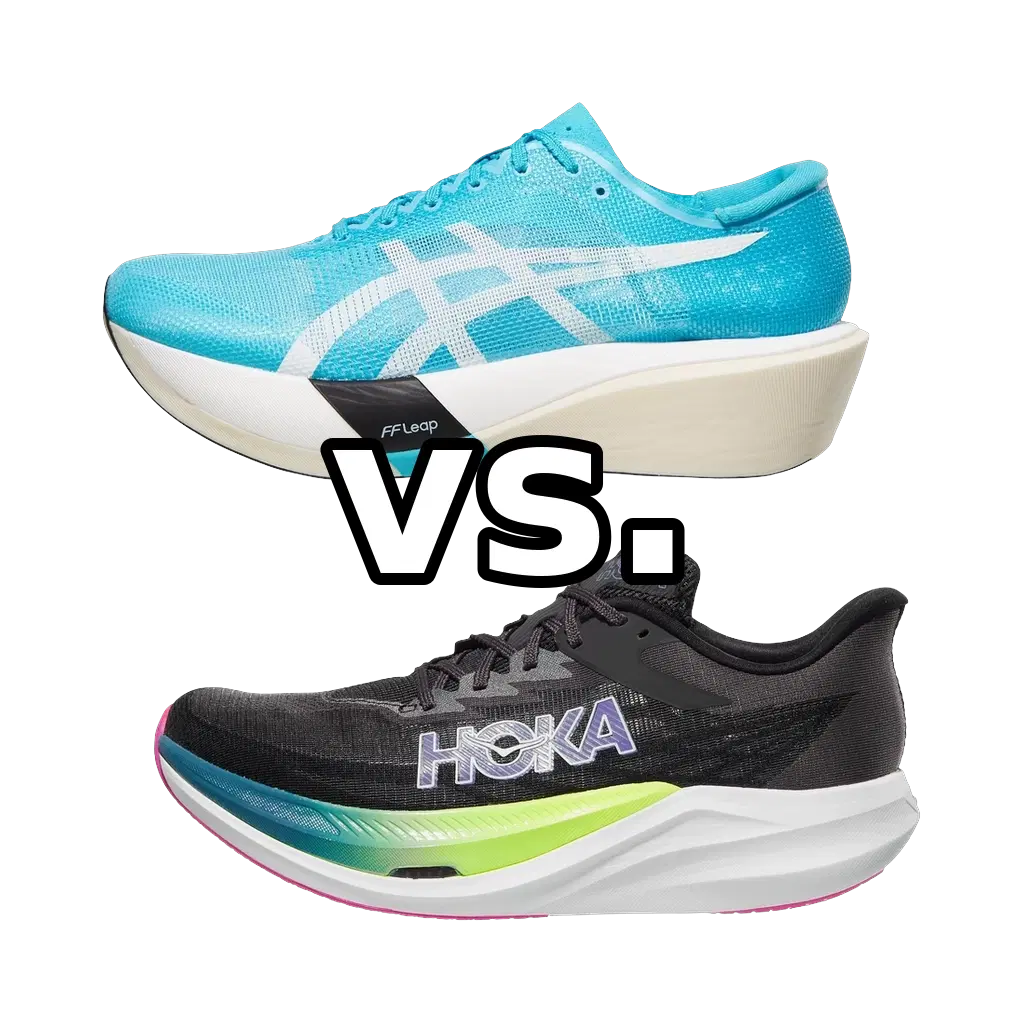
Both are excellent neutral carbon supershoes with near-identical geometry, so the decision comes down to ride and weight rather than capability. Go with the Metaspeed Edge Tokyo if you want the lightest, liveliest, most propulsive tool for fast racing and you strike on the forefoot; go with the Rocket X 3 if you want a firmer, more protective, do-it-all racer that shines at the half and doesn't mind the extra ~60g. It genuinely depends on whether you prioritize featherweight snap (Edge) or versatile, planted stability of feel over distance (Rocket X 3).
Pace
6 of 6
Cushioning
5 of 6
Responsiveness
6 of 6
Stability
2 of 6
Drop
7 mm
Support
Neutral
Plate
Carbon
Distances
5K10KHalfMarathon
Pace
6 of 6
Cushioning
5 of 6
Responsiveness
6 of 6
Stability
2 of 6
Drop
7 mm
Support
Neutral
Plate
Carbon
Distances
5K10KHalfMarathon
At a Glance
Asics Metaspeed Edge TokyoHoka Rocket X 3
Who Should Choose Each Shoe
Choose
Asics Metaspeed Edge Tokyo
Choose the Metaspeed Edge Tokyo if you're a competitive, experienced racer — especially a midfoot or forefoot striker — who wants the lightest, most eager shoe possible for chasing PBs and can reliably hold a fast, committed pace. Its softer, snappier A-TPU forefoot and feathery build make it the pick for runners who want maximum liveliness and rebound and don't mind a minimal, breathable racing upper that prioritizes speed over long-haul durability. If your races are all-out efforts and every gram counts, this is the more specialized weapon.
Choose
Hoka Rocket X 3
Choose the Rocket X 3 if you want one carbon racer that confidently covers everything from a fast 5K to marathon day and you value a firmer, more protective, race-tuned ride over outright softness. It suits confident recreational racers through competitive amateurs who like a substantial, planted feel underfoot and a punchy winged-plate rocker that clicks in at tempo — and who'd rather carry a bit more shoe in exchange for that reassuring cushion on long efforts. It's the more versatile everyday racer of the two.
Head-to-Head
Start with the numbers that actually diverge. The Metaspeed Edge Tokyo comes in at a measured 159g (men's US 9), which puts it among the very lightest supershoes made, while the Rocket X 3 lands at 220g — a roughly 60g difference you feel on every stride at the end of a hard race. Both build to about 40mm at the heel and both measure close to a 7mm drop, so it isn't a case of one being a taller, more cushioned shoe; the underfoot volume is comparable, and the Edge is simply doing it with less material. The foams tell the other half of the story: the Edge pairs a soft, bouncy A-TPU (FF Leap) forefoot over a firmer FF Turbo+ heel for a lively, rolling ride that compresses and snaps back when you're up on your toes, whereas the Rocket X 3's dual-density PEBA reads firmer and more race-tuned — protective and quick rather than plush or pillowy. Both use a full-length carbon plate to drive an aggressive rocker (Hoka's is a distinctive "winged" plate), both reward a midfoot-to-forefoot strike, and both turn tippy and a little unstable at easy paces on their narrow platforms, so neither is a daily trainer or recovery cruiser. Their pace windows overlap almost exactly (roughly 3:00–3:30 min/km), but their sweet spots lean differently: the Edge is happiest in genuinely fast road racing where you can stay glued to the plate, while the Rocket X 3 is at its best over the half and positions itself as the more versatile do-everything racer.
Similar Comparisons
Hoka Rocket X 2 vs Hoka Rocket X 3
Asics Metaspeed Sky Tokyo vs Asics Metaspeed Edge Tokyo
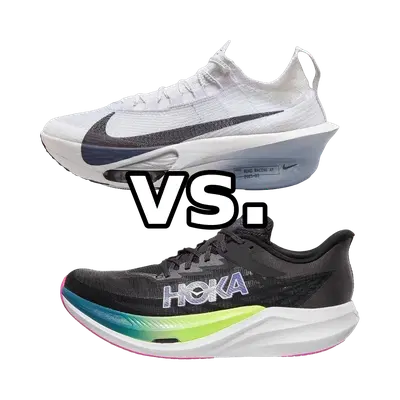
Nike Alphafly 3 vs Hoka Rocket X 3
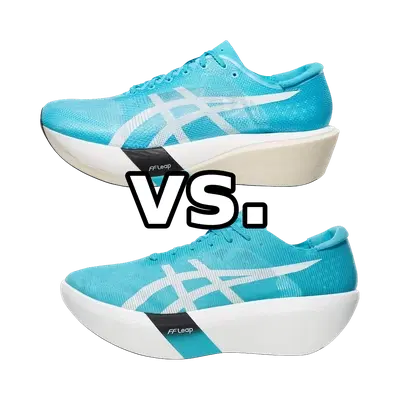
Asics Metaspeed Edge Tokyo vs Asics Metaspeed Ray
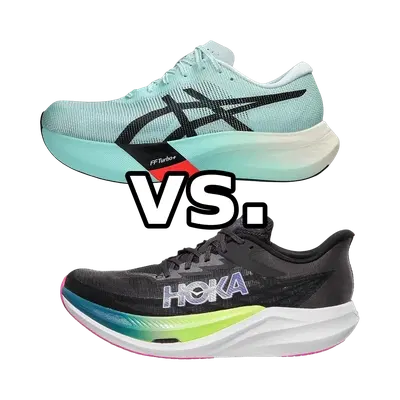
Asics Metaspeed Edge Paris vs Hoka Rocket X 3
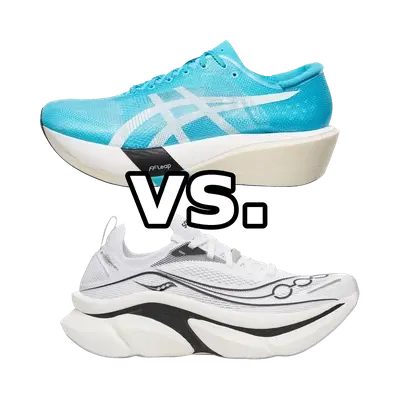
Asics Metaspeed Edge Tokyo vs Saucony Endorphin Elite 3
Nike Vaporfly 4 vs Hoka Rocket X 3
Nike Alphafly 3 vs Asics Metaspeed Edge Tokyo
© 2026 longrunshoes.ai | All rights reserved.
Use of materials from this site is permitted only with proper attribution and a link to longrunshoes.ai.