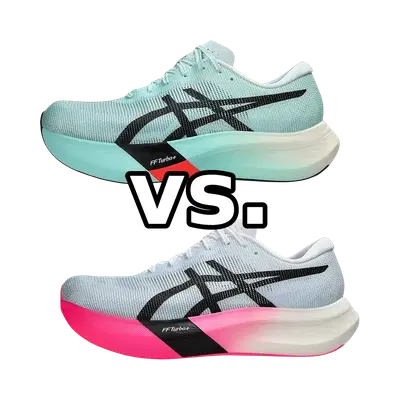
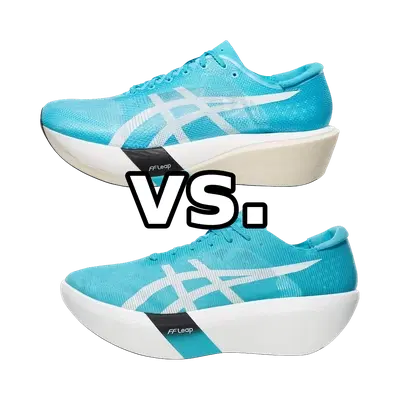
Asics Metaspeed Edge Paris vs Asics Metaspeed Edge Tokyo:
Which to Choose
Verdict
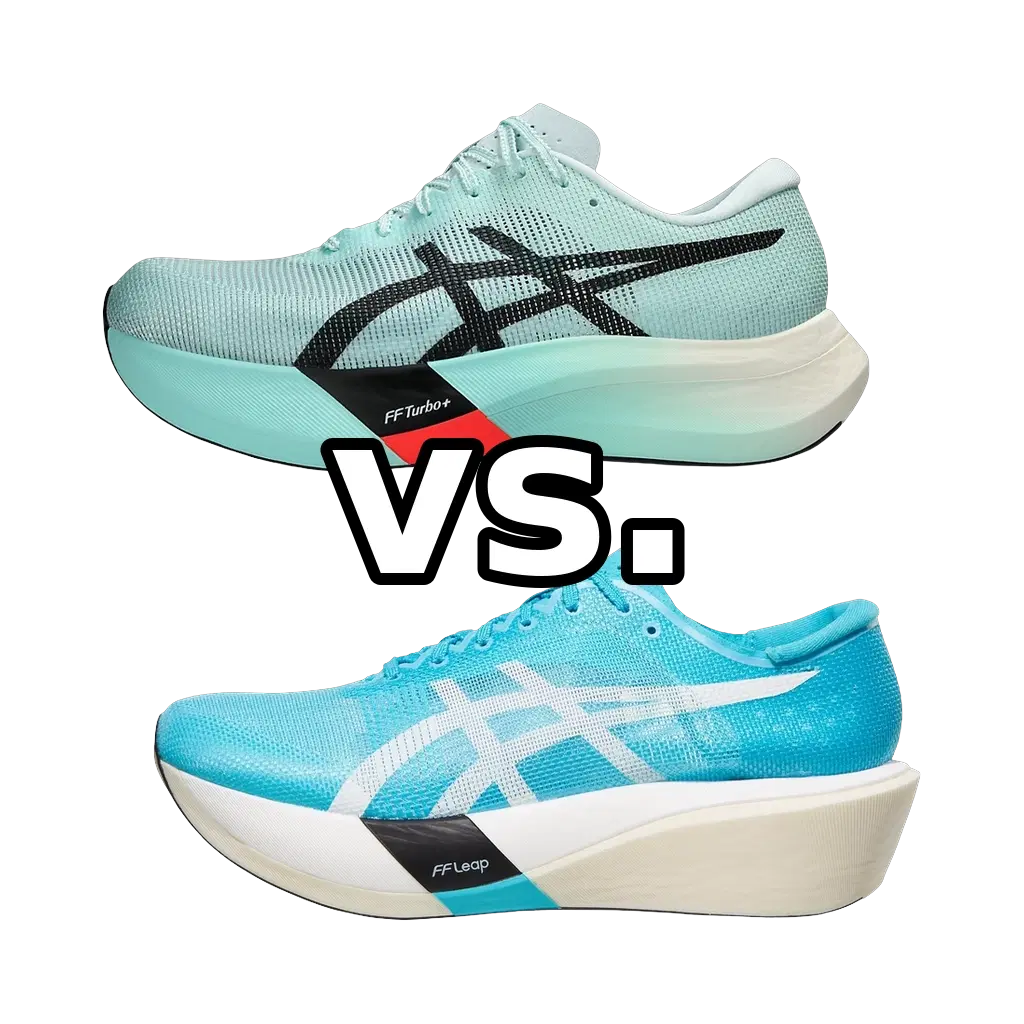
These are close cousins, but the Tokyo is a real step forward, not a repaint: lighter, with a softer and bouncier A-TPU forefoot and a wider useful range from 5K to marathon. If you're a dedicated marathon specialist who loves the Paris's firm, planted PEBA ride and low 5mm drop, there's no reason to feel outdated. But for most Edge Paris owners — especially forefoot strikers, runners who race multiple distances, or anyone who'll appreciate roughly 26 fewer grams and a more forgiving forefoot — the Tokyo is the one to upgrade to.
Pace
6 of 6
Cushioning
5 of 6
Responsiveness
6 of 6
Stability
2 of 6
Drop
5 mm
Support
Neutral
Plate
Carbon
Distances
HalfMarathon
Pace
6 of 6
Cushioning
5 of 6
Responsiveness
6 of 6
Stability
2 of 6
Drop
7 mm
Support
Neutral
Plate
Carbon
Distances
5K10KHalfMarathon
At a Glance
Asics Metaspeed Edge ParisAsics Metaspeed Edge Tokyo
Who Should Choose Each Shoe
Choose
Asics Metaspeed Edge Paris
Choose the Metaspeed Edge Paris if you're a steady, powerful "strength" runner whose racing lives at the half and full marathon, and you like a firm, planted, road-connected feel underfoot rather than a soft, bouncy forefoot. Its single-foam FF Turbo Plus PEBA setup and lower 5mm drop reward an even, grinding rhythm, and if you already own a pair you're comfortable and fast in, there's no urgent flaw pushing you off it. It's the pick for the marathoner who wants firm propulsion over plushness and doesn't need to drop down to 5K/10K speeds.
Choose
Asics Metaspeed Edge Tokyo
Choose the Metaspeed Edge Tokyo if you want the more complete version of the same idea: noticeably lighter at 159g, softer and springier through the forefoot thanks to the FF Leap A-TPU foam, and genuinely happy racing anything from 5K to the marathon. It suits midfoot and forefoot strikers especially — the slightly higher measured drop and eager forefoot rebound reward staying up on your toes and committing to pace. For a current Paris owner, this is the upgrade worth making if you race across a range of distances, want the weight savings, or prefer a more forgiving, rolling ride without giving up the plate's snap.
Head-to-Head
Start with the platform they share: both run a full-length carbon plate under a tall, narrow neutral geometry, both score 2/6 for stability, and both feel tippy and a little unremarkable if you shuffle — they only come alive once you're truly on pace. The differences are in materials and mass. The Paris is built entirely on FF Turbo Plus PEBA, a lively but deliberately firm race foam that keeps you connected to the road; the Tokyo splits its midsole, dropping softer, bouncier FF Leap (A-TPU) superfoam into the forefoot over a firmer FF Turbo+ heel, so it compresses and snaps back more eagerly up front while keeping crisp heel transitions. That makes the Tokyo the more forgiving and rolling of the two through the forefoot without losing snap. Weight is the other big lever: at a measured 159g in a men's US 9 the Tokyo is one of the lightest supershoes made, roughly 26g under the Paris's ~185g at the same size — a difference you feel in the back half of a race. Stack is close, with the Paris around 39.5mm heel / 34.5mm forefoot and the Tokyo about 38.9mm / 32.0mm, so the Tokyo actually sits a touch lower and closer to the ground up front. Drop diverges too: the Paris runs the lower 5mm offset, while the Tokyo measures nearer 7mm (Asics still markets 5mm), a geometry that leans slightly more toward forefoot and midfoot strikers. Finally, range: the Paris is emphatically a half-and-full-marathon tool at its best around 3:00–3:20 min/km, whereas the Tokyo genuinely stretches from 5K through the marathon, making it the more versatile racer across the pace spectrum. The Tokyo also swaps to a razor-thin MOTIONWRAP 3.0 upper that prioritizes lightness — with the trade-off that this minimal build isn't chasing long-haul durability.
© 2026 longrunshoes.ai | All rights reserved.
Use of materials from this site is permitted only with proper attribution and a link to longrunshoes.ai.