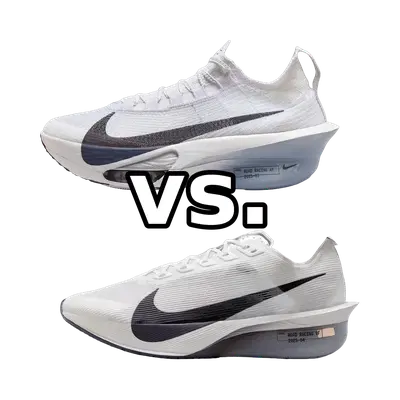
Nike Vaporfly 4 vs New Balance FuelCell SuperComp Elite v5:
Which to Choose
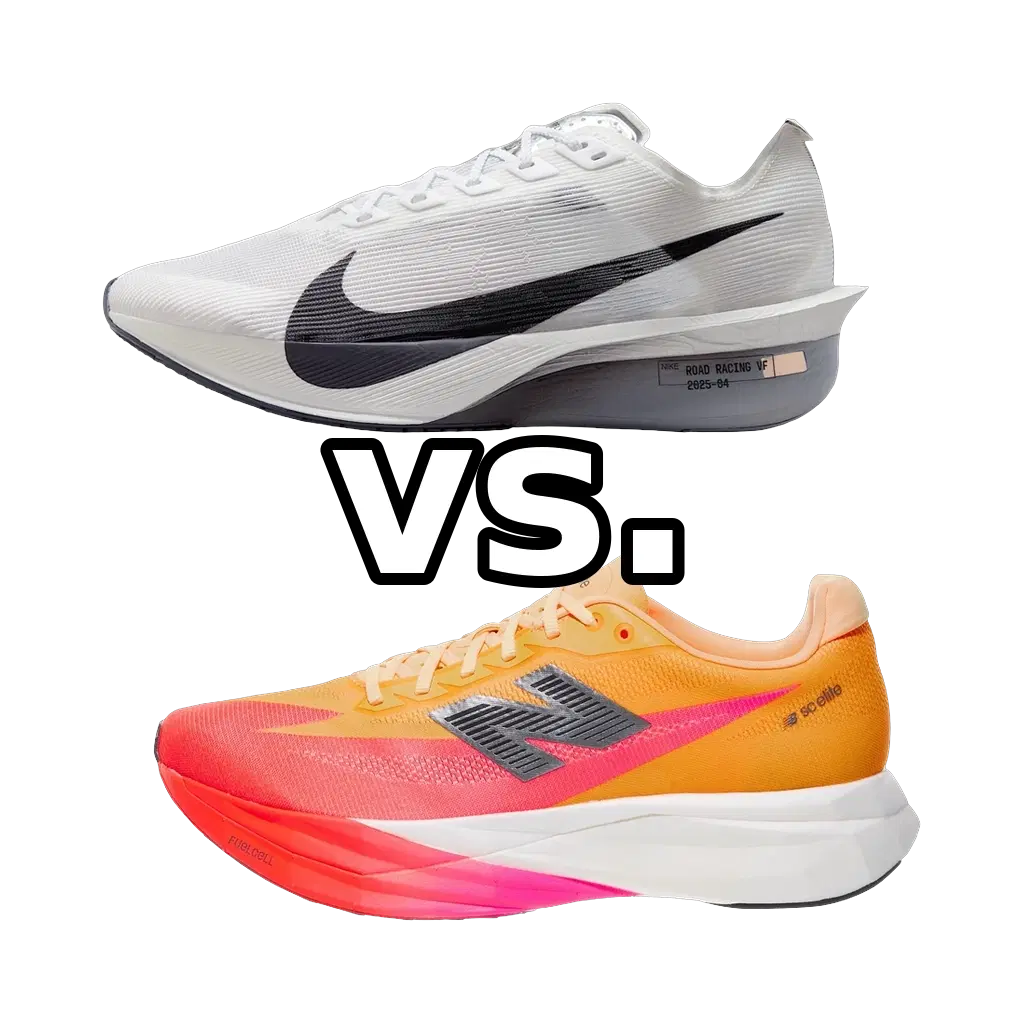
Verdict
It genuinely depends on your race — but on a concrete axis, not a coin flip. If you race a range of distances and want the lighter, lower, snappier shoe, go Vaporfly 4; if your goal is the marathon and you want the taller, more cushioned, more planted ride for the long haul, the SuperComp Elite v5 is built for exactly that. Shorter and more versatile leans Nike; longer and more grounded leans New Balance.
Pace
6 of 6
Cushioning
5 of 6
Responsiveness
6 of 6
Stability
2 of 6
Drop
8 mm
Support
Neutral
Plate
Carbon
Distances
5K10KHalfMarathon
Pace
6 of 6
Cushioning
5 of 6
Responsiveness
6 of 6
Stability
2 of 6
Drop
10 mm
Support
Neutral
Plate
Carbon
Distances
HalfMarathon
At a Glance
Nike Vaporfly 4New Balance FuelCell SuperComp Elite v5
Who Should Choose Each Shoe
Choose
Nike Vaporfly 4
Choose the Vaporfly 4 if you want one racer that covers everything from a 5K to a marathon and you value low weight and a quick, snappy turnover above maximum cushioning. It's the better pick for runners whose racing calendar spans shorter, faster efforts — its efficiency peaks in the 10K-to-half range — and for anyone who prefers a lower, more agile ride that changes pace instantly. If you like a minimal, close-to-the-road racing feel and want the lightest shoe on the line, this is your shoe.
Choose
New Balance FuelCell SuperComp Elite v5
Choose the SuperComp Elite v5 if the marathon (or a strong half) is your target and you want more shoe underfoot for those long, sustained efforts. Its taller 39mm heel and Energy Arc build feel more grounded and better cushioned deep into a race, and the roomier semi-gusseted upper suits runners who want a bit more toebox space over 26.2 miles. It's the more specialized long-distance racer for someone who holds a fast, steady effort and prioritizes late-race comfort over shaving grams.
Head-to-Head
Start with what they share: both are low-stability (2/6), neutral shoes with no pronation support, both pair a 100% PEBA foam with a full-length carbon plate, and both score maxed-out for pace and responsiveness with high-but-firm, racing-tuned cushioning rather than pillowy softness. Both also turn tippy and vague at jogging speed and only truly come alive when you're moving — these are race-day tools, not daily trainers. The real differences are geometry, weight, and range. The Vaporfly 4 is noticeably the lighter shoe, at roughly 167g in a men's US 9 versus 198g for the Elite v5, and it sits lower in the heel: both share a 29mm forefoot, but the Vaporfly stacks 35mm at the heel against the Elite v5's 39mm, which gives New Balance a taller rear and a slightly higher drop (around 8mm on the Vaporfly versus roughly 10mm on the Elite v5). That extra rear stack is why the Elite v5 feels more grounded and better cushioned over long miles, while the lighter, lower Vaporfly feels snappier and more eager to change pace. It shows up in their range, too: the Vaporfly is rated across 5K, 10K, half, and marathon with its sweet spot in the 10K-to-half window, whereas the Elite v5 is dialed specifically for the half and marathon, with the marathon as its true home. The Elite v5 also brings New Balance's Energy Arc — a concave plate with midsole voids for extra rebound — and a roomier, semi-gusseted woven upper, versus the Vaporfly's thinner, more minimal engineered mesh that trades some durability and toebox room for lower weight.
Similar Comparisons
New Balance FuelCell SuperComp Elite v4 vs New Balance FuelCell SuperComp Elite v5
Nike Vaporfly 4 vs Saucony Endorphin Pro 5
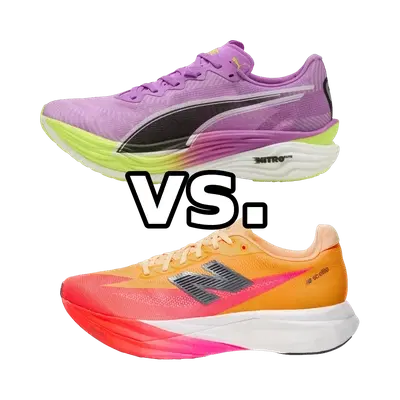
Puma Deviate Nitro Elite 3 vs New Balance FuelCell SuperComp Elite v5
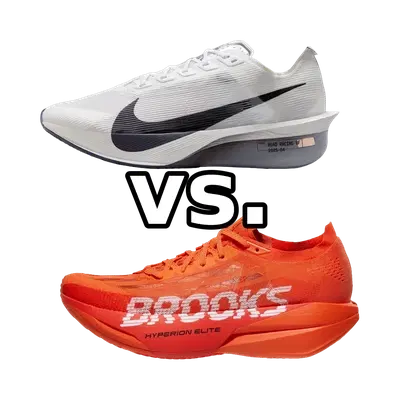
Nike Vaporfly 4 vs Brooks Hyperion Elite 6
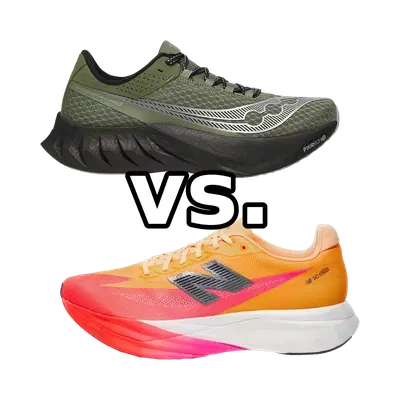
Saucony Endorphin Pro 4 vs New Balance FuelCell SuperComp Elite v5
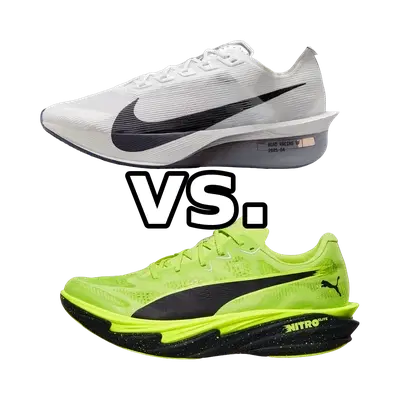
Nike Vaporfly 4 vs Puma Deviate Nitro Elite 4
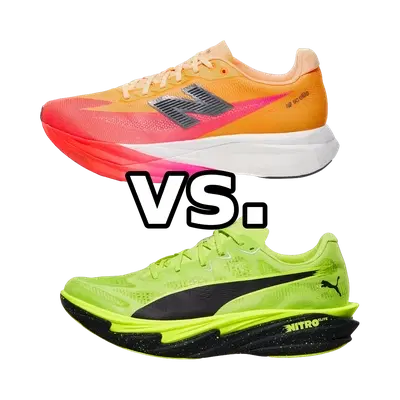
New Balance FuelCell SuperComp Elite v5 vs Puma Deviate Nitro Elite 4
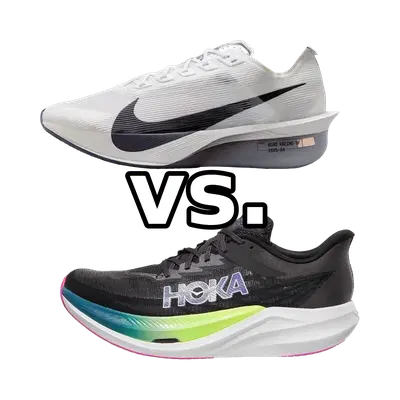
Nike Vaporfly 4 vs Hoka Rocket X 3
© 2026 longrunshoes.ai | All rights reserved.
Use of materials from this site is permitted only with proper attribution and a link to longrunshoes.ai.