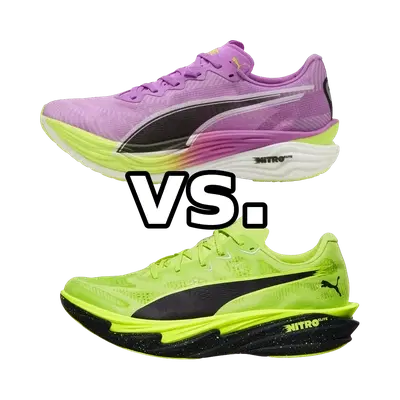
Puma Deviate Nitro Elite 3 vs New Balance FuelCell SuperComp Elite v5:
Which to Choose
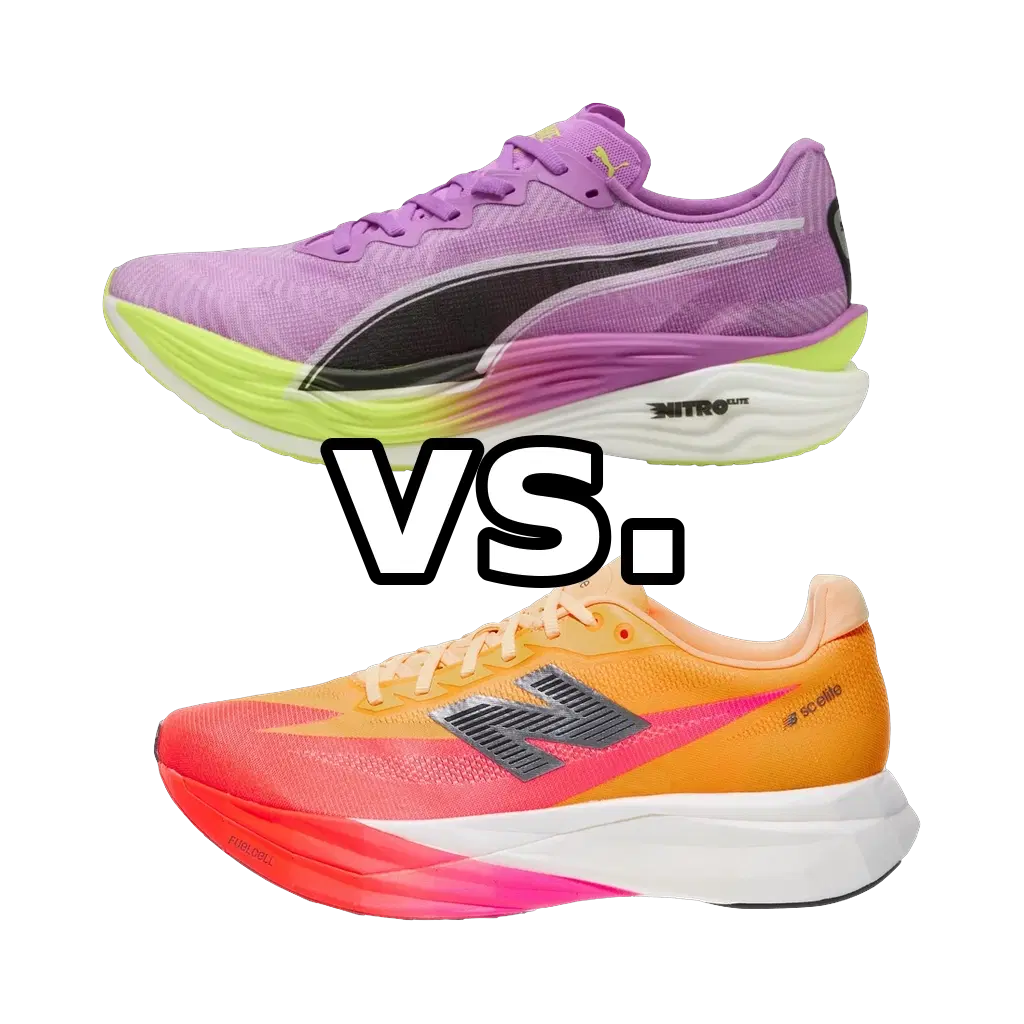
Verdict
These two are close enough that neither is "better" — pick on fit and distance. Go New Balance if you have a wider foot or a marathon-first season and want that extra long-run rebound; go Puma if you prefer a snug, locked-in race fit and want a single shoe that's equally happy at 10K, the half, or the marathon. If your feet are comfortable in either, the roomier New Balance is the safer long-race bet while the Puma is the sharper all-distance weapon.
Pace
6 of 6
Cushioning
5 of 6
Responsiveness
6 of 6
Stability
2 of 6
Drop
8 mm
Support
Neutral
Plate
Carbon
Distances
10KHalfMarathon
Pace
6 of 6
Cushioning
5 of 6
Responsiveness
6 of 6
Stability
2 of 6
Drop
10 mm
Support
Neutral
Plate
Carbon
Distances
HalfMarathon
At a Glance
Puma Deviate Nitro Elite 3New Balance FuelCell SuperComp Elite v5
Who Should Choose Each Shoe
Choose
Puma Deviate Nitro Elite 3
Choose the Puma Deviate Nitro Elite 3 if you want one racer that covers everything from 10K to the marathon and you race the half most often — its snappy, aggressive roll is at its best there. It suits runners with narrower feet or those who like a tight, minimal, locked-down race fit and don't mind a pared-back upper. If you value a sharp, eager ride and want versatility down into shorter, faster distances, this is the pick.
Choose
New Balance FuelCell SuperComp Elite v5
Choose the New Balance FuelCell SuperComp Elite v5 if the marathon is your target race — the Energy Arc midsole is tuned to keep returning energy over long, sustained efforts, and that's where it feels best. It's also the better call if you've found most super-shoes too narrow: the roomier toebox and semi-gusseted tongue give more forefoot space for feet that swell late in a long race. Runners who prioritize fit comfort over the last 10K of a marathon, and who want the slightly lighter shoe, will be happiest here.
Head-to-Head
Start with how closely matched these are: both use a 100%/near-100% PEBA midsole with a full-length carbon plate, both are tuned racing-firm rather than pillowy, and both are deliberately tippy at jogging pace because the tall, narrow race geometry is optimized for speed, not strolling. The numbers underline the overlap — the Puma lands around 204g and the New Balance around 198g in the men's lab weight, so the New Balance is marginally lighter but not in a way you'll feel on the run. Stack is effectively identical at roughly 39mm in the heel, with the Puma at about 28.6mm forefoot and the SuperComp at about 29mm, and while Puma lists an 8mm drop and New Balance 8–10mm, both actually measure closer to 10mm underfoot, giving a similar moderate heel-to-toe feel. The meaningful differences are two. First, fit: the Puma wears like a true race shoe — a thin, breathable engineered mesh on a slightly narrow platform that prioritizes a locked-in, minimal upper over roomy comfort, whereas the New Balance uses a woven nylon/polyester mesh with a semi-gusseted tongue and a noticeably roomier toebox than most racers. Second, distance bias: the Puma is the more versatile of the two, genuinely sharp from 10K through the marathon with the half as its sweet spot, while the SuperComp's Energy Arc (concave plate plus midsole voids for extra rebound) is tuned longer, peaking at the marathon. The Puma's ride feels aggressive and snappy — quick to roll and quick to reward a committed effort — while the SuperComp pairs that propulsive snap with a touch more long-haul rebound from the Energy Arc geometry.
Similar Comparisons

Nike Vaporfly 4 vs New Balance FuelCell SuperComp Elite v5
Saucony Endorphin Pro 4 vs Puma Deviate Nitro Elite 3
New Balance FuelCell SuperComp Elite v4 vs New Balance FuelCell SuperComp Elite v5
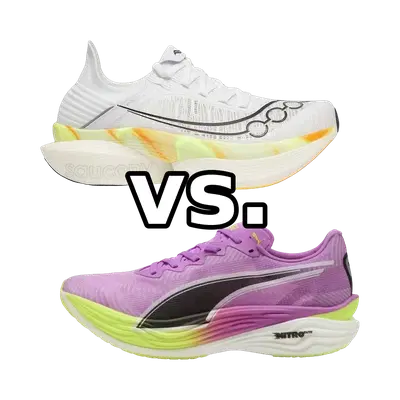
Saucony Endorphin Elite 2 vs Puma Deviate Nitro Elite 3
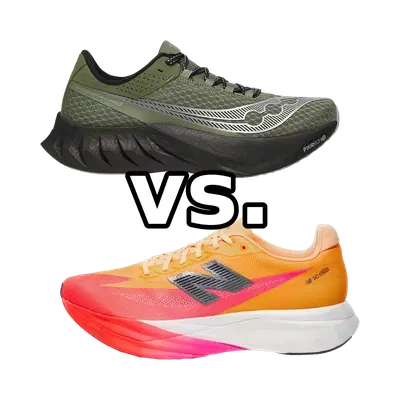
Saucony Endorphin Pro 4 vs New Balance FuelCell SuperComp Elite v5
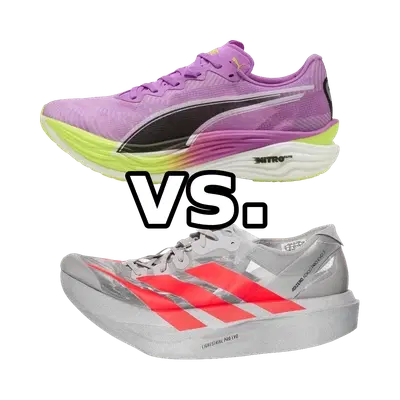
Puma Deviate Nitro Elite 3 vs Adidas Adizero Adios Pro Evo 2
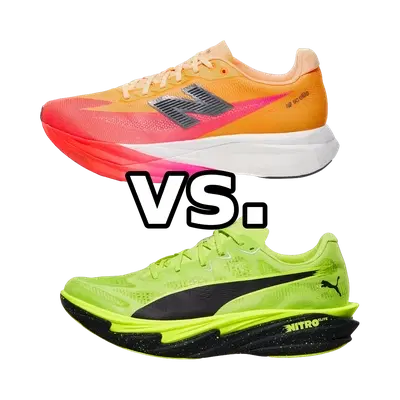
New Balance FuelCell SuperComp Elite v5 vs Puma Deviate Nitro Elite 4

Brooks Hyperion Elite 5 vs New Balance FuelCell SuperComp Elite v5
© 2026 longrunshoes.ai | All rights reserved.
Use of materials from this site is permitted only with proper attribution and a link to longrunshoes.ai.