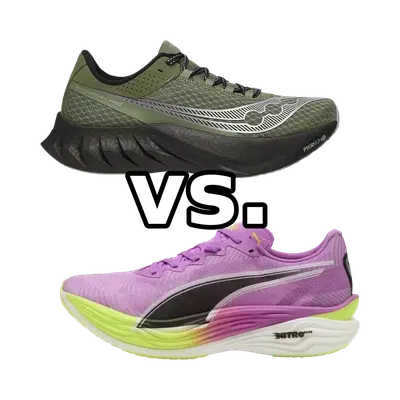
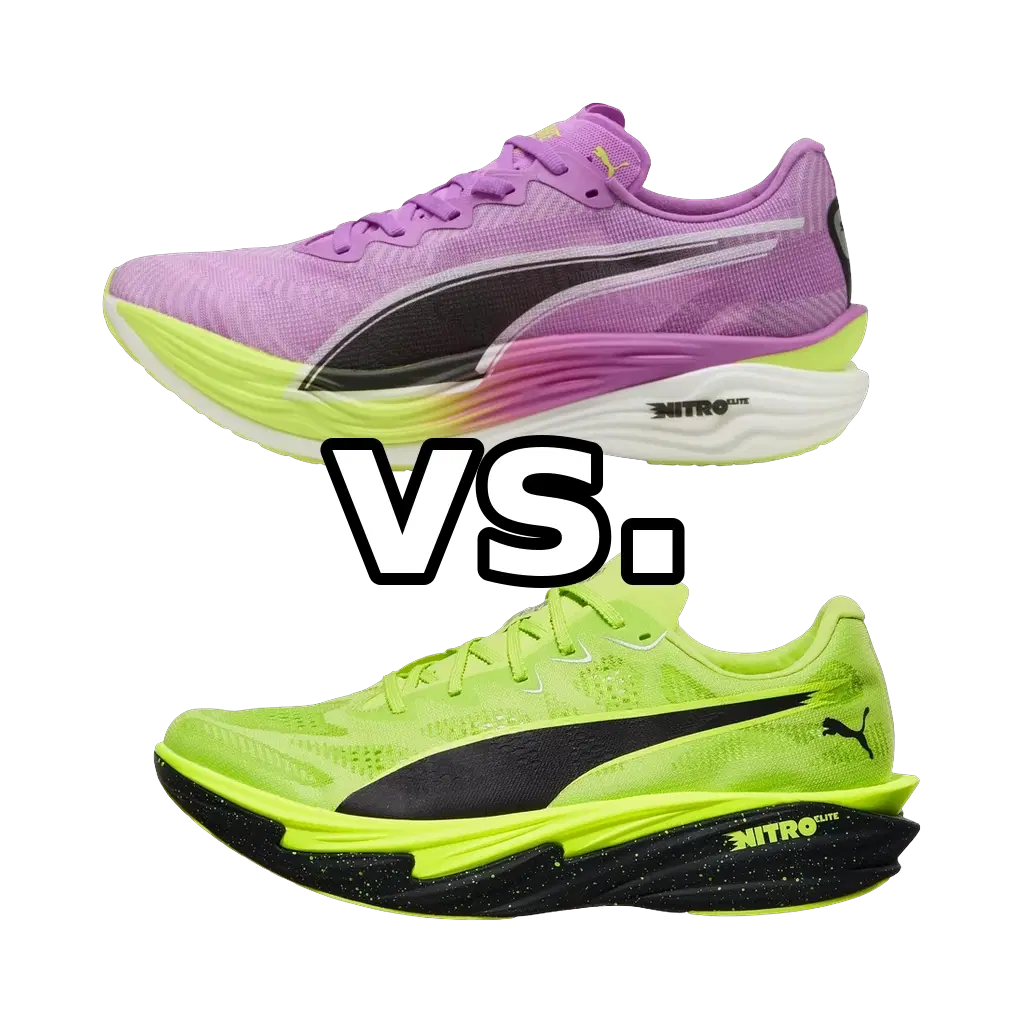
Puma Deviate Nitro Elite 3 vs Puma Deviate Nitro Elite 4:
Which to Choose
Verdict
For a new buyer the Elite 4 is the straightforward choice — it's the same shoe, lighter and slightly more refined. For an existing Elite 3 owner, the upgrade comes down to one thing: if that ~30g weight savings and the more locked-in upper matter to you for long races, upgrade; if your current pair fits well and you're happy with its ride, there's no change in geometry, stability, or pace ceiling compelling enough to force the switch.
Pace
6 of 6
Cushioning
5 of 6
Responsiveness
6 of 6
Stability
2 of 6
Drop
8 mm
Support
Neutral
Plate
Carbon
Distances
10KHalfMarathon
Pace
6 of 6
Cushioning
5 of 6
Responsiveness
6 of 6
Stability
2 of 6
Drop
9 mm
Support
Neutral
Plate
Carbon
Distances
10KHalfMarathon
At a Glance
Puma Deviate Nitro Elite 3Puma Deviate Nitro Elite 4
Who Should Choose Each Shoe
Choose
Puma Deviate Nitro Elite 3
The Elite 3 still makes sense for the experienced racer who already owns a pair, has dialed in the fit, and doesn't feel a ~30g weight penalty is worth changing what's working — it delivers the same aggressive carbon-and-PEBA ride and the same 10K-to-marathon range. It's also the pick if you preferred the feel of the original Nitro Elite PEBA and the engineered-mesh upper and want to keep racing on a known quantity rather than adapt to a new foam and lockdown.
Choose
Puma Deviate Nitro Elite 4
The Elite 4 is the better buy for almost any new purchase and the clearest upgrade for an Elite 3 owner who wants free speed: it keeps everything that made the line a sharp race-day weapon while cutting roughly 30g and adding a more secure ULTRAWEAVE upper, which pays off most in half and full marathons where fatigue compounds. Choose it if you're a strong midfoot striker who can hold a committed pace and want one of the lightest supershoes available — just not if you need any pronation support, because the low-stability platform is unchanged.
Head-to-Head
Ride character, geometry, and intended use are effectively the same shoe: both roll aggressively at speed, both feel lively and bouncy rather than soft, and both turn tippy and restless if you slow to a jog, because each sits on a tall, narrow, no-support platform tuned for 3:00–3:20 min/km efforts. The stacks are essentially unchanged (a touch under 40mm at the heel, high-20s at the forefoot on both) with a moderate 8–9mm drop, so you won't feel a different amount of foam or a different ramp underfoot. The headline difference is mass: the Elite 3 comes in around 204g in a men's US 9, while the Elite 4 drops to roughly 173g — a genuine ~30g cut that's a lot to shave from an already-light racer and is felt most in the back half of a marathon and in leg turnover during hard intervals. Puma also reworked the recipe: the Elite 3's Nitro Elite PEBA gives way to the Elite 4's NITRO ELITE aliphatic TPU/PEBA-type compound (returning roughly 77% energy at heel and forefoot), and the engineered mesh upper is replaced by a lighter, more locked-in ULTRAWEAVE. Responsiveness, pace ceiling, and best distances are identical on paper, so the Elite 4 isn't a different tool — it's the same tool made lighter and a little more refined, with the same low-stability caveat for runners who need structure.
Similar Comparisons

Nike Vaporfly 4 vs Puma Deviate Nitro Elite 4

Saucony Endorphin Elite 2 vs Puma Deviate Nitro Elite 3
Saucony Endorphin Pro 5 vs Puma Deviate Nitro Elite 4
Puma Deviate Nitro Elite 3 vs Adidas Adizero Adios Pro Evo 2
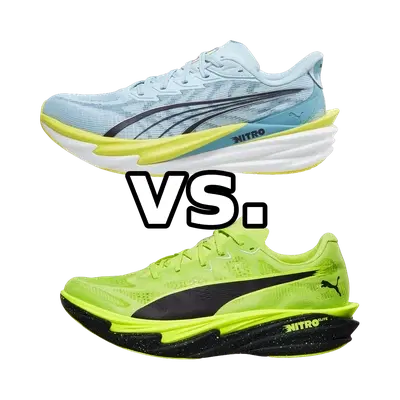
Puma Deviate Nitro 4 vs Puma Deviate Nitro Elite 4
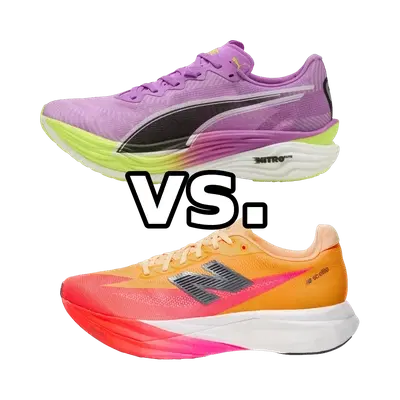
Puma Deviate Nitro Elite 3 vs New Balance FuelCell SuperComp Elite v5
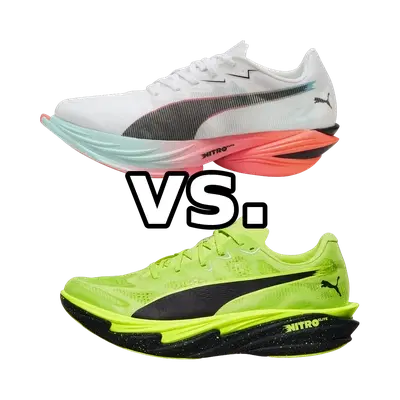
Puma Fast-R Nitro Elite 3 vs Puma Deviate Nitro Elite 4
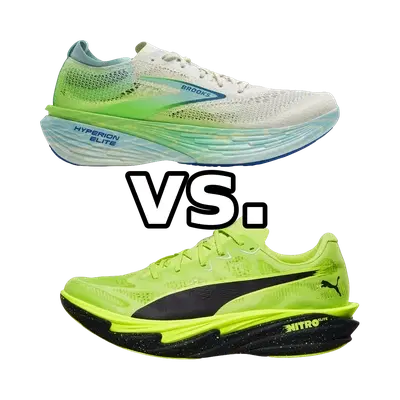
Brooks Hyperion Elite 4 PB vs Puma Deviate Nitro Elite 4
© 2026 longrunshoes.ai | All rights reserved.
Use of materials from this site is permitted only with proper attribution and a link to longrunshoes.ai.