
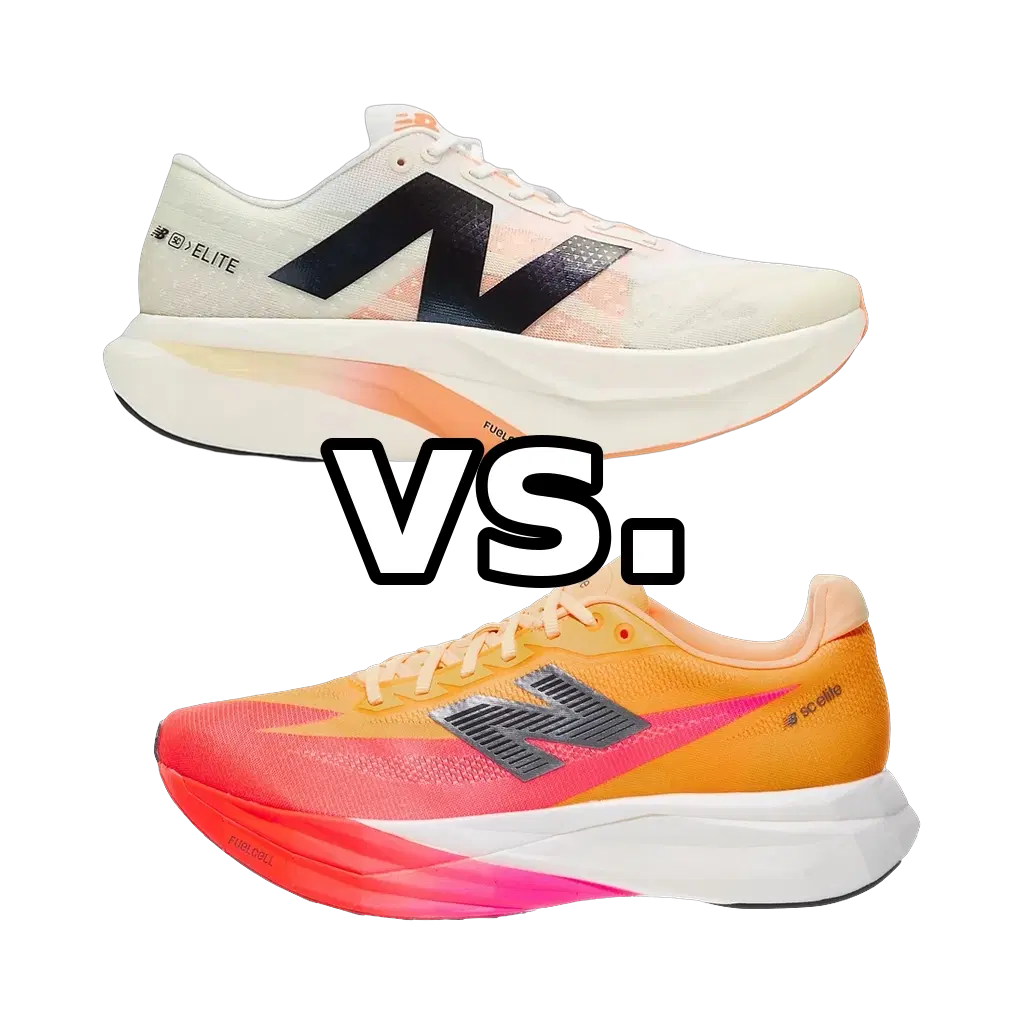
New Balance FuelCell SuperComp Elite v4 vs New Balance FuelCell SuperComp Elite v5:
Which to Choose
Verdict
It depends on what you loved about the v4. If you're a v4 owner who valued its plush, low-drop, comfort-leaning ride, the v5 is a genuine change in character — firmer, higher-drop, and less cushioned — so an upgrade isn't automatic. But if you want the same race mission delivered in a lighter, snappier, more aggressively propulsive package, the v5 is the clear step forward and the shoe most fast marathoners will prefer.
Pace
6 of 6
Cushioning
6 of 6
Responsiveness
6 of 6
Stability
2 of 6
Drop
4 mm
Support
Neutral
Plate
Carbon
Distances
HalfMarathon
Pace
6 of 6
Cushioning
5 of 6
Responsiveness
6 of 6
Stability
2 of 6
Drop
10 mm
Support
Neutral
Plate
Carbon
Distances
HalfMarathon
At a Glance
New Balance FuelCell SuperComp Elite v4New Balance FuelCell SuperComp Elite v5
Who Should Choose Each Shoe
Choose
New Balance FuelCell SuperComp Elite v4
Choose the v4 if you specifically prized its softer, more cushioned ride — its 6/6 cushioning and lower 4mm drop deliver a plusher, more even underfoot feel that some marathoners find easier on the legs over three-plus hours. It's the better pick for a runner who likes a low-drop racer, wants maximum protective foam deep into the marathon, and doesn't mind carrying slightly more weight for that comfort. If your form and footstrike suit a flatter, low-offset platform, there's no reason the v4 stops being a capable PB shoe just because a successor exists.
Choose
New Balance FuelCell SuperComp Elite v5
Choose the v5 if you want the more modern super-shoe feel: lighter on the foot at 198g, firmer and more responsive, with a higher heel-to-toe drop (~8–10mm) that rolls you forward more aggressively and suits a wider range of footstrikes. It's the stronger option for runners holding fast, sustained marathon efforts who want quick, snappy transitions over pillowy softness, and who'll appreciate the roomier toebox and semi-gusseted upper for long-distance comfort. This is the upgrade for a v4 owner chasing a sharper, racier ride rather than a cushioned one.
Head-to-Head
On paper the two shoes look nearly identical — both max out at 6/6 for pace and responsiveness, both are neutral platforms with low 2/6 stability, and both run a full-length carbon plate through 100% PEBA FuelCell foam aimed squarely at the half and marathon. The differences are in how that platform is tuned. The v5 is meaningfully lighter, at 198g for a men's US 9 versus roughly 230g for the v4 — a real weight saving you feel late in a race. The bigger change is geometry: the v4 sits at a low 4mm drop with a tall, evenly built stack (about 40mm heel / 36mm forefoot), while the v5 keeps a similar heel height (~39mm) but drops the forefoot to around 29mm, pushing the drop up to roughly 8–10mm. That extra heel bias, plus a stiffer forefoot plate and the concave-plate-and-voids Energy Arc setup, gives the v5 a firmer, snappier, more propulsive toe-off — reflected in its slightly lower 5/6 cushioning score against the v4's max 6/6. In practice the v4 leans softer and more cushioned, with a rolling, comfort-tilted ride, while the v5 feels racier and more planted through transitions but less plush underfoot. The v5 also gets a more accommodating upper — a woven nylon/polyester mesh with a semi-gusseted tongue and a roomier toebox — on a slightly narrower, more streamlined race platform. What doesn't change: both are tall, low-stability builds that feel tippy and wobbly at jogging pace and only come alive when you commit to genuine race effort, so neither is the shoe if you want a stable, everyday ride.
Similar Comparisons
Puma Deviate Nitro Elite 3 vs New Balance FuelCell SuperComp Elite v5
Saucony Endorphin Pro 4 vs New Balance FuelCell SuperComp Elite v5
New Balance FuelCell SuperComp Elite v5 vs Puma Deviate Nitro Elite 4

Brooks Hyperion Elite 5 vs New Balance FuelCell SuperComp Elite v5
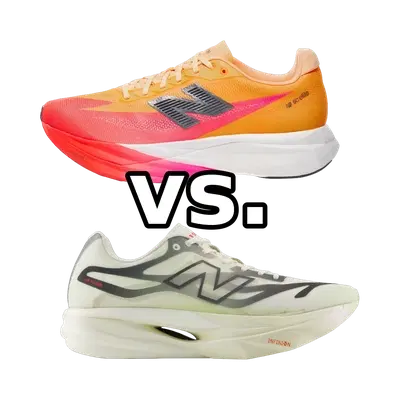
New Balance FuelCell SuperComp Elite v5 vs New Balance FuelCell SuperComp Elite v6
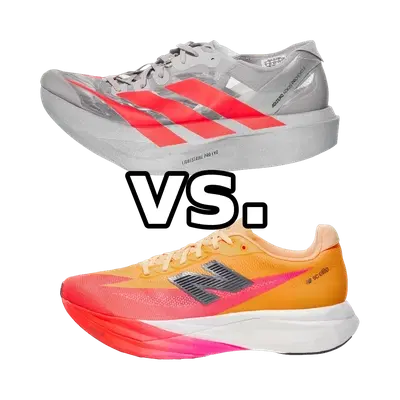
Adidas Adizero Adios Pro Evo 2 vs New Balance FuelCell SuperComp Elite v5
© 2026 longrunshoes.ai | All rights reserved.
Use of materials from this site is permitted only with proper attribution and a link to longrunshoes.ai.