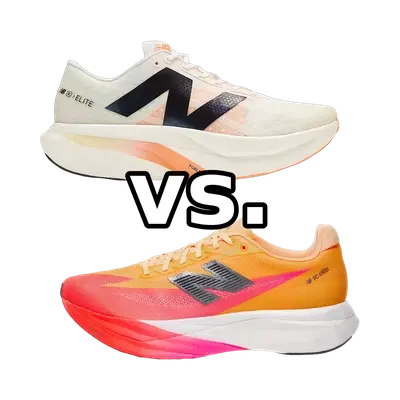
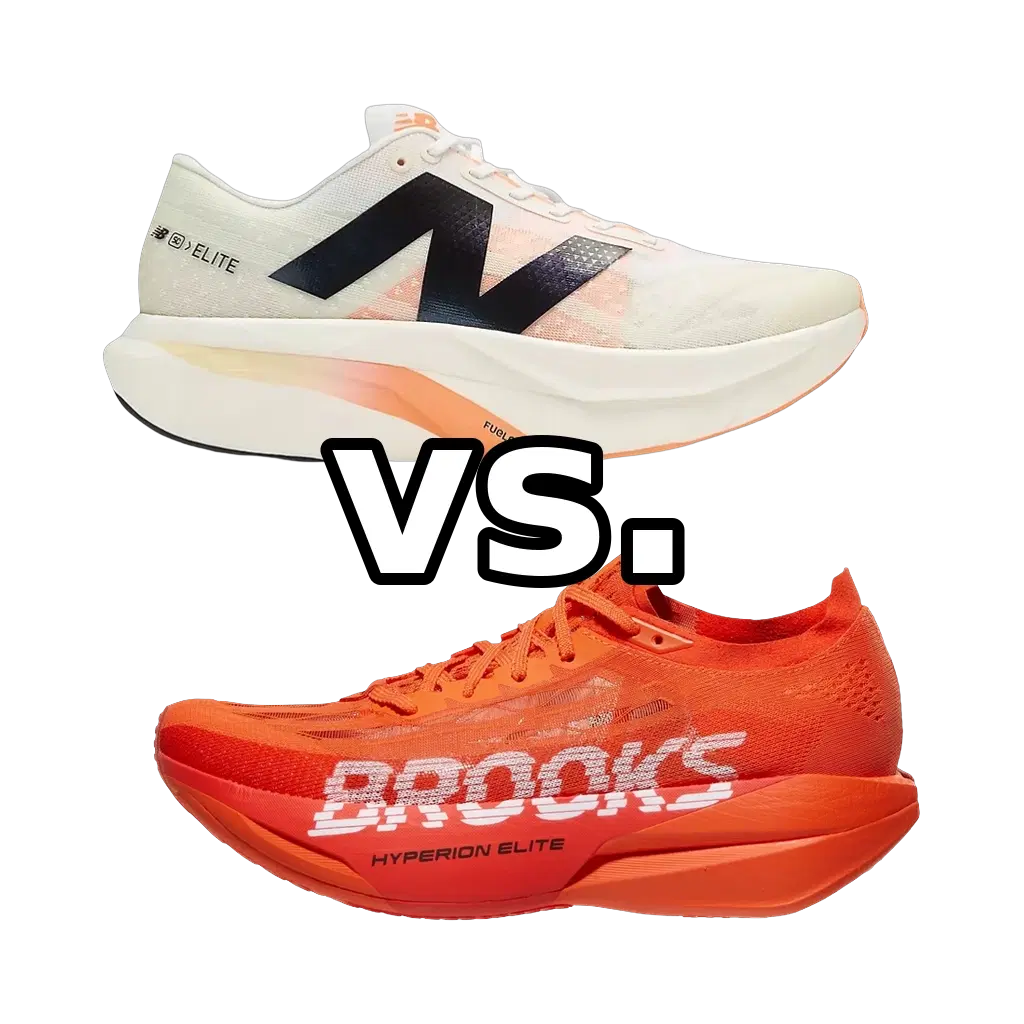
New Balance FuelCell SuperComp Elite v4 vs Brooks Hyperion Elite 6:
Which to Choose
Verdict
These are genuinely close rivals, so let your race calendar and preferred ride decide. If you race mostly half and full marathons and want a softer, taller, roll-you-forward feel, the SuperComp Elite v4 is your shoe; if you want the lighter, snappier, higher-drop option that races confidently from 10K to the marathon, the Hyperion Elite 6 is the more versatile and faster-feeling choice. Both demand real pace to shine and neither offers stability, so either way, these are race-day tools for efficient neutral runners — not daily trainers.
Pace
6 of 6
Cushioning
6 of 6
Responsiveness
6 of 6
Stability
2 of 6
Drop
4 mm
Support
Neutral
Plate
Carbon
Distances
HalfMarathon
Pace
6 of 6
Cushioning
6 of 6
Responsiveness
6 of 6
Stability
2 of 6
Drop
7 mm
Support
Neutral
Plate
Carbon
Distances
10KHalfMarathon
At a Glance
New Balance FuelCell SuperComp Elite v4Brooks Hyperion Elite 6
Who Should Choose Each Shoe
Choose
New Balance FuelCell SuperComp Elite v4
Choose the New Balance FuelCell SuperComp Elite v4 if your target races are the half and especially the full marathon, and you want a soft, tall, rolling ride that eases toe-off and stays protective deep into the race's final hours. Its lower 4 mm drop and fuller forefoot suit a runner who likes to settle into a smooth, patient rhythm and let the geometry carry them forward. It's the pick for the confident neutral marathoner who prioritizes long-haul cushioning and forward roll over outright lightness.
Choose
Brooks Hyperion Elite 6
Choose the Brooks Hyperion Elite 6 if you want one super shoe that races everything from 10K up through the marathon, and you value a lighter, snappier platform — it's the lighter of the two by a clear margin. Its 7 mm drop and quick, insistent rocker favor midfoot and forefoot strikers who like an aggressive, pick-up-the-pace toe-off. It's the better fit for a versatile racer who runs sharp workouts and shorter races alongside the big-day marathon, and who doesn't want to carry extra grams to do it.
Head-to-Head
Start with what's identical: both run a PEBA-based foam (New Balance's FuelCell, Brooks' DNA Gold) over a full-length carbon plate, both are neutral with no pronation support, and both rate the same on our scales for pace, cushioning, responsiveness, and stability (6/6, 6/6, 6/6, 2/6). Both also share the super-shoe tradeoff — a tall platform that feels tippy and unsettled at jogging speeds and only comes alive when you commit to pace, plus modest durability from the thin, breathable racing uppers. The real separators are weight, drop, and range. The Hyperion Elite 6 is the lighter shoe at roughly 192–198 g in a men's US 9 versus about 230 g for the SuperComp Elite v4 — a meaningful gap you feel in the back half of a race. Heel stack is effectively the same, right around 40 mm, but the two get there differently: the Brooks runs a 7 mm drop (roughly 40 mm heel / 33 mm forefoot), while the New Balance sits at a lower 4 mm offset with a thicker forefoot near 36 mm. That gives the SuperComp a softer, more pronounced forward roll that rewards patience and settling into a long marathon rhythm, while the Hyperion's steeper drop and firmer-feeling forefoot deliver a quicker, snappier, more insistent toe-off. Range is the other divider: both nail the half and full marathon, but the Hyperion Elite 6 is explicitly happy at 10K too, making it the more versatile racer, whereas the SuperComp Elite v4 is at its best over the longer, 90-minute-plus distances where its deep, rolling cushioning pays off.
Similar Comparisons
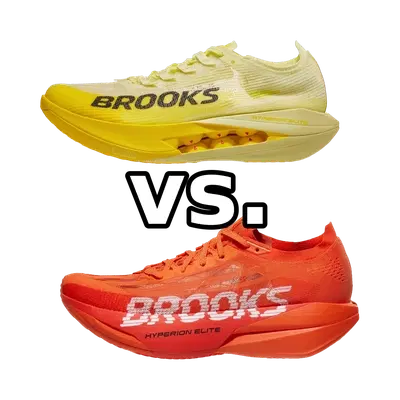
Brooks Hyperion Elite 5 vs Brooks Hyperion Elite 6
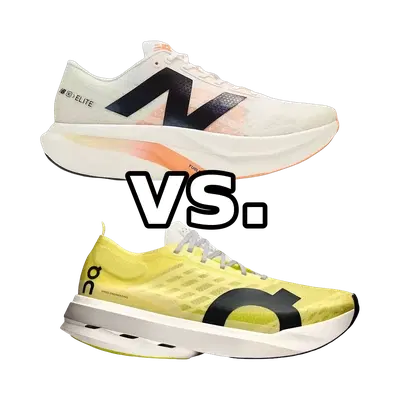
New Balance FuelCell SuperComp Elite v4 vs On Cloudboom Strike
Nike Vaporfly 4 vs Brooks Hyperion Elite 6
New Balance FuelCell SuperComp Elite v4 vs New Balance FuelCell SuperComp Pacer v2
Saucony Endorphin Pro 5 vs Brooks Hyperion Elite 6
Brooks Hyperion Elite 4 PB vs Brooks Hyperion Elite 6
Asics Metaspeed Edge Tokyo vs Brooks Hyperion Elite 6
Nike Alphafly 3 vs Brooks Hyperion Elite 6
© 2026 longrunshoes.ai | All rights reserved.
Use of materials from this site is permitted only with proper attribution and a link to longrunshoes.ai.