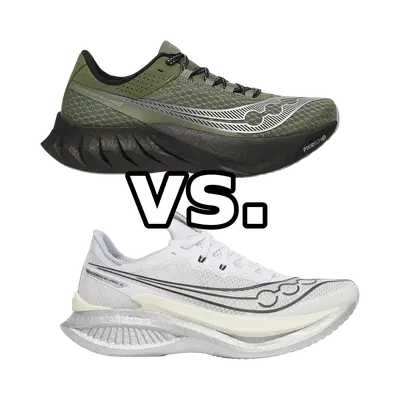
Saucony Endorphin Pro 5 vs Brooks Hyperion Elite 6:
Which to Choose
Verdict
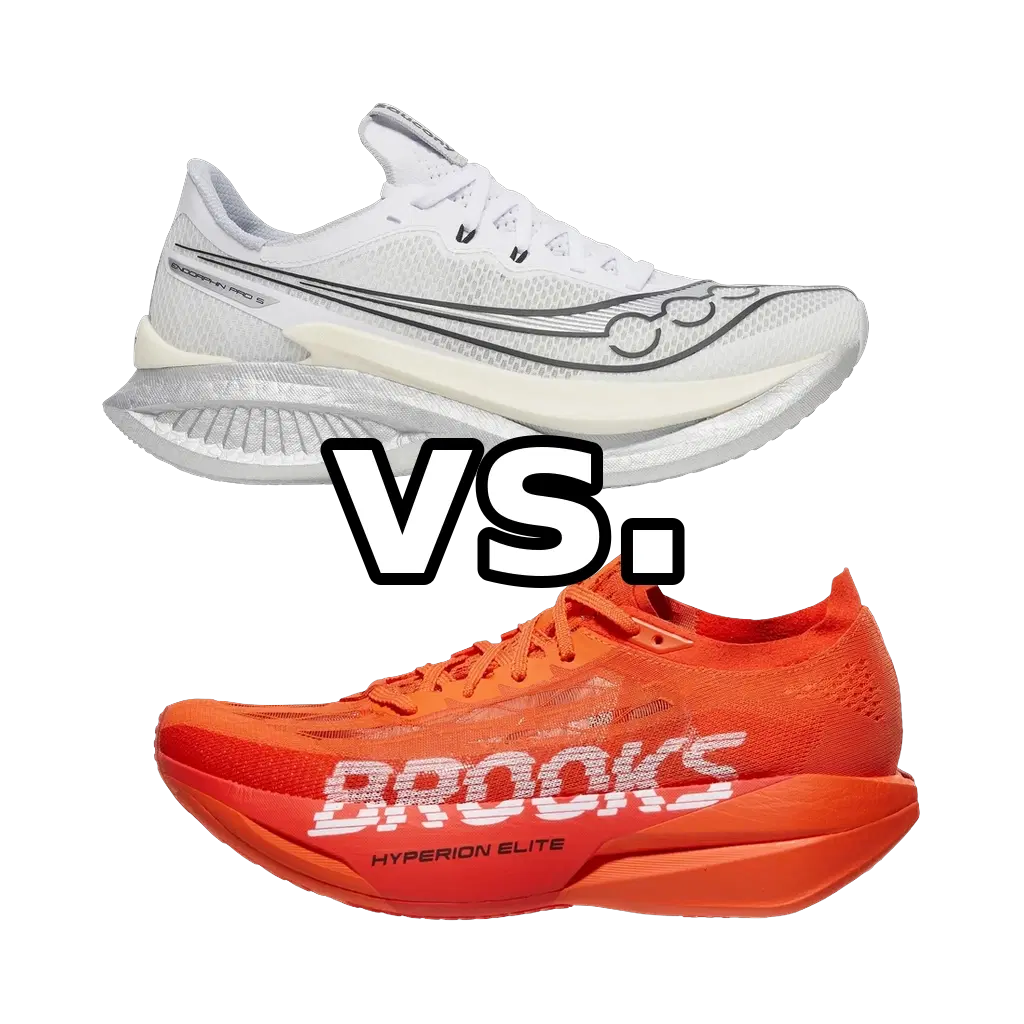
Both are elite neutral super shoes that want to be run fast, so this comes down to distance range and ride preference, not quality. Pick the Endorphin Pro 5 for firmer, snappier versatility that extends down to the 5K, and pick the Hyperion Elite 6 if you race mostly 10K to marathon and want a lighter, taller, softer platform with maximum long-distance cushioning.
Pace
6 of 6
Cushioning
5 of 6
Responsiveness
6 of 6
Stability
2 of 6
Drop
9 mm
Support
Neutral
Plate
Carbon
Distances
5K10KHalfMarathon
Pace
6 of 6
Cushioning
6 of 6
Responsiveness
6 of 6
Stability
2 of 6
Drop
7 mm
Support
Neutral
Plate
Carbon
Distances
10KHalfMarathon
At a Glance
Saucony Endorphin Pro 5Brooks Hyperion Elite 6
Who Should Choose Each Shoe
Choose
Saucony Endorphin Pro 5
Choose the Endorphin Pro 5 if you want one race shoe to do everything from a 5K to a marathon, and you like a firmer, snappier, forward-driving ride that rewards a quick, committed cadence. Its slightly heel-biased 9 mm drop and more compact stack suit heel and midfoot strikers who want an aggressive, energetic toe-off rather than a deep, plush platform. It's the more versatile pick for a runner who races a range of distances and doesn't want to give up short-course speed.
Choose
Brooks Hyperion Elite 6
Choose the Hyperion Elite 6 if your racing focus is 10K to the marathon and you want the deepest, softest protection for sustained long efforts — its 40/33 mm max-cushioned DNA Gold stack is built to keep your legs fresh late in a half or full. The lower 7 mm drop favors midfoot and forefoot strikers, and at roughly 192–198 g it's the lighter shoe despite carrying more foam, so it appeals to runners who prize a light, plush, long-distance racer over short-distance versatility. It's the better bet if you rarely race shorter than 10K and value cushioning over a firm, punchy feel.
Head-to-Head
These are close cousins in the super-shoe category, but the differences are concrete. The Hyperion Elite 6 is the taller, softer, more marathon-oriented tool: it stacks 40 mm at the heel and 33 mm at the forefoot with a maximum-cushioned, PEBA-based DNA Gold midsole, and it does that while weighing only about 192–198 g in a men's US 9. The Endorphin Pro 5 is the firmer, more compact platform — a 37 mm heel / 28 mm forefoot stack with a high but not max-stack dual-foam setup (PWRRUN PB over supercritical PWRRUN HG) — and it comes in a bit heavier at around 215 g. So despite carrying less foam, the Saucony is the heavier of the two, while the Brooks pairs a deeper, more protective ride with a lower overall weight. Drop is another real split: the Endorphin Pro 5 runs a 9 mm offset (Saucony markets it as 8 mm) for a slightly heel-biased, smooth roll-through, whereas the Hyperion Elite 6's 7 mm drop leans toward midfoot and forefoot strikers. Ride character follows from the foam: the Saucony feels snappy, firm and forward-driving, rewarding a committed quick cadence, while the Brooks feels softer and deeper underfoot with a more cushioned, protective rebound over long distances. Both are neutral with low, tall racing stability (no pronation control), both have thin, breathable, race-focused uppers that trade away durability and cold-weather protection, and both are rated identically for pace and responsiveness. The clearest use-case difference: the Endorphin Pro 5 genuinely covers 5K through the marathon and is happy at sharper 5K/10K efforts, while the Hyperion Elite 6 starts at 10K, with the half and full marathon as its true sweet spot.
Similar Comparisons
Brooks Hyperion Elite 5 vs Brooks Hyperion Elite 6
Nike Vaporfly 4 vs Saucony Endorphin Pro 5
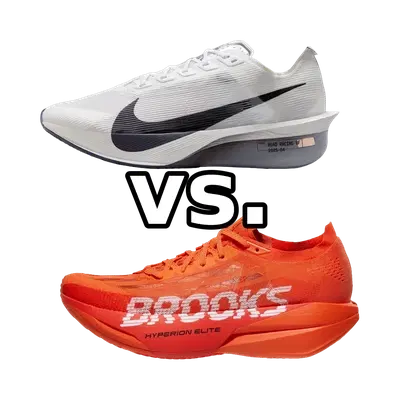
Nike Vaporfly 4 vs Brooks Hyperion Elite 6
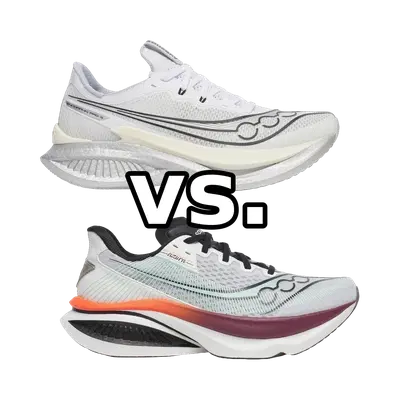
Saucony Endorphin Pro 5 vs Saucony Endorphin Azura
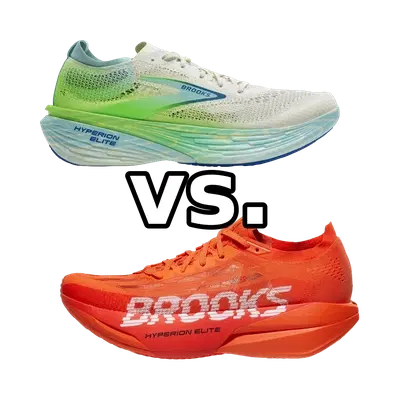
Brooks Hyperion Elite 4 PB vs Brooks Hyperion Elite 6
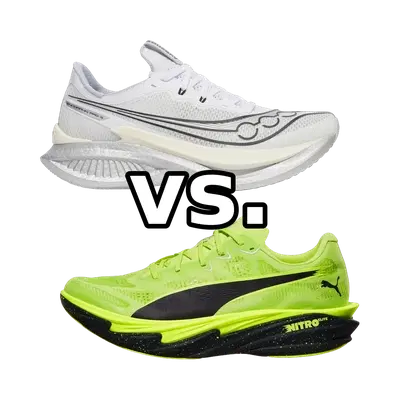
Saucony Endorphin Pro 5 vs Puma Deviate Nitro Elite 4
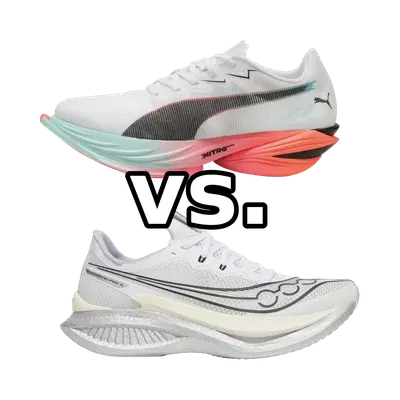
Puma Fast-R Nitro Elite 3 vs Saucony Endorphin Pro 5
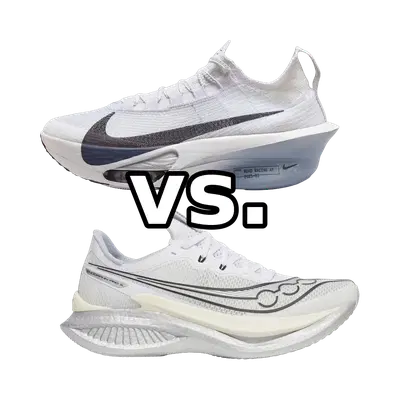
Nike Alphafly 3 vs Saucony Endorphin Pro 5
© 2026 longrunshoes.ai | All rights reserved.
Use of materials from this site is permitted only with proper attribution and a link to longrunshoes.ai.