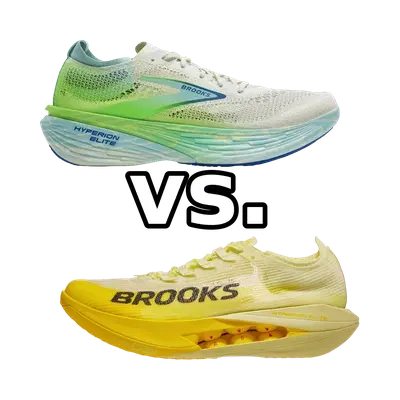
Brooks Hyperion Elite 5 vs Brooks Hyperion Elite 6:
Which to Choose
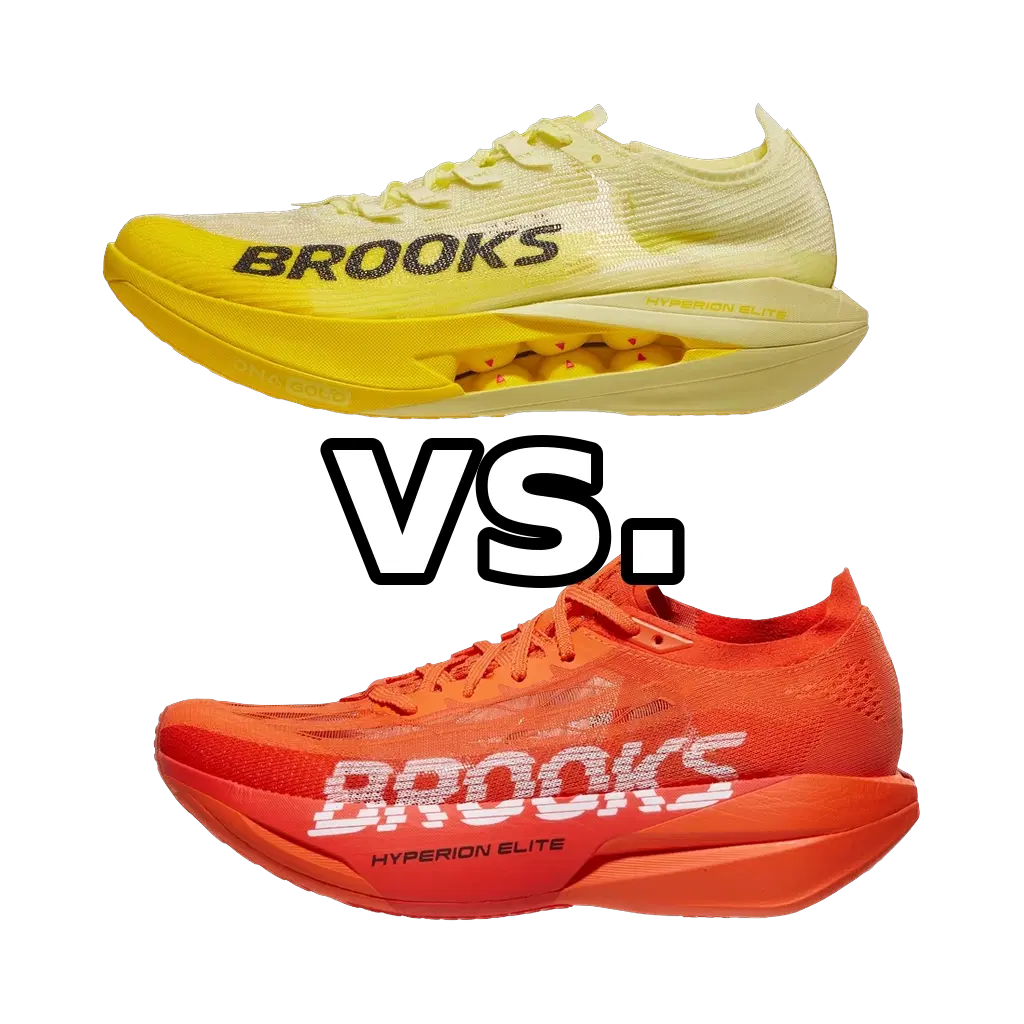
Verdict
This is a genuine upgrade with a specific catch: the Elite 6 is lighter, more cushioned, and more aggressively rockered, but it drops the offset from 12 mm to 7 mm. If you're a midfoot or forefoot striker racing 10K to the marathon, the 6 is the clear step forward. If you're a heel striker who relies on the 5's tall 12 mm ramp, or you want a racer that still shines at 5K, the older geometry may actually suit you better — so the decision hinges on your footstrike and drop preference, not on the fact that one is newer.
Pace
6 of 6
Cushioning
5 of 6
Responsiveness
6 of 6
Stability
2 of 6
Drop
12 mm
Support
Neutral
Plate
Carbon
Distances
5K10KHalfMarathon
Pace
6 of 6
Cushioning
6 of 6
Responsiveness
6 of 6
Stability
2 of 6
Drop
7 mm
Support
Neutral
Plate
Carbon
Distances
10KHalfMarathon
At a Glance
Brooks Hyperion Elite 5Brooks Hyperion Elite 6
Who Should Choose Each Shoe
Choose
Brooks Hyperion Elite 5
Choose the Hyperion Elite 5 if you're a heel or midfoot striker who likes a tall, ramped 12 mm drop that actively rolls you forward, or if your racing spans the full range from a sharp 5K up to the marathon and you want one shoe that handles the shorter, faster end too. It's also the pick if you already run well in it and the higher-drop geometry simply matches your stride — there's no reason to switch away from a ramp that works for you.
Choose
Brooks Hyperion Elite 6
Choose the Hyperion Elite 6 if you're a midfoot or forefoot striker, prefer a lower 7 mm drop, and want the deepest, softest protection for long race distances — its extra forefoot stack and maximum cushioning are built for the half and full marathon. It's also the better upgrade if you want the lightest, most aggressively rockered and energetic version of this platform and are willing to give up a little easy-pace stability and some 5K-oriented snappiness to get it.
Head-to-Head
The headline change is geometry. The Elite 5 sits at 38 mm heel / 26 mm forefoot for a tall, ramped 12 mm drop that rolls heel and midfoot strikers forward; the Elite 6 keeps a similar heel (40 mm) but stacks the forefoot way up to 33 mm, cutting the drop to 7 mm and pushing cushioning from high (5/6) to maximum (6/6). In practice that means the 6 is a lower-drop, more forefoot-cushioned, softer-riding shoe that better suits midfoot and forefoot strikers, while the 5's higher ramp remains the more natural fit for heel strikers. The 6 is also lighter — roughly 192–198 g in a men's US 9 versus about 204 g for the 5 — so it feels a touch quicker and more energetic underfoot, with an even more insistent forward-tipping rocker off the toe. Both share the same very-high responsiveness and race-pace optimization (around 3:00–3:20 min/km at their best), and both feel stiff and slightly tippy at easy jogging speeds; the taller, softer 6 platform trades a little more low-speed composure for its deeper long-distance protection. Their use cases diverge slightly at the short end: the 5 genuinely covers 5K through the marathon, whereas the 6's deeper, softer stack pushes its sweet spot to 10K, half, and full — it's less inclined toward pure 5K sharpness and more committed to going long.
Similar Comparisons
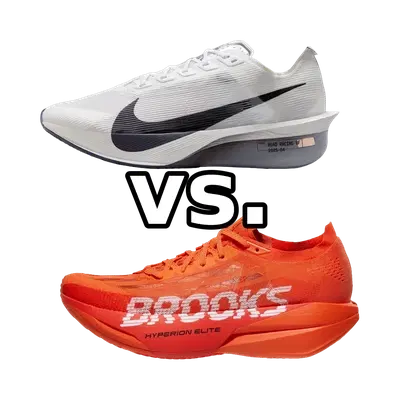
Nike Vaporfly 4 vs Brooks Hyperion Elite 6

Nike Alphafly 3 vs Brooks Hyperion Elite 5
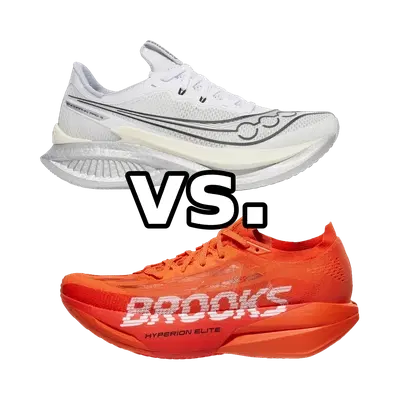
Saucony Endorphin Pro 5 vs Brooks Hyperion Elite 6
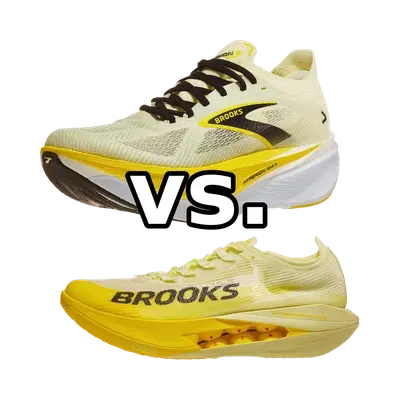
Brooks Hyperion Max 3 vs Brooks Hyperion Elite 5
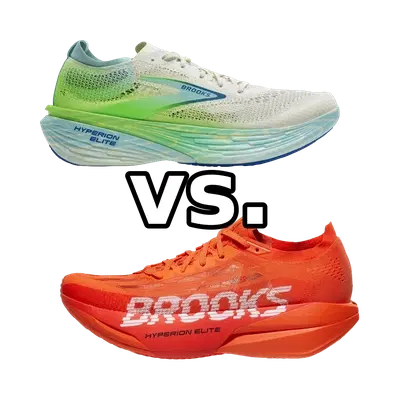
Brooks Hyperion Elite 4 PB vs Brooks Hyperion Elite 6
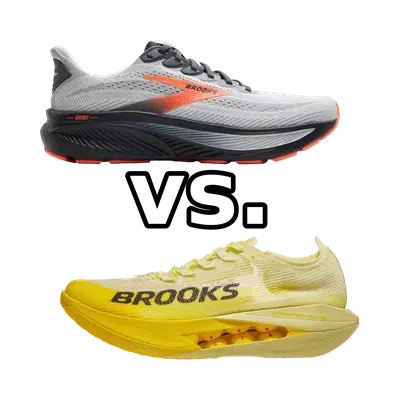
Brooks Ghost 17 vs Brooks Hyperion Elite 5
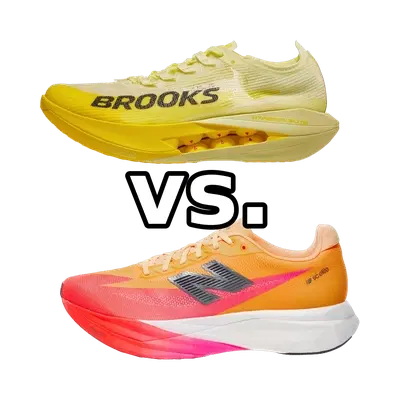
Brooks Hyperion Elite 5 vs New Balance FuelCell SuperComp Elite v5
© 2026 longrunshoes.ai | All rights reserved.
Use of materials from this site is permitted only with proper attribution and a link to longrunshoes.ai.