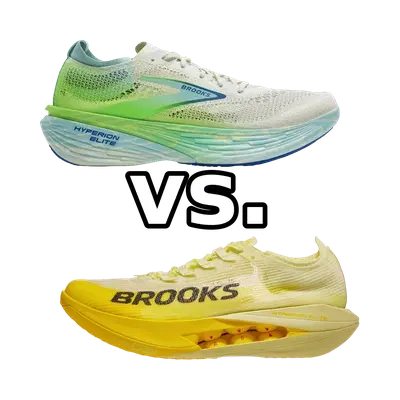
Brooks Hyperion Elite 5 vs New Balance FuelCell SuperComp Elite v5:
Which to Choose
Verdict
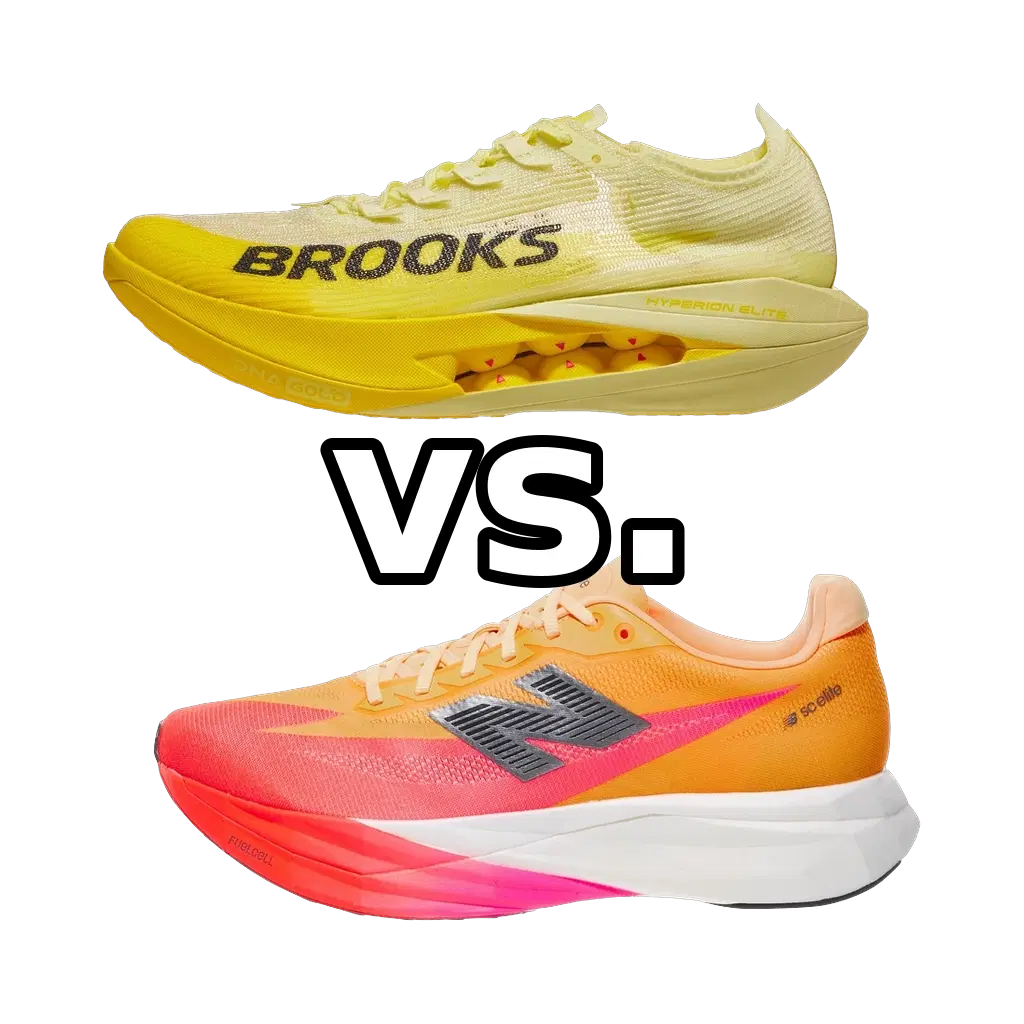
These are two excellent super-shoes doing the same job at the same level, so there's no wrong answer — the decision hinges on fit, footstrike, and range, not quality. Go Brooks for a higher-drop, narrower, do-it-all racer that's happy from the 5K to the marathon; go New Balance for a roomier-fitting, lower-drop, forefoot-cushioned specialist dialed in for the half and full marathon. Let your foot shape and your race calendar make the call.
Pace
6 of 6
Cushioning
5 of 6
Responsiveness
6 of 6
Stability
2 of 6
Drop
12 mm
Support
Neutral
Plate
Carbon
Distances
5K10KHalfMarathon
Pace
6 of 6
Cushioning
5 of 6
Responsiveness
6 of 6
Stability
2 of 6
Drop
10 mm
Support
Neutral
Plate
Carbon
Distances
HalfMarathon
At a Glance
Brooks Hyperion Elite 5New Balance FuelCell SuperComp Elite v5
Who Should Choose Each Shoe
Choose
Brooks Hyperion Elite 5
Pick the Brooks Hyperion Elite 5 if you're a heel or midfoot striker who likes a high, ramped ride that rolls you forward — the 12 mm drop and narrow platform reward a confident, centered landing. It's also the better buy if you want one racer that covers the whole menu, from a fast 5K and 10K up through the marathon, rather than a pure long-distance tool. Runners with narrower feet who prize a locked-in, racing-snug fit will feel most at home here.
Choose
New Balance FuelCell SuperComp Elite v5
Choose the New Balance FuelCell SuperComp Elite v5 if the half and full marathon are your target races and you want a shoe optimized for long, sustained speed, with extra forefoot foam and the Energy Arc's bouncy rebound under the ball of your foot. Its lower, moderate drop suits runners who don't want an aggressive heel ramp and prefer a more foot-strike-agnostic feel. It's also the clear pick if you have wider feet or simply want more toebox room than most racers allow — the roomier upper is one of its standout traits.
Head-to-Head
Start with the foam and plate, because here they truly are close: both ride on a 100%/near-100% PEBA superfoam over a full-length carbon plate, both feel lively and springy rather than plush, and both come alive at speed while feeling stiff and tippy if you jog them easy. Where they part ways is geometry. The Hyperion Elite 5 sits on a 38 mm heel / 26 mm forefoot stack with a tall 12 mm drop, a ramped shape that actively rolls heel and midfoot strikers forward. The SuperComp Elite v5 is slightly taller overall at 39 mm heel / 29 mm forefoot but with a lower, moderate offset (New Balance lists 8 mm; measured closer to 10 mm), so it puts more foam under the ball of the foot and biases less toward the heel. That extra forefoot stack plus the Energy Arc midsole voids give the New Balance a distinctly bouncy, propulsive feel tuned for sustained, settled efforts. Weight is a near-wash: the New Balance is marginally lighter at 198 g versus 204 g (men's US 9), a difference most runners won't feel. Fit is a more decisive split — the Brooks runs on a narrow racing platform with a knit upper that demands an assured, centered footstrike, while the New Balance uses a woven mesh upper with a semi-gusseted tongue and a noticeably roomier toebox. The last real difference is range: the Hyperion Elite 5 is built to race everything from a 5K through the marathon, so it doubles as a short-distance speed weapon, whereas the SuperComp Elite v5 is a dedicated half and full marathon specialist whose sweet spot is the long, held effort.
Similar Comparisons

Nike Vaporfly 4 vs New Balance FuelCell SuperComp Elite v5
Brooks Hyperion Elite 5 vs Brooks Hyperion Elite 6
New Balance FuelCell SuperComp Elite v4 vs New Balance FuelCell SuperComp Elite v5

Nike Alphafly 3 vs Brooks Hyperion Elite 5
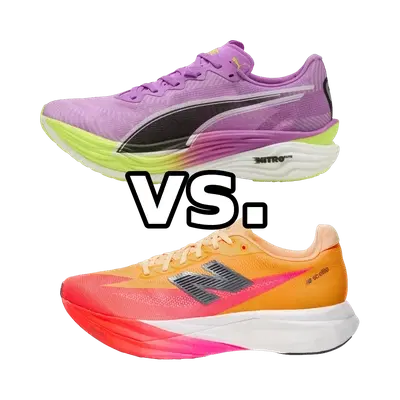
Puma Deviate Nitro Elite 3 vs New Balance FuelCell SuperComp Elite v5
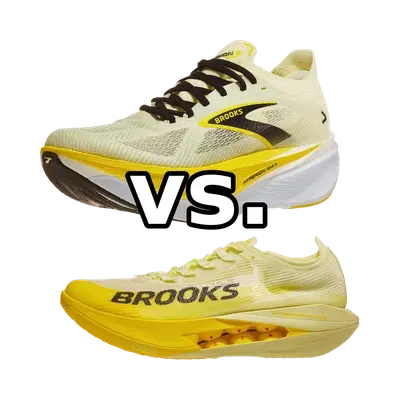
Brooks Hyperion Max 3 vs Brooks Hyperion Elite 5
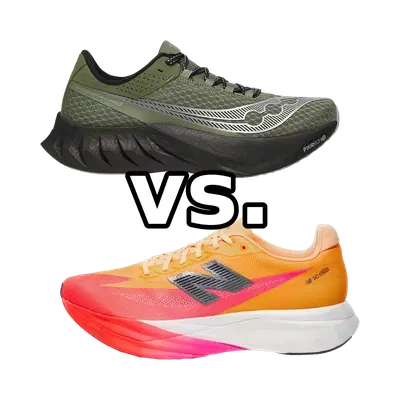
Saucony Endorphin Pro 4 vs New Balance FuelCell SuperComp Elite v5
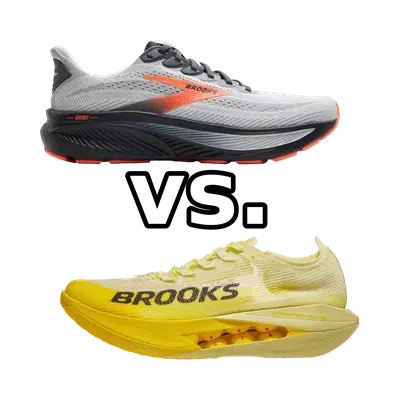
Brooks Ghost 17 vs Brooks Hyperion Elite 5
© 2026 longrunshoes.ai | All rights reserved.
Use of materials from this site is permitted only with proper attribution and a link to longrunshoes.ai.