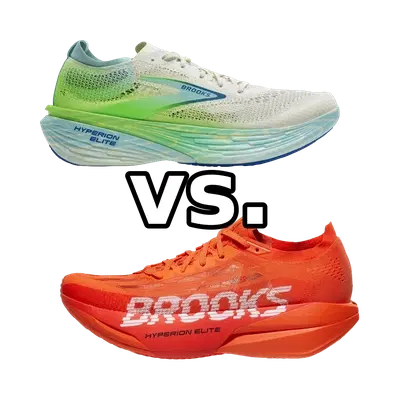
Brooks Hyperion Elite 4 PB vs Brooks Hyperion Elite 5:
Which to Choose
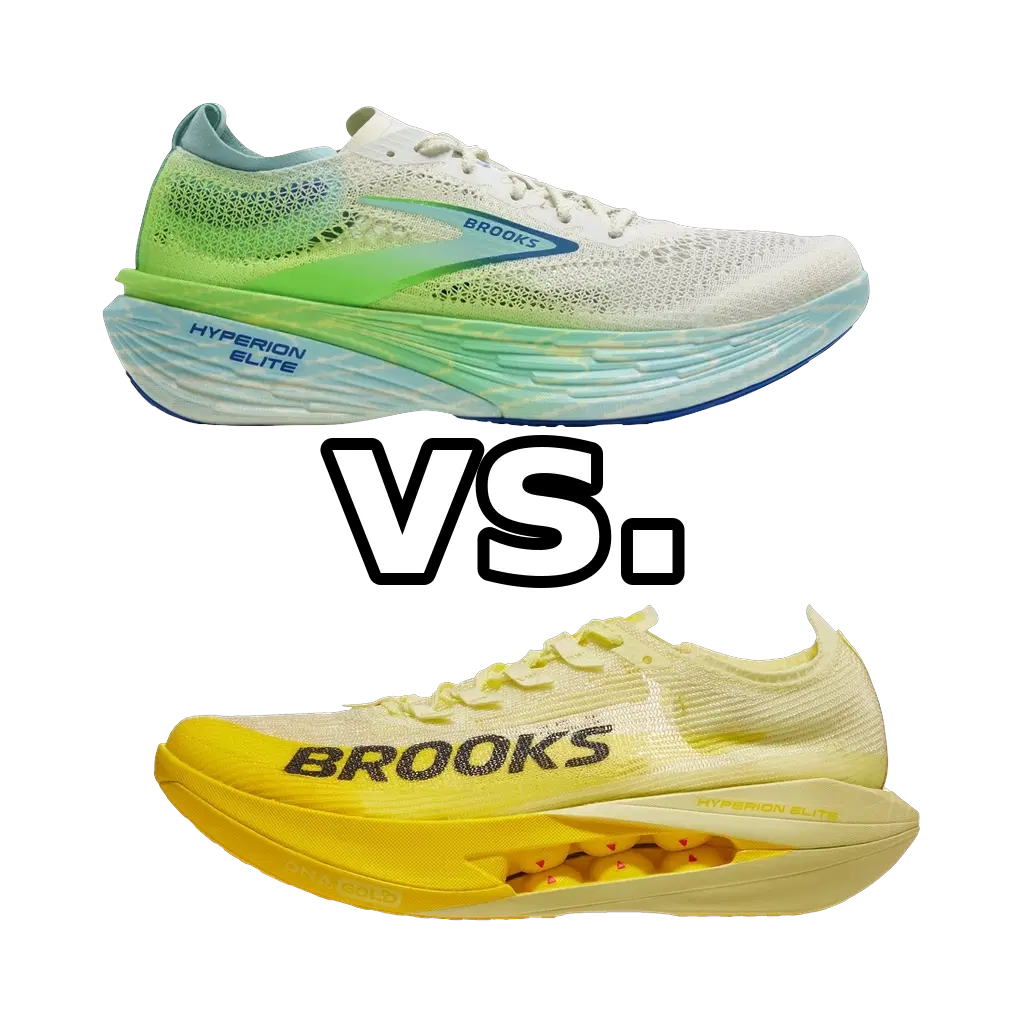
Verdict
These are close cousins, not a night-and-day generational leap, so the choice comes down to footstrike and drop preference rather than any gap in speed or quality. If you're a heel striker, want a taller 12mm ramp, prefer a softer and more rockered ride, or race distances as short as the 5K, the Elite 5 is a genuine upgrade. If you're a forefoot striker who likes the 8mm drop and the fuller 32mm forefoot of the Elite 4 PB — and especially if you already own it and it works for you — there's no urgent reason to switch; the newer shoe is different, not simply better for your stride.
Pace
6 of 6
Cushioning
5 of 6
Responsiveness
6 of 6
Stability
2 of 6
Drop
8 mm
Support
Neutral
Plate
Carbon
Distances
10KHalfMarathon
Pace
6 of 6
Cushioning
5 of 6
Responsiveness
6 of 6
Stability
2 of 6
Drop
12 mm
Support
Neutral
Plate
Carbon
Distances
5K10KHalfMarathon
At a Glance
Brooks Hyperion Elite 4 PBBrooks Hyperion Elite 5
Who Should Choose Each Shoe
Choose
Brooks Hyperion Elite 4 PB
Choose the Hyperion Elite 4 PB if you're a forefoot or midfoot striker who prefers a lower 8mm drop and wants the taller, more cushioned 32mm forefoot for half-marathon and marathon efforts. It's also the pick for the runner who already owns and loves the Elite 4 PB, gets along with its ride, and sees no compelling reason to move to a higher-ramped platform — nothing about the successor makes this shoe suddenly slow. It rewards a quick, efficient turnover at roughly 3:00–3:20 min/km, with the half marathon as its true sweet spot.
Choose
Brooks Hyperion Elite 5
Choose the Hyperion Elite 5 if you're a heel or midfoot striker who wants the more aggressive 12mm ramp and a smoother, more insistent forward roll, or if you want a slightly softer and bouncier version of the same DNA Gold PEBA and carbon-plate formula. It's also the better all-rounder for racers who want one shoe that stays sharp from a fast 5K all the way to the marathon, plus the refinements of a lighter engineered knit upper and simpler lacing. For anyone buying into the Hyperion Elite line fresh rather than replacing a beloved pair, this is the more current and versatile racer.
Head-to-Head
Start with what's unchanged, because it's most of the shoe: both weigh essentially the same (roughly 204–205g in a men's US 9), both use DNA Gold PEBA over a full-length carbon plate, and both deliver that lively, snappy, propulsive toe-off that feels planted at speed and a touch tippy and stiff when you jog them easy. Neither adds any pronation support — these are narrow race tools that demand an assured footstrike. The meaningful difference is geometry. The Elite 4 PB sits on a 40mm heel / 32mm forefoot stack (right at the World Athletics 40mm limit) with an 8mm drop, giving it a taller, more generously cushioned forefoot and a lower, flatter-feeling offset that suits forefoot and midfoot strikers. The Elite 5 actually trims total stack slightly to 38mm heel / 26mm forefoot but raises the drop to a full 12mm — a taller, more aggressive ramp with a lower forefoot that rolls you forward more insistently and specifically favors heel and midfoot strikers. In the Elite 5 that redesign also brings a softer, bouncier ride, a more pronounced rocker, a new SpeedVault+ plate arrangement, a lighter engineered knit upper in place of the thin racing upper, and the removal of the older stiff asymmetrical lacing setup. The use-case envelope widened too: the Elite 4 PB is dialed in for 10K through the marathon with the half as its sweet spot, while the Elite 5 stays sharp down to a fast 5K and out to the marathon. So this isn't a foam swap dressed up as a new model — it's the same weight and same superfoam-plus-plate engine repackaged around a noticeably different ride profile.
Similar Comparisons
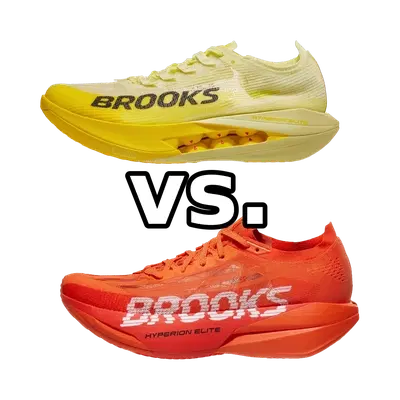
Brooks Hyperion Elite 5 vs Brooks Hyperion Elite 6

Saucony Endorphin Elite 2 vs Brooks Hyperion Elite 4 PB

Nike Alphafly 3 vs Brooks Hyperion Elite 5
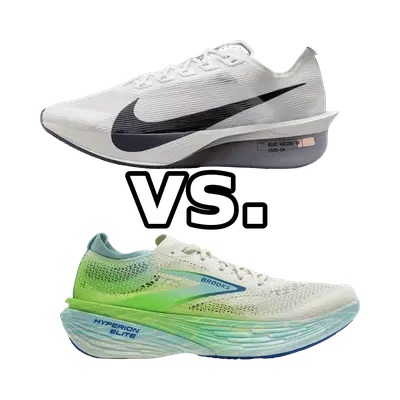
Nike Vaporfly 4 vs Brooks Hyperion Elite 4 PB
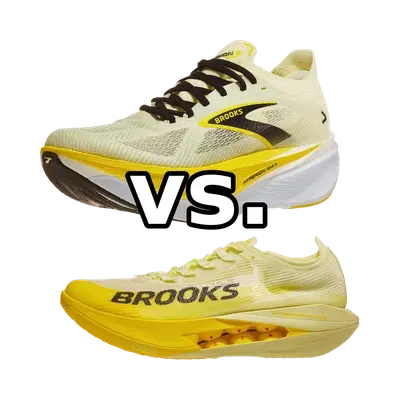
Brooks Hyperion Max 3 vs Brooks Hyperion Elite 5
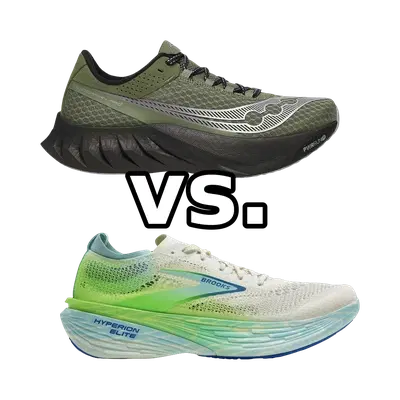
Saucony Endorphin Pro 4 vs Brooks Hyperion Elite 4 PB
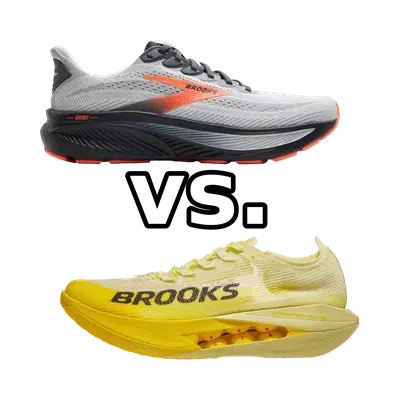
Brooks Ghost 17 vs Brooks Hyperion Elite 5
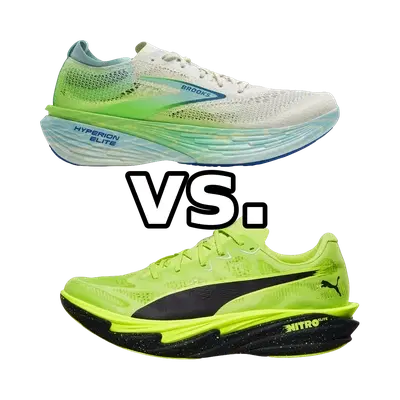
Brooks Hyperion Elite 4 PB vs Puma Deviate Nitro Elite 4
© 2026 longrunshoes.ai | All rights reserved.
Use of materials from this site is permitted only with proper attribution and a link to longrunshoes.ai.