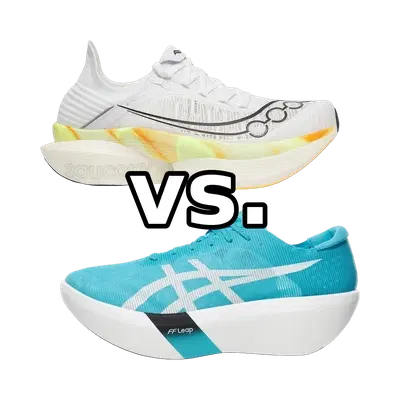
Saucony Endorphin Elite 2 vs Brooks Hyperion Elite 4 PB:
Which to Choose
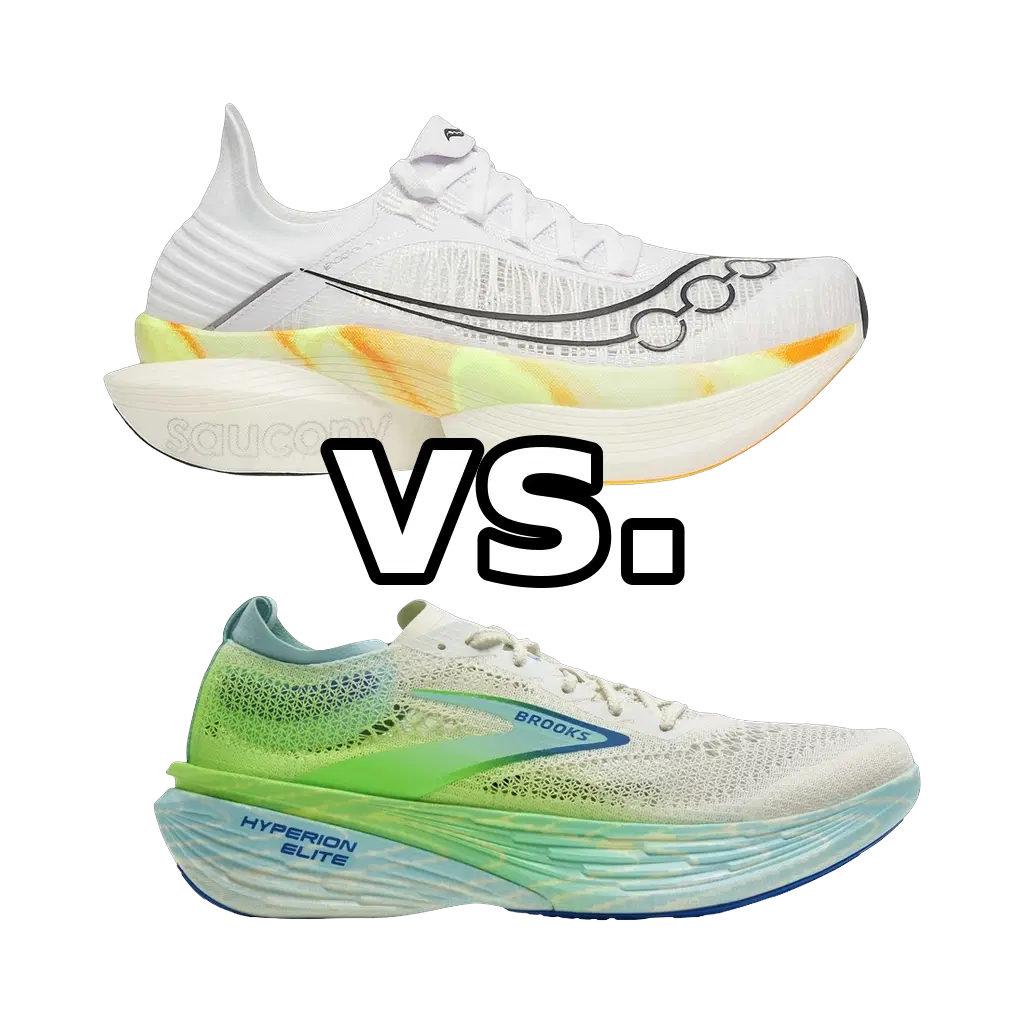
Verdict
These two are close enough in weight, stack, drop, and construction that neither is meaningfully "faster" — pick on fit and purpose. Go Saucony Endorphin Elite 2 if the marathon is your target and you want its aggressive forward rocker and firm forefoot snap; go Brooks Hyperion Elite 4 PB if you want a more versatile 10K-to-marathon racer with a rolling transition and a stiffer, more rigid plate. If you can, run in both: the ride personalities are distinct enough that your legs will tell you which one you want on race morning.
Pace
6 of 6
Cushioning
5 of 6
Responsiveness
6 of 6
Stability
2 of 6
Drop
8 mm
Support
Neutral
Plate
Carbon
Distances
HalfMarathon
Pace
6 of 6
Cushioning
5 of 6
Responsiveness
6 of 6
Stability
2 of 6
Drop
8 mm
Support
Neutral
Plate
Carbon
Distances
10KHalfMarathon
At a Glance
Saucony Endorphin Elite 2Brooks Hyperion Elite 4 PB
Who Should Choose Each Shoe
Choose
Saucony Endorphin Elite 2
Choose the Saucony Endorphin Elite 2 if your goal race is the marathon and you want a shoe tuned specifically to reward a hard, sustained effort over that distance. It's the better pick for a confident neutral runner with an efficient forefoot-oriented stride who likes an aggressive rocker that tips you forward and a firm, snappy forefoot pop rather than a softer landing. If you've raced in forward-rockered super shoes before and want maximum turnover over 26.2 miles, this is the one.
Choose
Brooks Hyperion Elite 4 PB
Choose the Brooks Hyperion Elite 4 PB if you want one race-day shoe that works across a wider range — from 10K through the half, its sweet spot, up to the marathon — rather than a marathon specialist. It suits a runner who prefers a rolling, propulsive transition and doesn't mind, or actively wants, a very rigid plate driving a powerful toe-off. If your race calendar mixes shorter, faster efforts with the occasional long one, the Hyperion is the more flexible choice of the two.
Head-to-Head
Start with how similar these are: both sit right around 200g (the Endorphin Elite 2 is roughly 199g, the Hyperion Elite 4 PB roughly 197g), both carry a high — but deliberately not maximal — PEBA stack with a heel in the high-30s to 40mm range, both run neutral with a low-stability 2/6 narrow racing platform, and both pair that foam with a full-length carbon plate. The Endorphin Elite 2 lists a confirmed 8mm drop; the Hyperion's offset isn't manufacturer-specified but sits in the same racer-typical moderate range. Underfoot both feel lively and springy rather than plush, both get tippy and unsettled at jog pace, and both only come alive once you're driving hard at roughly 3:00–3:20 min/km. The differences that actually separate them are threefold. First, distance tuning: the Endorphin Elite 2 is happiest held over the full marathon, its sweet spot, while the Hyperion Elite 4 PB stretches down to the 10K and peaks at the half — so the Brooks is the slightly more versatile racer across shorter, sharper efforts and the Saucony is the more single-mindedly marathon-oriented tool. Second, ride personality: Saucony's PWRRUN HG delivers a firm, snappy forefoot pop behind an aggressive rocker that almost tips you forward, demanding a committed forefoot strike; Brooks' DNA Gold works through a distinct rolling, propulsive transition driven by an exceptionally rigid 3D-printed SpeedVault+ plate, which gives a powerful but very stiff toe-off that can feel harsh if you dislike ultra-stiff setups. Third, fit and feel: both uppers are thin breathable racing mesh over a narrow last, but the Saucony's rocker geometry is the more aggressively forward of the two. In short, this is a ride-feel-and-distance decision, not a spec-sheet mismatch.
Similar Comparisons
Brooks Hyperion Elite 4 PB vs Brooks Hyperion Elite 5
Saucony Endorphin Elite 2 vs Saucony Endorphin Elite 3
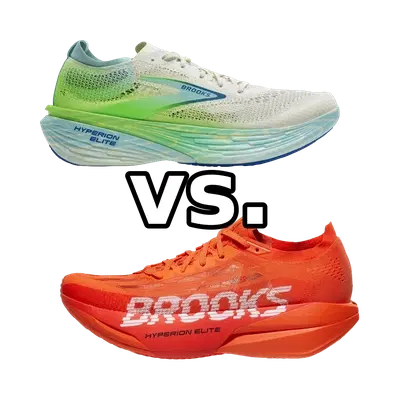
Brooks Hyperion Elite 4 PB vs Brooks Hyperion Elite 6
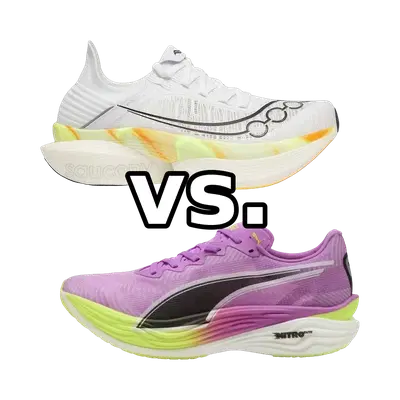
Saucony Endorphin Elite 2 vs Puma Deviate Nitro Elite 3
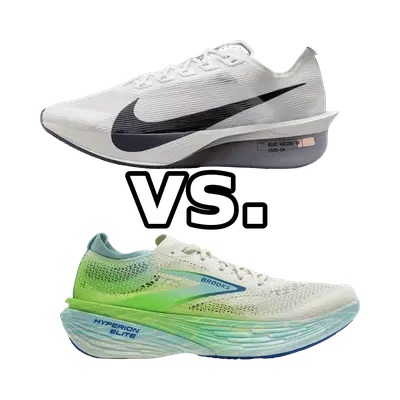
Nike Vaporfly 4 vs Brooks Hyperion Elite 4 PB
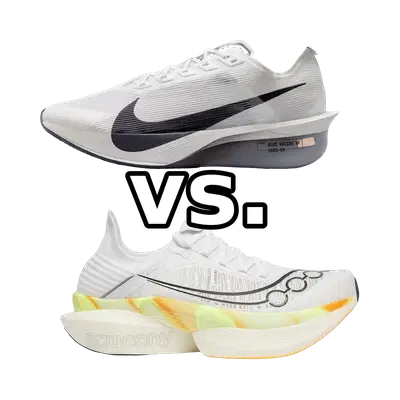
Nike Vaporfly 4 vs Saucony Endorphin Elite 2
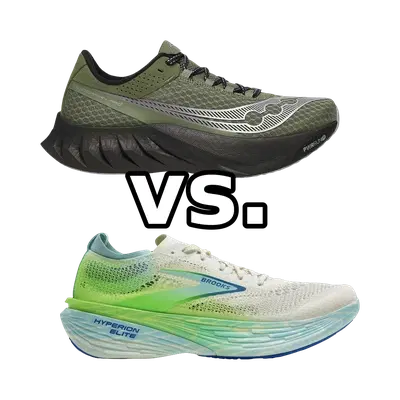
Saucony Endorphin Pro 4 vs Brooks Hyperion Elite 4 PB
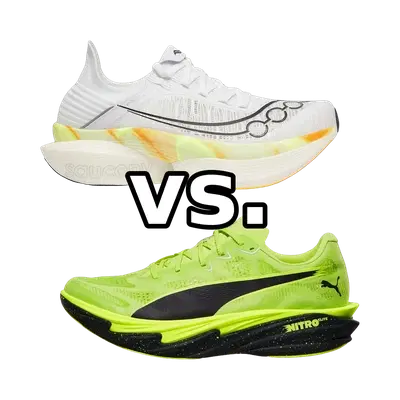
Saucony Endorphin Elite 2 vs Puma Deviate Nitro Elite 4
© 2026 longrunshoes.ai | All rights reserved.
Use of materials from this site is permitted only with proper attribution and a link to longrunshoes.ai.