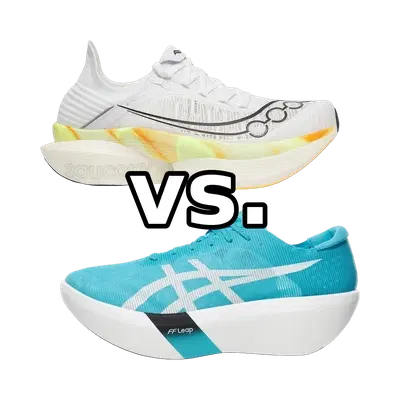
Saucony Endorphin Elite 2 vs Saucony Endorphin Elite 3:
Which to Choose
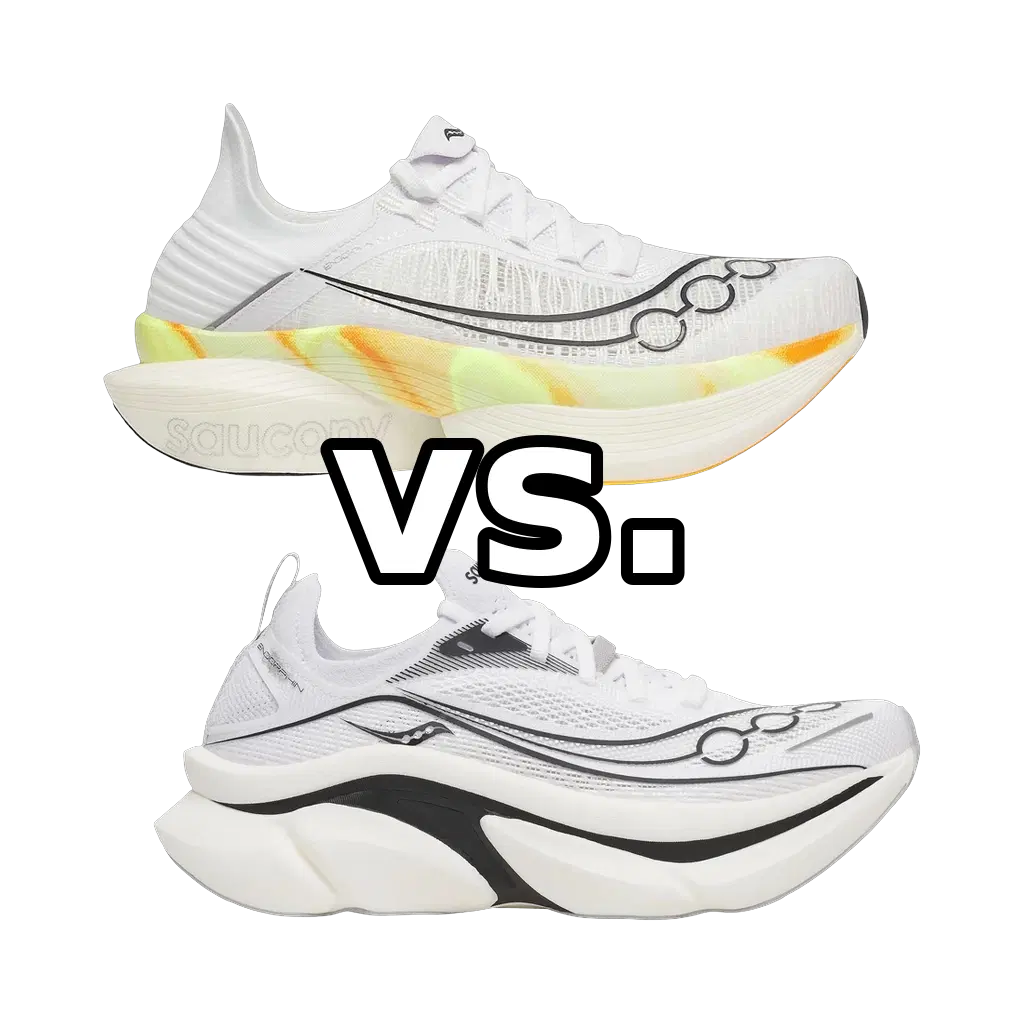
Verdict
These are the same class of shoe with the same mission, so this comes down to what you value. If your Elite 2 fits well and you love its firmer, 8mm-drop snap, there's no compelling reason to switch — the Elite 3 doesn't make it obsolete. But if the Elite 2's cramped upper or occasionally twitchy platform ever cost you, the Elite 3 is a genuine upgrade: roomier, softer, more planted, and lower to the ground at 6mm, without giving up any of the speed. For a new buyer choosing fresh, the Elite 3 is the safer default; for an existing owner, upgrade for the fit and stability, not for a revolution in performance.
Pace
6 of 6
Cushioning
5 of 6
Responsiveness
6 of 6
Stability
2 of 6
Drop
8 mm
Support
Neutral
Plate
Carbon
Distances
HalfMarathon
Pace
6 of 6
Cushioning
5 of 6
Responsiveness
6 of 6
Stability
2 of 6
Drop
6 mm
Support
Neutral
Plate
Carbon
Distances
HalfMarathon
At a Glance
Saucony Endorphin Elite 2Saucony Endorphin Elite 3
Who Should Choose Each Shoe
Choose
Saucony Endorphin Elite 2
Choose the Endorphin Elite 2 if you already own it, love how it rides, and have a well-fitting pair with tread left — the fundamentals it does well are unchanged, so there's no urgency to replace a shoe that's working for you. It also suits the runner who prefers a slightly higher 8mm drop and a firmer, snappier forefoot pop, and who has an efficient, aggressive form that already keeps the narrow platform under control at speed. This is a confident neutral racer's tool for the half and marathon, best held in the 3:00–3:20 min/km zone.
Choose
Saucony Endorphin Elite 3
Choose the Endorphin Elite 3 if you're upgrading from the Elite 2 and want the specific things that frustrated you fixed: a roomier toe box, a more secure heel, and a more stable, planted feel at race pace thanks to the forked, torsionally controlled plate. It's also the better pick if you like a softer, bouncier ride and a lower, more level 6mm-drop feel, or if the Elite 2's cramped fit ever bothered you over marathon distance. New buyers weighing the two should default here — it's the same racing weapon with the rougher edges smoothed off.
Head-to-Head
On paper these two are close cousins. Both sit at the racing-legal ceiling of stack — the Elite 2 measures roughly 39.5mm heel / 31.5mm forefoot, while the Elite 3 builds to about 40mm heel / 34mm forefoot — and both weigh about the same, near 199g for the Elite 2 and roughly 204g in a men's US 9 for the Elite 3, so you won't feel one as meaningfully heavier than the other. Both carry a full-length carbon plate and both rate identically on the core numbers: maximum pace, high (5/6) cushioning, top responsiveness, and low (2/6) stability. The meaningful differences are in geometry, plate design, and fit. The biggest spec change is drop: the Elite 2 runs a balanced 8mm offset, while the Elite 3 drops to 6mm (Saucony's own listing still says 8mm), a slightly lower, more level feel. The plate itself is reworked — the Elite 3 uses a slotted, forked carbon plate that keeps the longitudinal stiffness driving you forward but adds a measure of torsional control, which helps settle the Elite 2's occasionally darty, unpredictable feel at speed. The Elite 3's midsole is also softer and bouncier underfoot, transitioning from soft-and-forgiving at easy jog paces to crisp and rebounding once you commit, and its one-piece engineered-mesh upper opens up a noticeably roomier toe box and a more secure heel than the cramped Elite 2. Both still get tippy at slow speeds and both are pure racers — poor daily trainers with limited-durability outsoles — so the character is the same; the Elite 3 is the more planted, better-fitting, marginally softer refinement of it.
© 2026 longrunshoes.ai | All rights reserved.
Use of materials from this site is permitted only with proper attribution and a link to longrunshoes.ai.