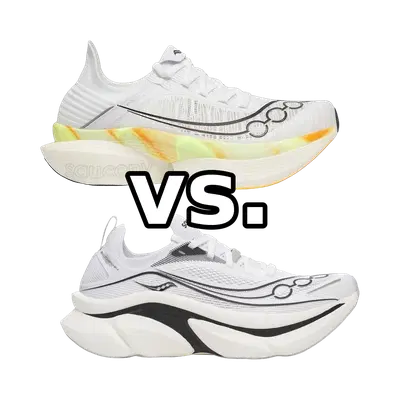
Saucony Endorphin Elite 2 vs Asics Metaspeed Ray:
Which to Choose
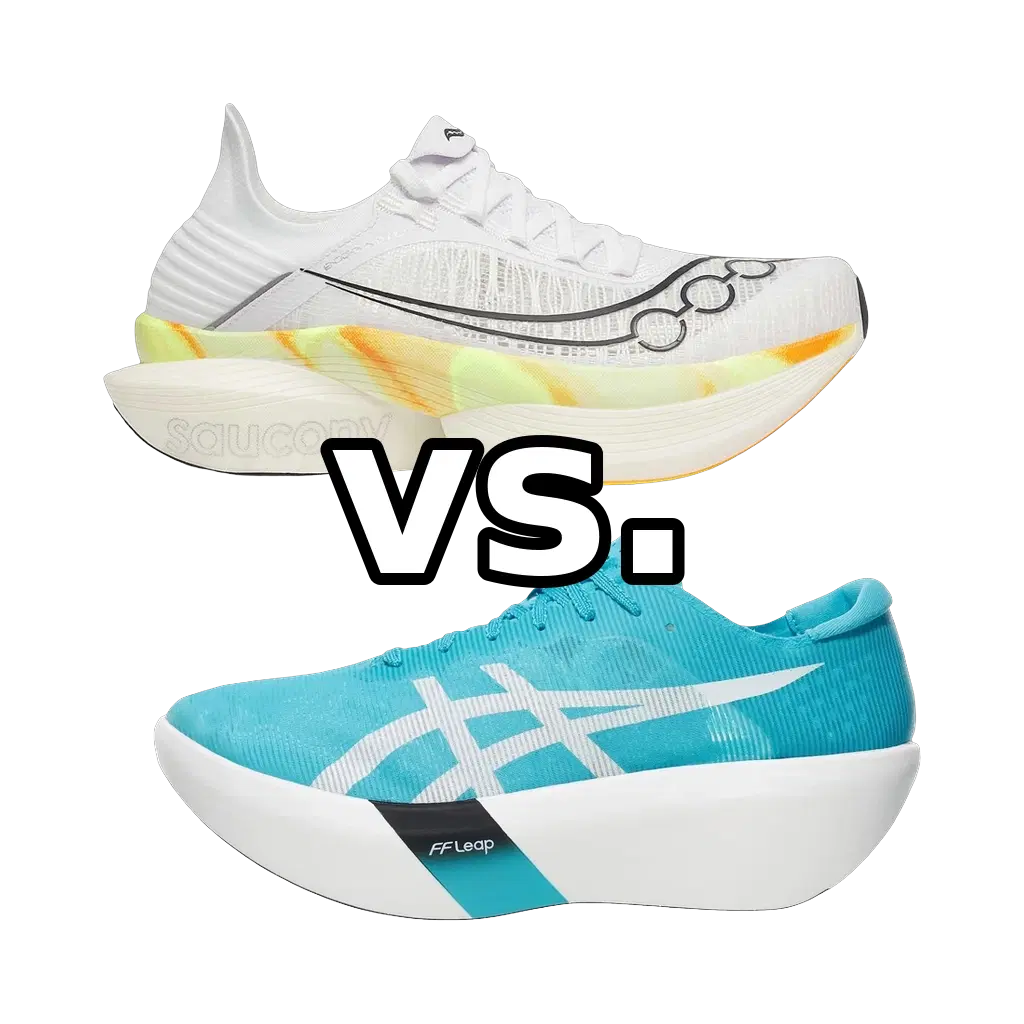
Verdict
It genuinely comes down to your stride and how much you value grams. Both are elite neutral carbon racers that peak at the same paces over the same distances, so you won't go wrong either way — but if you want the lightest possible shoe and have the form to control a low-drop, tippy platform, the Metaspeed Ray is the more extreme tool; if you'd rather have a full-length plate, a bit more drop, and a slightly more grounded, footstrike-tolerant ride, the Endorphin Elite 2 is the safer race-day bet.
Pace
6 of 6
Cushioning
5 of 6
Responsiveness
6 of 6
Stability
2 of 6
Drop
8 mm
Support
Neutral
Plate
Carbon
Distances
HalfMarathon
Pace
6 of 6
Cushioning
5 of 6
Responsiveness
6 of 6
Stability
1 of 6
Drop
5 mm
Support
Neutral
Plate
Carbon
Distances
HalfMarathon
At a Glance
Saucony Endorphin Elite 2Asics Metaspeed Ray
Who Should Choose Each Shoe
Choose
Saucony Endorphin Elite 2
Choose the Endorphin Elite 2 if you want a full-length-plate racer that feels a little more planted and forgiving of your footstrike, with an 8mm drop that suits both heel and midfoot strikers pressing the pace. It's the pick for the marathoner who values a continuous, propulsive plate and a touch more underfoot substance over chasing the absolute lowest weight, and who wants a shoe that rewards a committed forefoot strike without demanding flawless form every stride.
Choose
Asics Metaspeed Ray
Choose the Metaspeed Ray if outright lightness is your priority and you have the strong, well-controlled, forefoot-oriented stride to handle it — at roughly 129g it's exceptionally light, with a low 5mm drop and generous 35mm of forefoot foam that push you into a quick, forward-leaning turnover. It's the racer for the confident runner who wants the most stripped-back, single-minded marathon tool available and is willing to trade durability and any slow-pace composure for pure race-day speed.
Head-to-Head
These two are closer in mission than almost any other pairing you could put side by side — both are neutral, both max out our pace and responsiveness scales, both use a firm PEBA-class racing foam (Saucony's PWRRUN HG, Asics's ATPU FF Leap), and both peak in the same 3:00–3:20 min/km window with the marathon as their sweet spot. The differences are in the details, and they matter. The most decisive one is weight: the Ray comes in at roughly 129g in a men's US 9 against about 199g for the Endorphin Elite 2 — a genuinely large 70g gap that makes the Ray feel feathery and eager where the Elite 2 feels more substantial and planted underfoot. Stack heights are close at the heel (about 40mm on the Ray, 39.5mm on the Elite 2), but the Ray carries more foam up front at 35mm versus 31.5mm, which combines with its lower 5mm drop to sit you flatter and encourage a quick, forefoot-driven turnover; the Elite 2's steeper 8mm drop gives a touch more heel-to-toe ramp that a wider range of footstrikes can load. The plates differ too: the Elite 2 runs a full-length carbon plate for continuous, propulsive stiffness, while the Ray uses a forefoot-biased three-quarter plate that trims weight and allows a little more flex behind the toes. Neither is a stability shoe — both are deliberately tippy — but the Ray's more extreme paring-back makes it the wobblier and less durable of the two at anything below race effort, whereas the Elite 2's slightly heavier, fuller build reads as marginally more composed. In short: same category, but the Elite 2 is the more grounded, higher-drop full-plate racer and the Ray is the lighter, lower-drop, more single-minded one.
© 2026 longrunshoes.ai | All rights reserved.
Use of materials from this site is permitted only with proper attribution and a link to longrunshoes.ai.