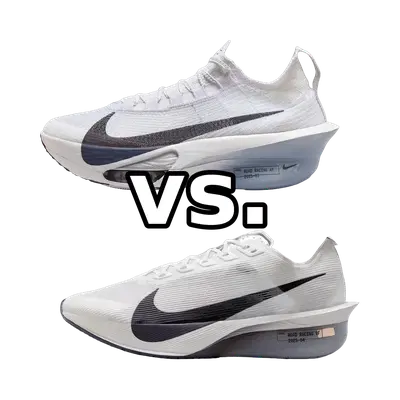
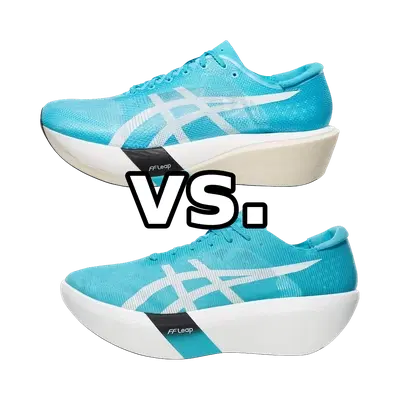
Nike Alphafly 3 vs Asics Metaspeed Ray:
Which to Choose
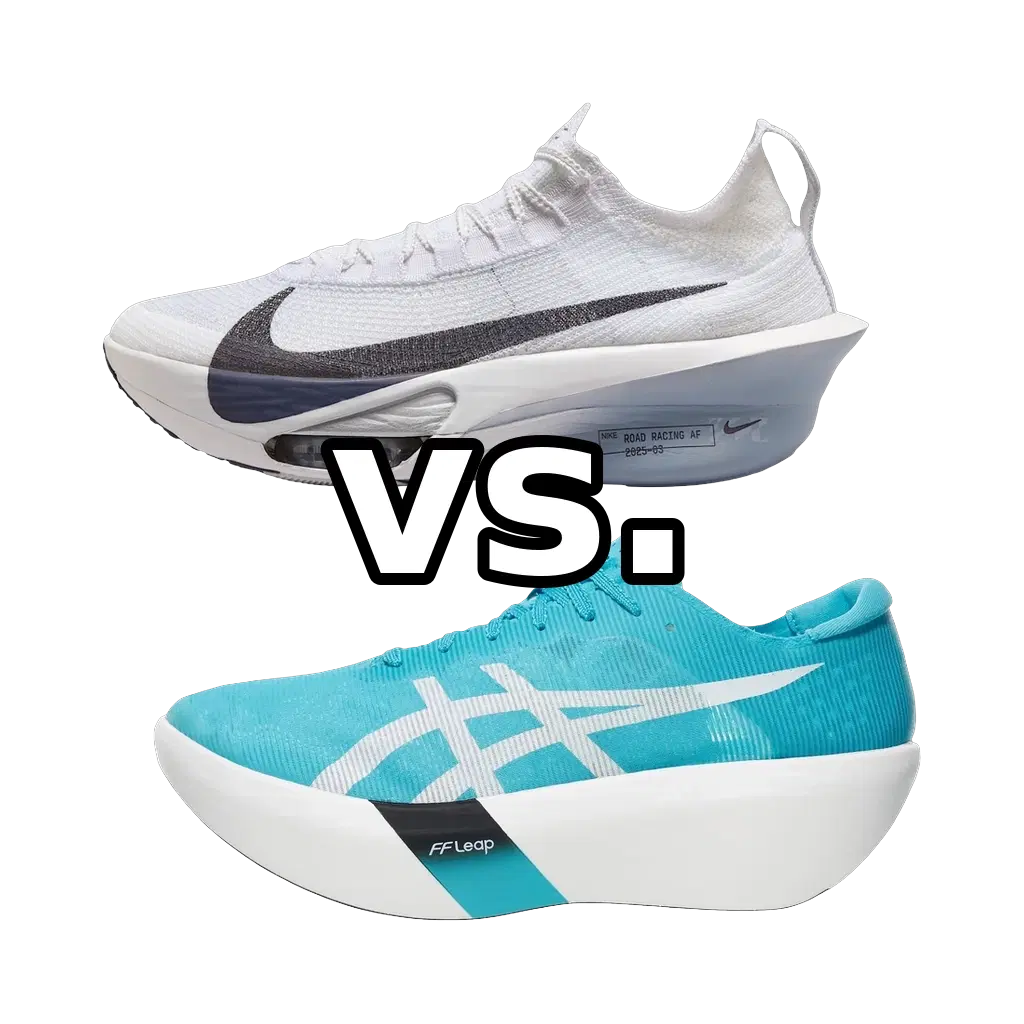
Verdict
It genuinely depends, but on a clear axis: pick the Alphafly 3 if you value a softer, bouncier, more cushioned and slightly more planted ride with an 8mm drop and full-length plate, and pick the Metaspeed Ray if you want the lightest possible shoe with a firm, forefoot-driven, low-drop feel. Both are pure race-day tools for fast runners chasing PBs over the half and marathon — neither is a daily trainer — so let your foot strike and your preference for cushion-versus-lightness decide.
Pace
6 of 6
Cushioning
5 of 6
Responsiveness
6 of 6
Stability
2 of 6
Drop
8 mm
Support
Neutral
Plate
Carbon
Distances
HalfMarathon
Pace
6 of 6
Cushioning
5 of 6
Responsiveness
6 of 6
Stability
1 of 6
Drop
5 mm
Support
Neutral
Plate
Carbon
Distances
HalfMarathon
At a Glance
Nike Alphafly 3Asics Metaspeed Ray
Who Should Choose Each Shoe
Choose
Nike Alphafly 3
Choose the Alphafly 3 if you want a marathon racer that feels a little more cushioned and secure under a tall stack, with a soft, bouncy ZoomX ride and that signature Air Zoom pod pop off the forefoot. Its full-length plate and slightly higher 8mm drop make it the more forgiving and stable of the two for runners who aren't purely forefoot strikers, and it suits a runner who wants max propulsion without the most knife-edge, minimal platform. It's the safer pick for a longer marathon effort where the extra foam and structure pay off late in the race.
Choose
Asics Metaspeed Ray
Choose the Metaspeed Ray if outright lightness is your priority — at about 129g it's dramatically lighter than the Alphafly, and that near-weightless feel is its whole reason for being. It rewards a strong, well-controlled, forefoot-oriented stride with its firm FF Leap foam, low 5mm drop, and flexible three-quarter plate that snaps you off the front of the shoe. It's the racer for the experienced, efficient runner who wants the least possible mass and the most eager turnover, and who can keep a tippy, minimal platform tracking straight at speed.
Head-to-Head
On paper these two occupy the same category, but they feel very different underfoot. The biggest single difference is weight: the Metaspeed Ray comes in at about 129g in a men's US 9, while the Alphafly 3 is roughly 198g — a gap of about 70g (2.4 oz), which is enormous for a race shoe and makes the Ray one of the lightest super shoes ever built. Both sit near the maximum 40mm heel stack, but they get there differently: the Alphafly runs 40mm heel / 32mm forefoot for an 8mm drop, while the Ray is 40mm / 35mm for a lower 5mm drop that leans you forward onto the forefoot. Cushioning feel diverges too — the Alphafly's ZoomX foam is soft and deeply bouncy, and its twin forefoot Air Zoom pods add a pronounced, trampoline-like pop at toe-off, whereas the Ray's FF Leap foam is firm-yet-lively, springing back sharply and rolling you forward with urgency rather than plush softness. The plates reflect their philosophies: the Alphafly uses a full-length carbon plate that stabilizes the tall, soft platform and drives every stride, while the Ray uses a partial, forefoot-biased three-quarter carbon plate that trims weight and adds a touch of flex, favoring quick forefoot turnover. Neither is stable — the Alphafly rates a 2/6 and the Ray a 1/6, and both wobble at easy paces — but the Ray's narrower, more minimal build makes it the tippier, more demanding of the two. In short: the Alphafly is the more cushioned, more forgiving, more "planted" of the two despite still being a race shoe; the Ray is the more extreme, pared-back, feathery one that asks for cleaner form in return for less mass to carry.
© 2026 longrunshoes.ai | All rights reserved.
Use of materials from this site is permitted only with proper attribution and a link to longrunshoes.ai.