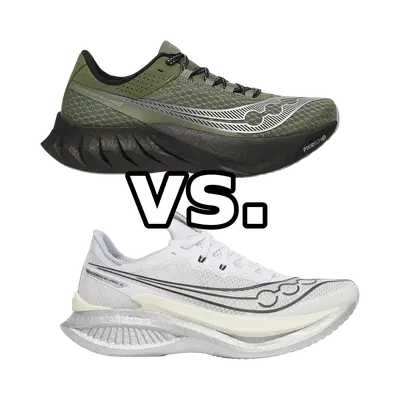
Saucony Endorphin Pro 4 vs Brooks Hyperion Elite 4 PB:
Which to Choose
Verdict
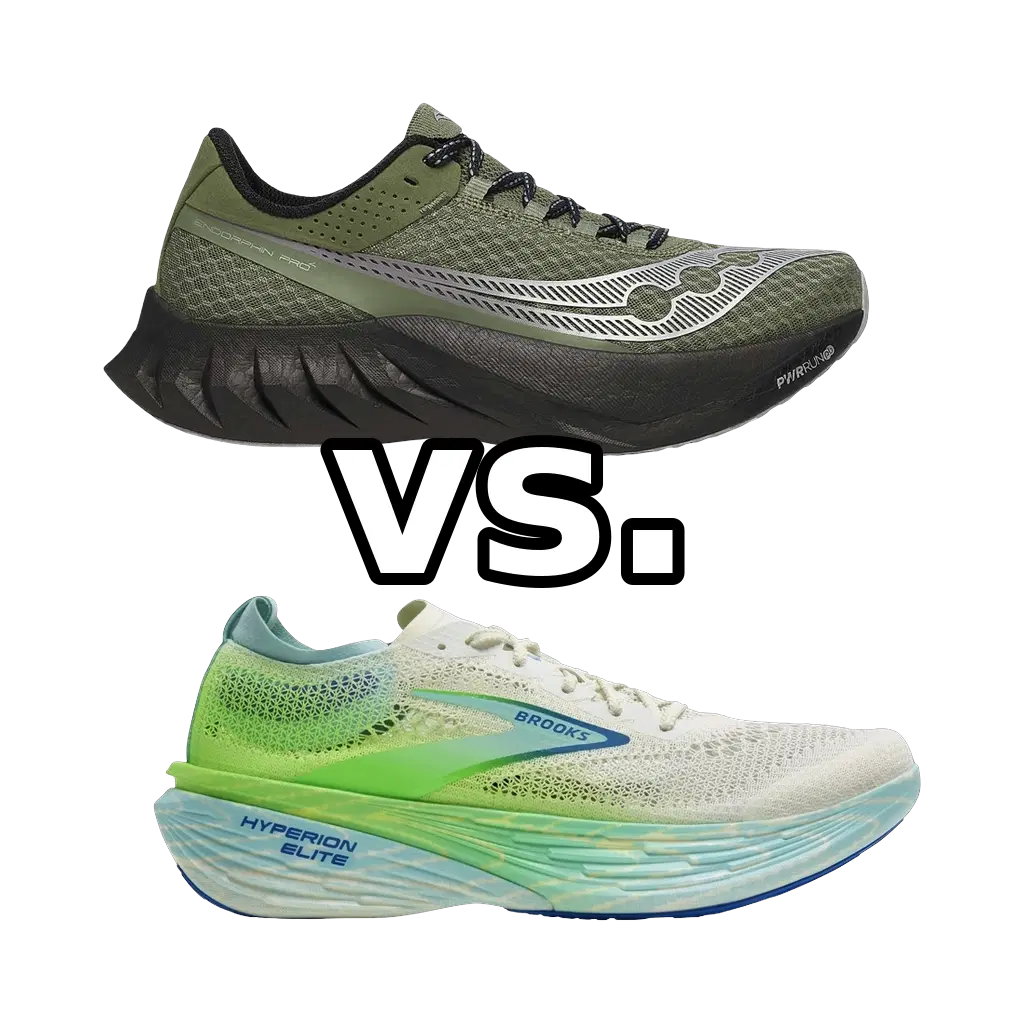
These are genuinely close rivals, and there's no wrong answer — both are fast, plated PEBA racers with the same drop, nearly identical stack, and the same ideal distances. It comes down to platform and ride: go Hyperion Elite 4 PB for a lighter, narrower, snappier shoe that rewards an efficient stride, or Endorphin Pro 4 for a slightly broader, softer, more stable ride that's more forgiving when a long race gets ugly. Match the shoe to your foot width and how much composure you want late in a race, and try both on if you can.
Pace
6 of 6
Cushioning
5 of 6
Responsiveness
6 of 6
Stability
2 of 6
Drop
8 mm
Support
Neutral
Plate
Carbon
Distances
10KHalfMarathon
Pace
6 of 6
Cushioning
5 of 6
Responsiveness
6 of 6
Stability
2 of 6
Drop
8 mm
Support
Neutral
Plate
Carbon
Distances
10KHalfMarathon
At a Glance
Saucony Endorphin Pro 4Brooks Hyperion Elite 4 PB
Who Should Choose Each Shoe
Choose
Saucony Endorphin Pro 4
Choose the Endorphin Pro 4 if you want the slightly more forgiving of these two racers — a marginally wider, softer platform with a strong rocker makes it the easier shoe to hold together late in a marathon or when your form starts to fray. It's the better pick for runners who like a plush-but-propulsive feel, who want a shoe that doubles comfortably for sharp tempo work as well as race day, and who value a little more underfoot real estate for stability at the back of a long effort.
Choose
Brooks Hyperion Elite 4 PB
Choose the Hyperion Elite 4 PB if outright speed and low weight top your list and you already have an efficient, well-balanced stride. It's the lighter, narrower, snappier-feeling of the two, best suited to 10K-to-half specialists and confident marathoners who run with a quick, precise turnover and want the most immediate, aggressive rolling transition the moment they're on pace. Runners with narrower feet will also likely find its platform locks in better.
Head-to-Head
Start with how alike these two are, because the similarity is the headline. Both run an 8mm heel-to-toe drop, both sit at essentially the same height — the Endorphin Pro 4 measures 39.5mm heel / 31.5mm forefoot and the Hyperion Elite 4 PB 40mm / 32mm — and both pair a PEBA-based superfoam (Saucony's PWRRUN PB, Brooks' DNA Gold) with a full-length carbon plate. Both score identically in our data on pace, cushioning, responsiveness and stability, both call the half their sweet spot, and both share the same honest weakness: a tall, soft racing platform that feels lively and propulsive at pace but tippy and unsettled when you slow to a jog. Where they separate is weight and platform shape. The Hyperion is the lighter shoe — Brooks lists it around 204g for a men's sample versus roughly 218g for the Endorphin Pro 4 at a comparable size — and it runs on a noticeably narrower base, which makes it feel quick and nimble but also more demanding of a precise, planted footstrike. The Endorphin Pro 4's platform is a touch broader and its ride leans slightly softer and more cushioned underfoot, with a pronounced rocker that tips you onto your toes and rewards a high cadence; the Hyperion's transition feels a hair firmer and snappier, rolling you forward hard the moment you're moving fast. Neither offers any pronation support — these are confident-runner tools — and both use thin, breathable race uppers that trade some lockdown and long-haul durability for low weight.
Similar Comparisons
Brooks Hyperion Elite 4 PB vs Brooks Hyperion Elite 5
Saucony Endorphin Pro 4 vs Saucony Endorphin Azura
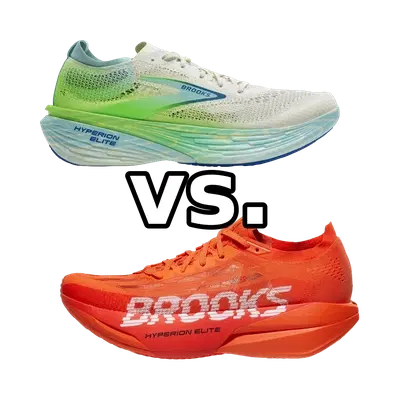
Brooks Hyperion Elite 4 PB vs Brooks Hyperion Elite 6
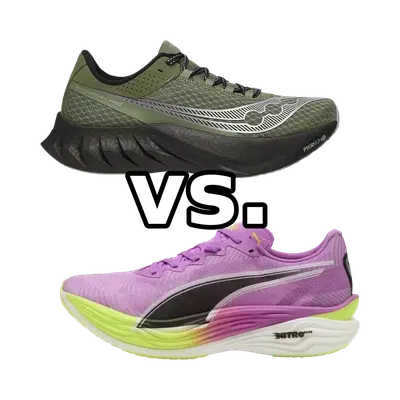
Saucony Endorphin Pro 4 vs Puma Deviate Nitro Elite 3
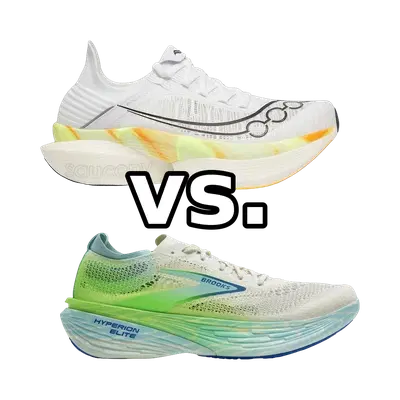
Saucony Endorphin Elite 2 vs Brooks Hyperion Elite 4 PB
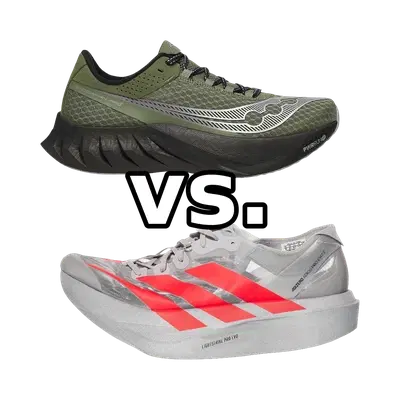
Saucony Endorphin Pro 4 vs Adidas Adizero Adios Pro Evo 2
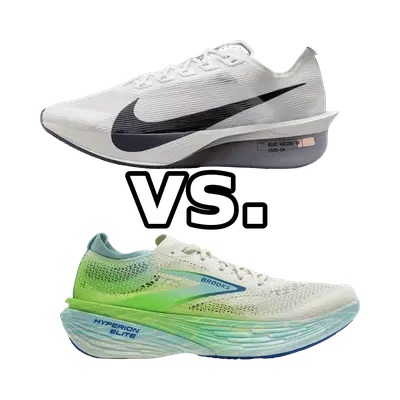
Nike Vaporfly 4 vs Brooks Hyperion Elite 4 PB
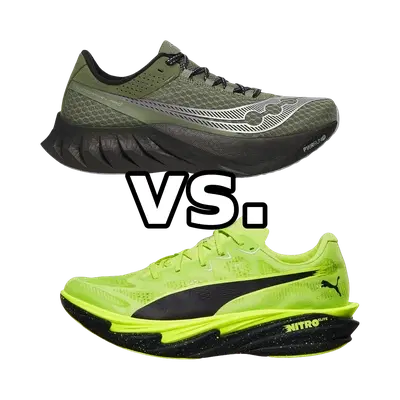
Saucony Endorphin Pro 4 vs Puma Deviate Nitro Elite 4
© 2026 longrunshoes.ai | All rights reserved.
Use of materials from this site is permitted only with proper attribution and a link to longrunshoes.ai.