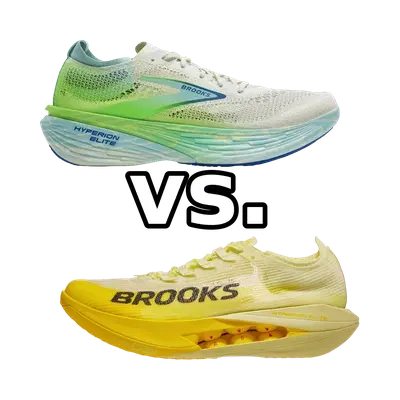
Brooks Hyperion Elite 4 PB vs Puma Deviate Nitro Elite 4:
Which to Choose
Verdict
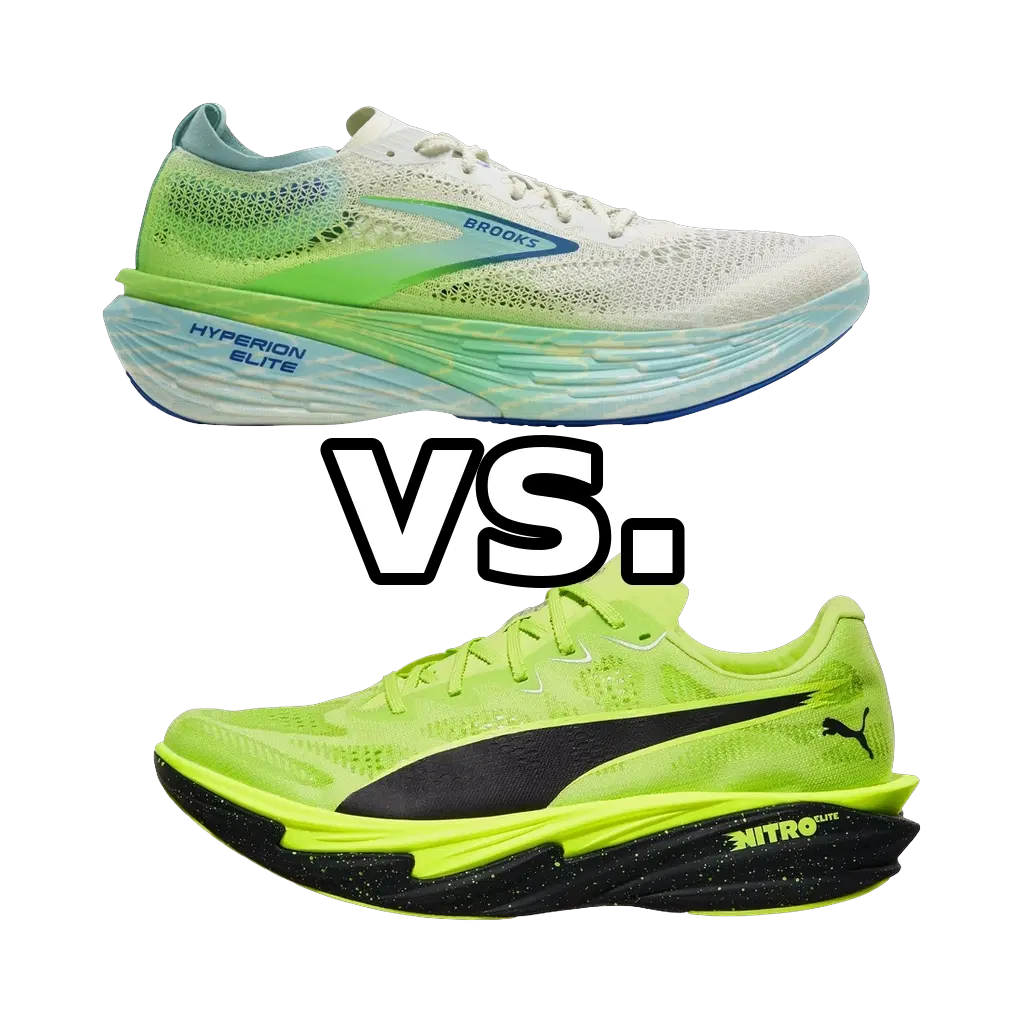
These are two genuinely comparable super-racers aimed at the same fast runner, so there's no wrong answer — it comes down to ride preference and weight. Want the lighter, bouncier, more aggressively propulsive shoe that slings you forward? Take the Puma. Want a slightly firmer, lower, more controlled and natural-feeling platform you drive yourself? Take the Brooks. Try both at speed if you can, because the spec sheets are nearly identical and your legs will decide this one.
Pace
6 of 6
Cushioning
5 of 6
Responsiveness
6 of 6
Stability
2 of 6
Drop
8 mm
Support
Neutral
Plate
Carbon
Distances
10KHalfMarathon
Pace
6 of 6
Cushioning
5 of 6
Responsiveness
6 of 6
Stability
2 of 6
Drop
9 mm
Support
Neutral
Plate
Carbon
Distances
10KHalfMarathon
At a Glance
Brooks Hyperion Elite 4 PBPuma Deviate Nitro Elite 4
Who Should Choose Each Shoe
Choose
Brooks Hyperion Elite 4 PB
Choose the Brooks Hyperion Elite 4 PB if you want a race-day shoe that feels planted, controlled, and a little closer to the ground rather than aggressively sprung — a runner who finds extreme rockers unsettling and prefers to drive the pace themselves will appreciate its more natural, snappy-but-grounded transition. It's a strong pick for the half and full marathon where a slightly firmer, more predictable platform can pay off late in the race, and for runners already comfortable with Brooks's fit and the DNA Gold PEBA feel.
Choose
Puma Deviate Nitro Elite 4
Choose the Puma Deviate Nitro Elite 4 if you want the lighter shoe (around 173g) and the bouncier, more overtly propulsive ride — its NITRO ELITE foam and PWRPLATE generate an eager, tumbling toe-off that flatters a strong midfoot strike and makes fast feel faster. It's ideal for a confident, efficient racer who likes a super-shoe to actively throw them forward through 10K to marathon efforts and prioritizes low weight and energy return over a grounded, controlled feel.
Head-to-Head
Start with how closely these two track: identical pace, cushioning, responsiveness, and stability ratings, the same neutral support, the same full-length carbon plate, and the same 10K–marathon range. The drop is effectively a wash — 8mm for the Brooks versus 9mm for the Puma — a moderate, forward-leaning offset on both that suits heel and midfoot strikers. The first real separator is weight: the Puma is the featherweight, coming in around 173g in a men's US 9 against roughly 197g for the Hyperion Elite 4 PB, a meaningful ~24g gap you'll feel over marathon distance. Stack heights are close, with both sitting around a 37–38mm heel and high-20s forefoot, so neither is the taller or more protective shoe in any decisive way. Where they genuinely diverge is ride character. The Puma's NITRO ELITE foam (an aliphatic TPU/PEBA-type compound returning roughly 77% energy) paired with its PWRPLATE delivers a bouncier, more aggressive forward tumble — it wants to tip you onto your toes and roll fast. The Brooks's DNA Gold PEBA is lively and snappy too, but the overall ride comes across as a touch firmer, lower-to-the-ground and more controlled, with a less pronounced rocker — more a planted, natural fast ride than an overt sling-forward. Both share the same caveat: the tall, narrow, unstructured platform feels tippy and vague at easy jog speeds and only settles once you're genuinely moving. Uppers are thin and breathable on each — ULTRAWEAVE on the Puma, a stripped racing mesh on the Brooks.
Similar Comparisons
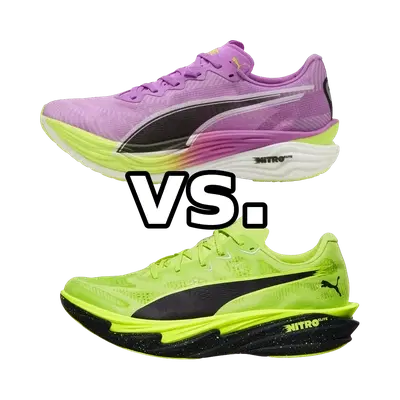
Puma Deviate Nitro Elite 3 vs Puma Deviate Nitro Elite 4
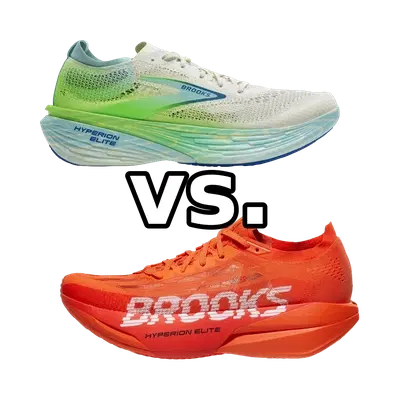
Brooks Hyperion Elite 4 PB vs Brooks Hyperion Elite 6
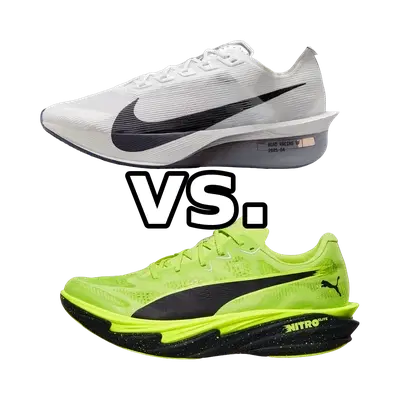
Nike Vaporfly 4 vs Puma Deviate Nitro Elite 4
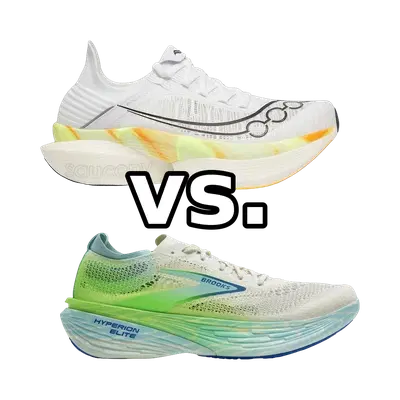
Saucony Endorphin Elite 2 vs Brooks Hyperion Elite 4 PB
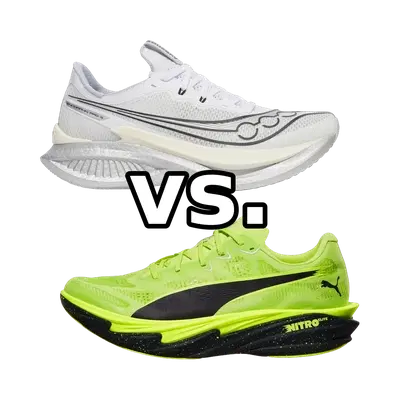
Saucony Endorphin Pro 5 vs Puma Deviate Nitro Elite 4
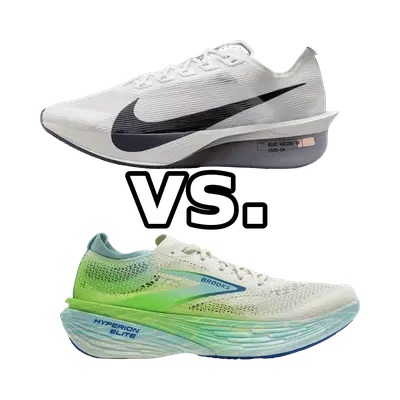
Nike Vaporfly 4 vs Brooks Hyperion Elite 4 PB
Puma Deviate Nitro 4 vs Puma Deviate Nitro Elite 4
Saucony Endorphin Pro 4 vs Brooks Hyperion Elite 4 PB
© 2026 longrunshoes.ai | All rights reserved.
Use of materials from this site is permitted only with proper attribution and a link to longrunshoes.ai.