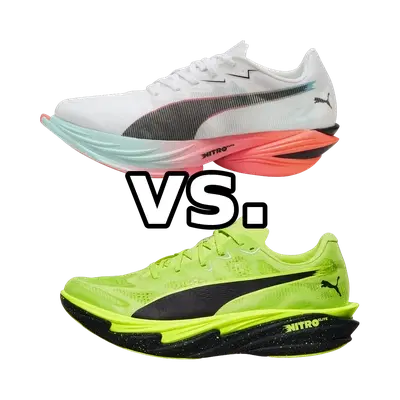
Puma Fast-R Nitro Elite 3 vs Saucony Endorphin Pro 5:
Which to Choose
Verdict
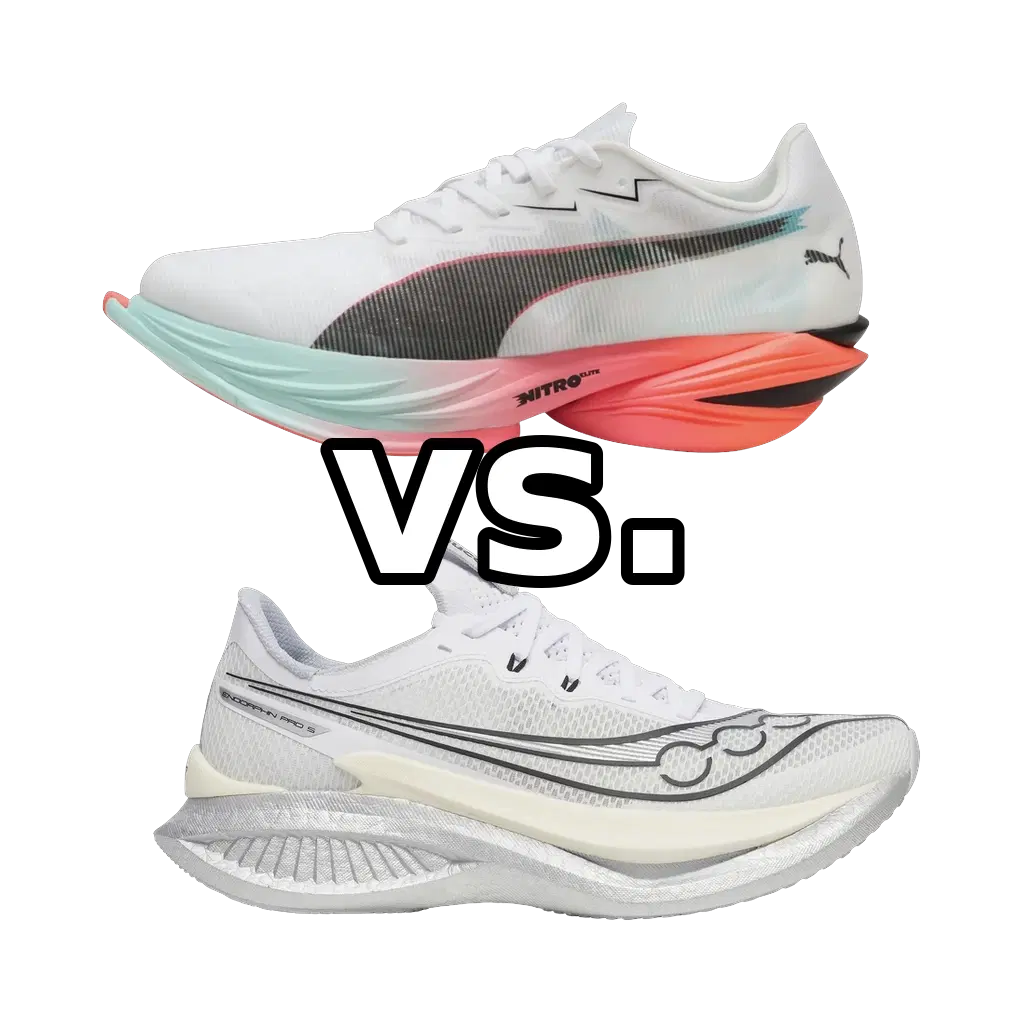
These are two excellent super-shoes serving the same purpose, so it genuinely depends — on your distance plan and how aggressive a ride you want. Pick the Puma Fast-R Nitro Elite 3 for the lightest, most explosive forefoot-driven weapon aimed at the half and full marathon; pick the Saucony Endorphin Pro 5 for a smoother, more versatile racer that covers 5K through the marathon and is easier to run well. If you're a committed forefoot racer chasing a long-distance PB, go Puma; if you want one do-it-all racer, go Saucony.
Pace
6 of 6
Cushioning
5 of 6
Responsiveness
6 of 6
Stability
2 of 6
Drop
9 mm
Support
Neutral
Plate
Carbon
Distances
HalfMarathon
Pace
6 of 6
Cushioning
5 of 6
Responsiveness
6 of 6
Stability
2 of 6
Drop
9 mm
Support
Neutral
Plate
Carbon
Distances
5K10KHalfMarathon
At a Glance
Puma Fast-R Nitro Elite 3Saucony Endorphin Pro 5
Who Should Choose Each Shoe
Choose
Puma Fast-R Nitro Elite 3
Choose the Puma Fast-R Nitro Elite 3 if you're an experienced, front-of-pack racer with an efficient forefoot strike who wants the absolute lightest, most propulsive tool for half and full marathons. It rewards a confident, committed stride and a quick toe-off, so it suits runners who already race in super-shoes and aren't put off by a firm, polarizing, aggressively aggressive ride that only clicks at speed. If shedding every possible gram and maximizing snap matters more to you than versatility or easy manners, this is the pick.
Choose
Saucony Endorphin Pro 5
Choose the Saucony Endorphin Pro 5 if you want one race shoe that does everything from a 5K to a marathon with a smoother, more approachable rocker and a slightly more forgiving platform. It's ideal for competitive and aspiring-fast neutral runners who race a range of distances across the year and would rather have a versatile, roll-through ride than the Puma's uncompromising forefoot bite. Its dual-foam setup and gentler transition make it the easier shoe to adapt to if you're newer to carbon racers.
Head-to-Head
The headline difference is weight: the Fast-R Nitro Elite 3 comes in around 170g in a men's sample, making it one of the lightest super-shoes you can buy, while the Endorphin Pro 5 sits around 215g. That ~45g gap is real and you feel it in the back half of a long race, where the Puma simply has less to carry. The other big divergence is midsole geometry. The Puma uses a decoupled, split-stack design — the heel and forefoot sections are physically separated — which makes for a firm, hyper-aggressive forefoot-driven ride that rewards a fast, forefoot-biased turnover but feels genuinely tippy and unsettled until you commit to race effort. The Endorphin Pro 5 runs a more conventional unified platform pairing a lively PWRRUN PB (PEBA) top layer over a supercritical PWRRUN HG base with a forked carbon plate; it's still tall, narrow and tippy at a jog, but its rocker rolls you forward more smoothly and forgivingly than the Puma's abrupt, plate-driven snap. Both drop into roughly the same optimal pace window (about 3:00–3:30 min/km), both use thin, gram-shaving mesh uppers that trade durability for speed, and both carry high-but-not-max cushioning. Where they split on use case: the Puma is tuned squarely for the half and full marathon and is at its best when you're holding a hard, rhythmic forefoot pace, whereas the Saucony genuinely stretches from 5K through the marathon, making it the more flexible racer if you want one shoe for the whole calendar.
Similar Comparisons
Saucony Endorphin Pro 4 vs Saucony Endorphin Pro 5
Nike Alphafly 3 vs Puma Fast-R Nitro Elite 3
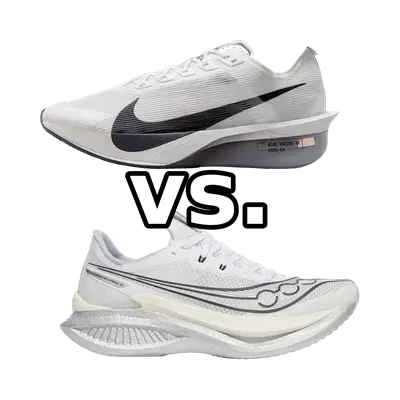
Nike Vaporfly 4 vs Saucony Endorphin Pro 5
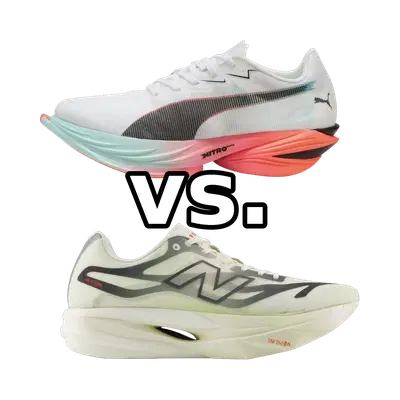
Puma Fast-R Nitro Elite 3 vs New Balance FuelCell SuperComp Elite v6
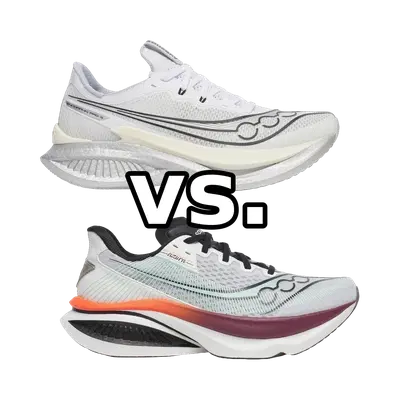
Saucony Endorphin Pro 5 vs Saucony Endorphin Azura
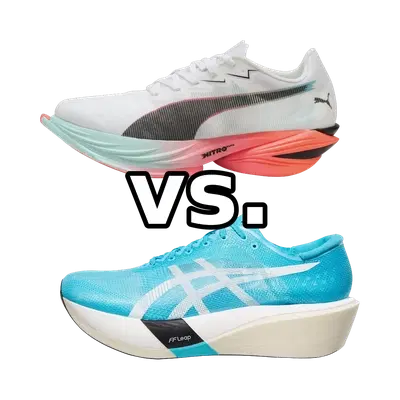
Puma Fast-R Nitro Elite 3 vs Asics Metaspeed Edge Tokyo
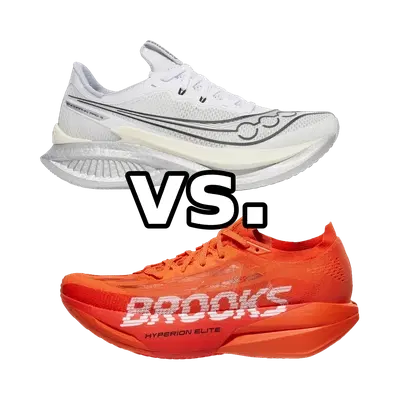
Saucony Endorphin Pro 5 vs Brooks Hyperion Elite 6
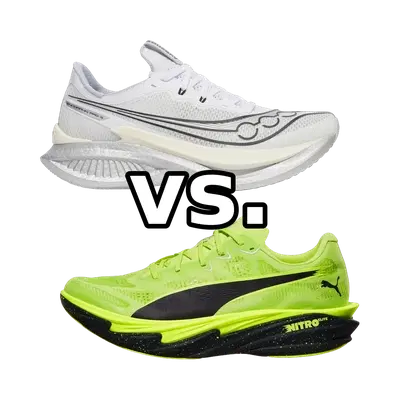
Saucony Endorphin Pro 5 vs Puma Deviate Nitro Elite 4
© 2026 longrunshoes.ai | All rights reserved.
Use of materials from this site is permitted only with proper attribution and a link to longrunshoes.ai.