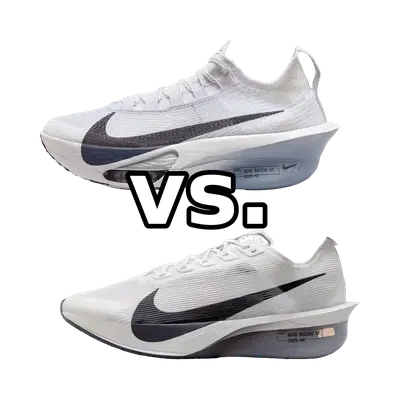
Nike Alphafly 3 vs Brooks Hyperion Elite 6:
Which to Choose
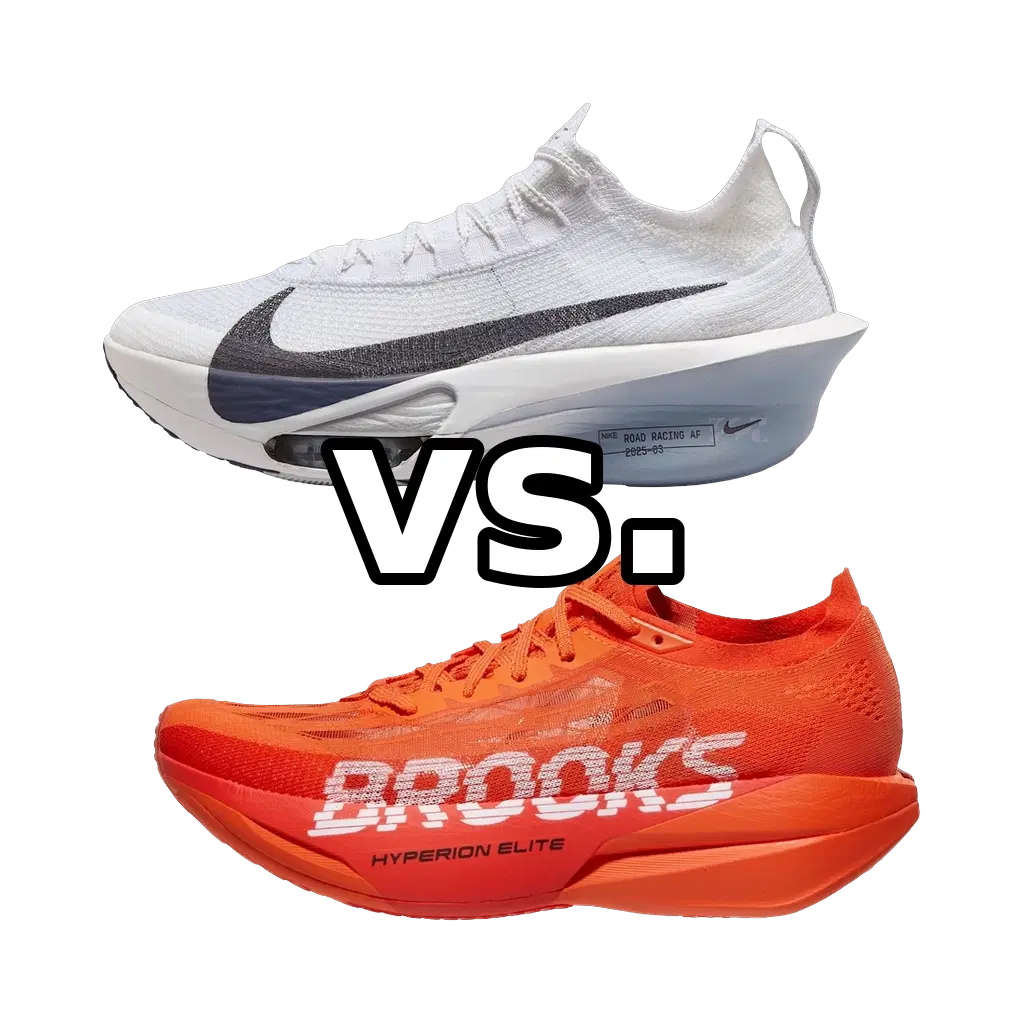
Verdict
These are genuinely close competitors, so it comes down to ride feel and range, not raw capability. Pick the Alphafly 3 if you race long (half/marathon) and crave that aggressive, air-pod-driven pop and don't mind the extra ~20 g; pick the Hyperion Elite 6 if you want a lighter, smoother, more planted shoe that also handles the 10K — the more versatile all-rounder of the two.
Pace
6 of 6
Cushioning
5 of 6
Responsiveness
6 of 6
Stability
2 of 6
Drop
8 mm
Support
Neutral
Plate
Carbon
Distances
HalfMarathon
Pace
6 of 6
Cushioning
6 of 6
Responsiveness
6 of 6
Stability
2 of 6
Drop
7 mm
Support
Neutral
Plate
Carbon
Distances
10KHalfMarathon
At a Glance
Nike Alphafly 3Brooks Hyperion Elite 6
Who Should Choose Each Shoe
Choose
Nike Alphafly 3
Choose the Alphafly 3 if your target is the half or full marathon and you're a committed forefoot/midfoot striker who can genuinely hold 3:00–3:20 min/km, where the Air Zoom pods and plate load up and deliver their signature trampoline pop. It suits the runner who wants maximum, dramatic propulsion over longer distances and doesn't mind carrying a bit more weight to get that pronounced spring. If you've raced in previous Alphaflys or Vaporflys and love that aggressive, bouncy toe-off, this is the natural pick.
Choose
Brooks Hyperion Elite 6
Choose the Hyperion Elite 6 if you want one super shoe that races well across a wider span — from a sharp 10K up through the marathon — and you value a lighter, smoother, more rolling ride over an explosive one. The sub-200 g weight and that planted, widened midfoot make it the better bet for runners who want confidence through corners and a slightly more forgiving pace window (3:00–3:45 min/km). It's the stronger choice for a versatile racer who doesn't want to own a separate shoe for shorter, faster efforts.
Head-to-Head
On the big numbers these shoes are near-twins: both sit at roughly a 40 mm heel stack with a forefoot in the low 30s (32 mm for the Alphafly, 33 mm for the Hyperion), and the drops are effectively the same — 8 mm versus 7 mm, a difference you won't feel. Both pair a full-length carbon plate with a bouncy super-foam (Nike's ZoomX, Brooks' PEBA-based DNA Gold) and a wafer-thin knit racing upper, and both carry a neutral, support-free platform (stability 2/6 each) that rewards an efficient stride and punishes a tired, sloppy one. The clearest spec difference is weight: the Hyperion Elite 6 is the lighter shoe at roughly 192–198 g in a men's US 9, while the Alphafly 3 comes in around 218 g — you're carrying a noticeable chunk more with Nike. Where they really diverge is ride character. The Alphafly's twin forefoot Air Zoom pods give it a distinctive, almost trampoline-like pop off the toe — a more dramatic, aggressive propulsion that needs genuine speed to snap in. The Hyperion counters with a smoother, more continuous forward-tipping rocker and a widened midfoot that feels a touch more planted through turns, a more rolling and less explosive sensation. That shows up in range, too: the Alphafly is a dedicated half-and-full specialist that wants to be driven at 3:00–3:30 min/km, whereas the Hyperion stretches its useful window down to the 10K and tolerates a slightly broader 3:00–3:45 min/km band, making it the more adaptable racer across distances. Both are delicate — thin outsoles and soft foam mean you should ration them for key sessions and race day rather than daily miles.
Similar Comparisons
Brooks Hyperion Elite 5 vs Brooks Hyperion Elite 6
Nike Alphafly 3 vs Asics Metaspeed Ray
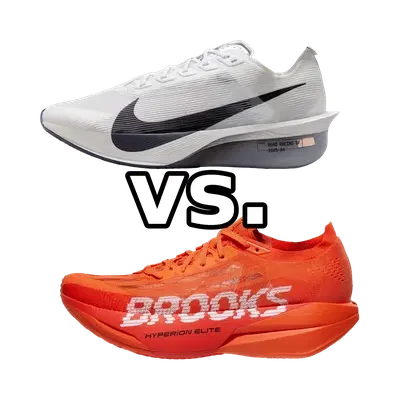
Nike Vaporfly 4 vs Brooks Hyperion Elite 6
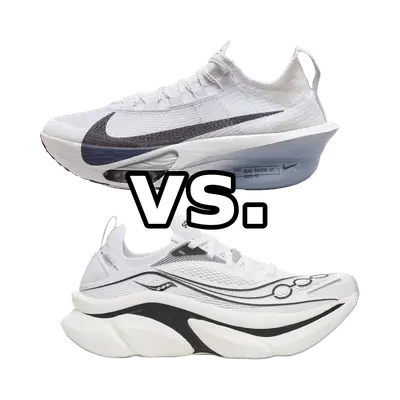
Nike Alphafly 3 vs Saucony Endorphin Elite 3
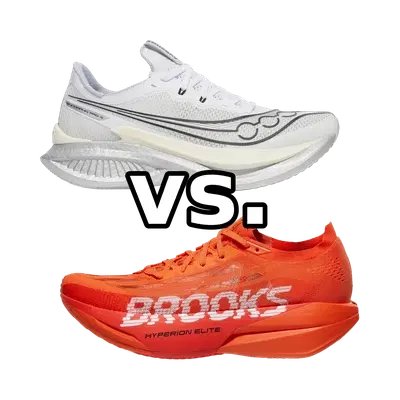
Saucony Endorphin Pro 5 vs Brooks Hyperion Elite 6
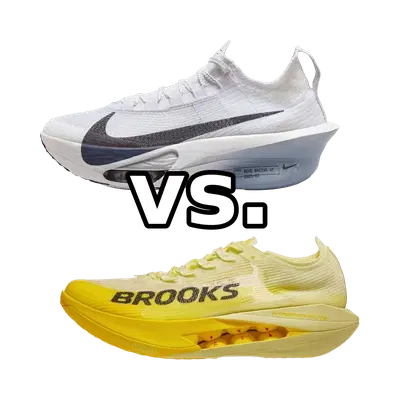
Nike Alphafly 3 vs Brooks Hyperion Elite 5
Brooks Hyperion Elite 4 PB vs Brooks Hyperion Elite 6
Nike Alphafly 3 vs Hoka Rocket X 3
© 2026 longrunshoes.ai | All rights reserved.
Use of materials from this site is permitted only with proper attribution and a link to longrunshoes.ai.