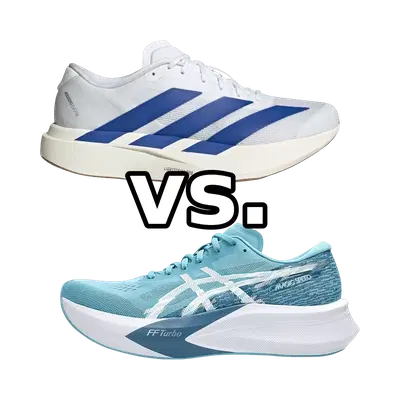
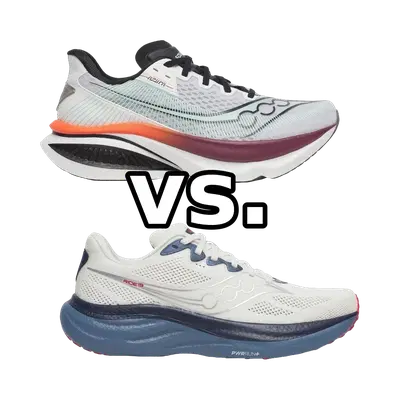
Adidas Adizero Evo SL vs Saucony Endorphin Azura:
Which to Choose
Verdict
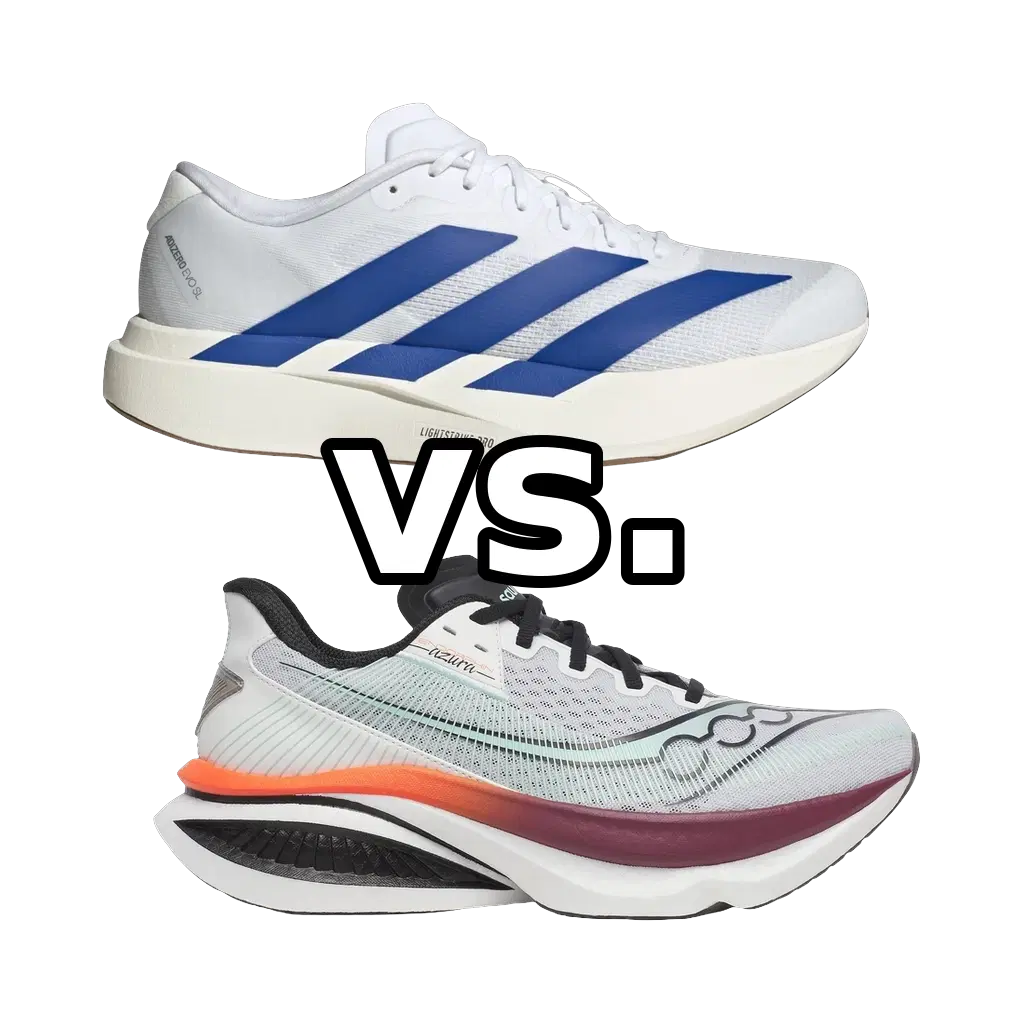
These are close cousins, so it comes down to how you'll use it. If your training centers on speed — intervals, tempos, and racing 5K to the half — the lighter, lower, snappier Evo SL is the sharper tool. If you want a single soft, bouncy shoe that covers daily miles through the marathon, the taller-heeled, more versatile Azura is the smarter buy. Both deliver plateless superfoam bounce; pick the Evo SL for focused speed, the Azura for range.
Pace
5 of 6
Cushioning
5 of 6
Responsiveness
5 of 6
Stability
3 of 6
Drop
6 mm
Support
Neutral
Plate
None
Distances
5K10KHalf
Pace
4 of 6
Cushioning
5 of 6
Responsiveness
5 of 6
Stability
3 of 6
Drop
8 mm
Support
Neutral
Plate
None
Distances
10KHalfMarathon
At a Glance
Adidas Adizero Evo SLSaucony Endorphin Azura
Who Should Choose Each Shoe
Choose
Adidas Adizero Evo SL
Choose the Adizero Evo SL if you're an experienced or improving runner who wants a lively, fast-rolling trainer for tempo runs, intervals, and racing from 5K to the half. Its lighter build, lower drop, and snappier transition reward a quick, purposeful midfoot strike, and the 10K is where it's most at home. It's the pick if your priority is speed work and short-course sharpness rather than piling on easy or long miles.
Choose
Saucony Endorphin Azura
Choose the Endorphin Azura if you want one soft, energetic shoe to handle most of your week — steady daily miles, uptempo efforts, and long runs alike. Its taller heel, 8 mm drop, and smooth rolling ride make it especially well suited to long tempos, progression runs, and going the marathon distance, with the half as its sweet spot. It's the better call for the neutral runner who values do-it-all range over outright speed and doesn't want a dedicated racer.
Head-to-Head
Underfoot the two are more alike than not — both are high-cushion, high-responsiveness neutral platforms (5/6 on each in our metrics) that generate their rebound purely from foam, with no plate steering the ride. The Evo SL's Lightstrike Pro and the Azura's PWRRUN PB are both PEBA-class foams, and both share the same mild trade-off: a slightly tippy, unsettled feel at very slow jogging speeds that disappears once you're moving with intent. The differences are in geometry and intent. The Evo SL is the lighter, lower shoe at about 224 g with a 39 mm heel / 33 mm forefoot stack, versus the Azura at 241 g on a 41 mm heel / 33 mm forefoot stack — so they share a forefoot height, but the Azura carries more foam under the heel and runs a higher 8 mm drop against the Evo SL's 6 mm. That shows up in the ride: the Evo SL feels snappier and quicker to transition, tuned for its 3:45–4:30 min/km fast zone and happiest over 5K to the half with the 10K as its sweet spot. The Azura's rolling, less urgent transition and taller heel suit a slightly more relaxed 4:30–5:15 min/km cruising range, and it extends the useful distance upward — 10K through the marathon, with the half as its home. In short, same foam philosophy, but the Evo SL is the sharper short-course tool and the Azura the more versatile long-run and daily workhorse.
Similar Comparisons
Hoka Clifton 10 vs Saucony Endorphin Azura

Adidas Adizero Evo SL vs Nike Structure 26
Saucony Endorphin Trainer vs Saucony Endorphin Azura
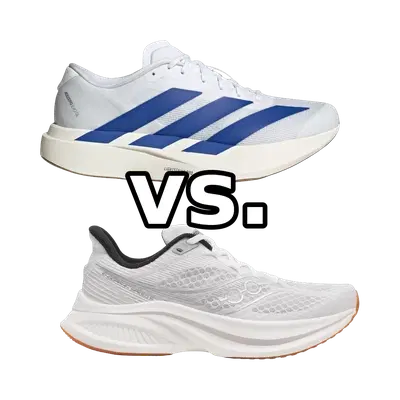
Adidas Adizero Evo SL vs Saucony Endorphin Speed 5
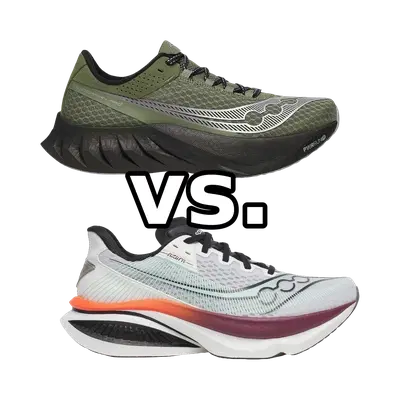
Saucony Endorphin Pro 4 vs Saucony Endorphin Azura
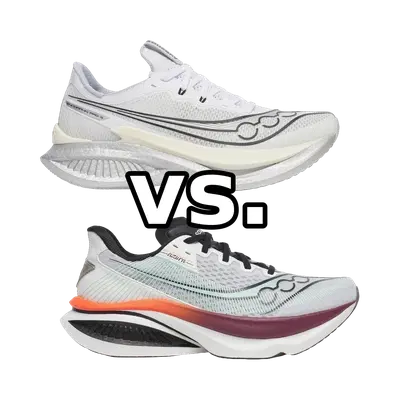
Saucony Endorphin Pro 5 vs Saucony Endorphin Azura
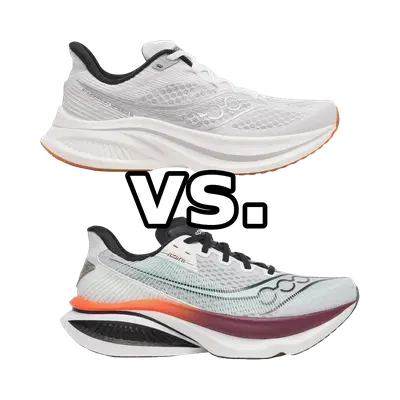
Saucony Endorphin Speed 5 vs Saucony Endorphin Azura
Saucony Endorphin Azura vs Saucony Ride 19
© 2026 longrunshoes.ai | All rights reserved.
Use of materials from this site is permitted only with proper attribution and a link to longrunshoes.ai.