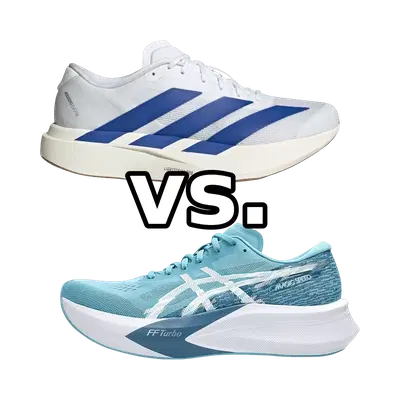
Adidas Adizero Evo SL vs Saucony Endorphin Speed 5:
Which to Choose
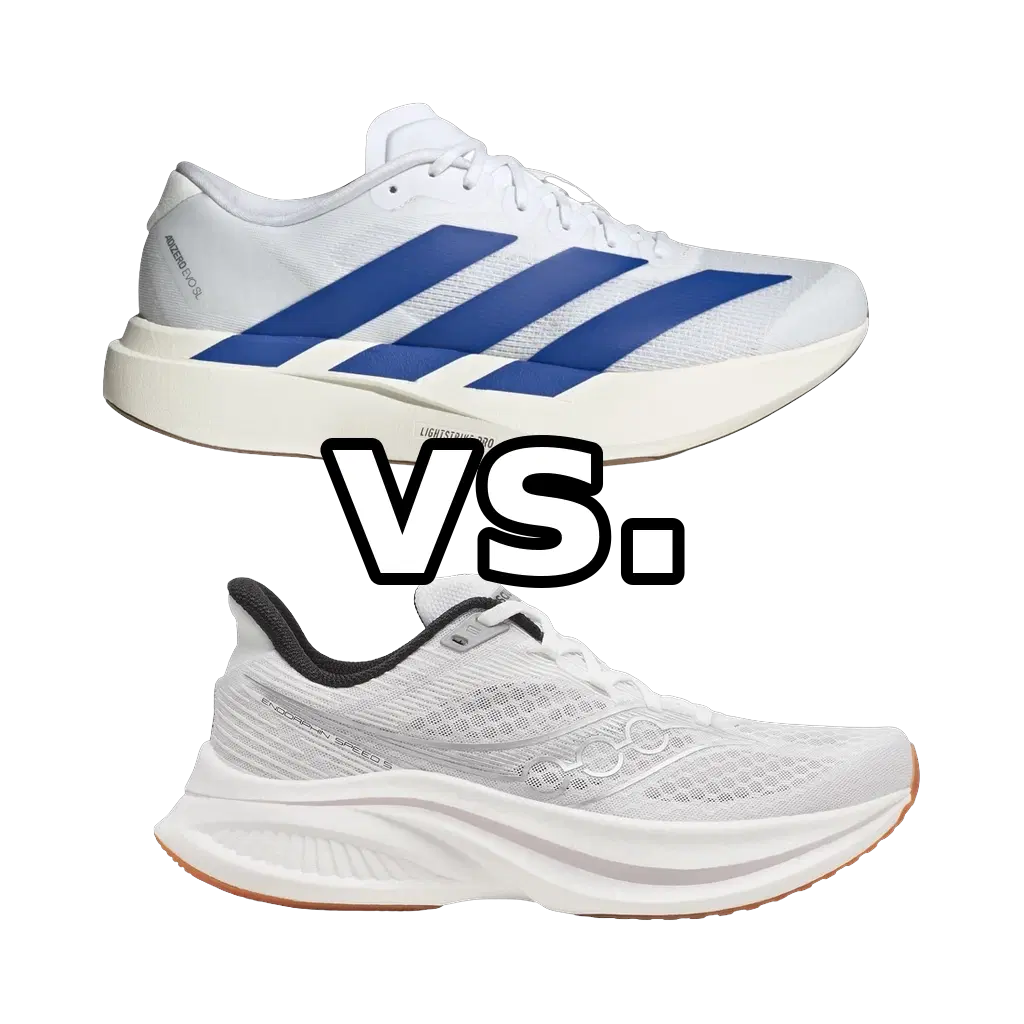
Verdict
It genuinely depends on distance and how much you like a plate. Go Evo SL for shorter, sharper racing and training up to the half, where its lighter weight and pure-foam snap shine; go Endorphin Speed 5 if you want one do-it-all shoe that reaches from 10K to the marathon with a plated, guided ride and a higher drop. Same foam family, same lively intent — but the Adidas is the faster short-course specialist and the Saucony is the more versatile long-distance workhorse.
Pace
5 of 6
Cushioning
5 of 6
Responsiveness
5 of 6
Stability
3 of 6
Drop
6 mm
Support
Neutral
Plate
None
Distances
5K10KHalf
Pace
5 of 6
Cushioning
5 of 6
Responsiveness
5 of 6
Stability
3 of 6
Drop
8 mm
Support
Neutral
Plate
Composite
Distances
10KHalfMarathon
At a Glance
Adidas Adizero Evo SLSaucony Endorphin Speed 5
Who Should Choose Each Shoe
Choose
Adidas Adizero Evo SL
Choose the Adizero Evo SL if your training skews toward speed — tempo reps, intervals, and racing 5K to half — and you want the lightest, most direct foam-driven feel of the two. It's the better pick for runners who like to drive the rebound with a quick midfoot strike and don't want a plate mediating the ride, and for those whose sweet spot is the 10K rather than the marathon. Its lower 6 mm drop and generous forefoot cushion suit forefoot-to-midfoot strikers chasing turnover.
Choose
Saucony Endorphin Speed 5
Choose the Endorphin Speed 5 if you want one shoe to cover the widest range — tempo work, long marathon-training miles, and race day — with the plate's guided, propulsive roll doing some of the work through toe-off. It's the stronger option for heel-and-midfoot strikers who prefer a higher 8 mm-plus drop and a wide, confidence-inspiring platform for going long. If your goal races reach the half and marathon rather than the 5K/10K, this is the more versatile all-rounder.
Head-to-Head
On paper these two are close cousins — both use a PEBA-class foam (Adidas's Lightstrike Pro versus Saucony's PWRRUN PB) and both deliver a soft-but-lively ride that only truly wakes up when you pick up the pace. The defining structural difference is the plate: the Endorphin Speed 5 runs a full-length semi-rigid winged nylon plate that guides and smooths transitions, while the Evo SL relies on foam alone for its rebound, giving it a more direct, less mechanically "rolled" feel. That shows in ride character — the Saucony carries you through toe-off with a plate-driven propulsion, whereas the Adidas rewards a quick, purposeful footstrike with pure foam spring. Weight is genuinely different: the Evo SL comes in around 224 g in a men's US 9 against roughly 241 g for the Endorphin Speed 5, so the Adidas feels the nimbler, snappier of the two, which fits its shorter-distance bias. Stack and geometry diverge too — the Evo SL sits near 39 mm heel / 33 mm forefoot at a 6 mm drop, while the Endorphin Speed 5 measures about 37 mm heel / 27 mm forefoot at a stated 8 mm drop (closer to 10 mm on the caliper); the practical upshot is the Adidas has more forefoot cushion and a lower, more midfoot-encouraging offset, while the Saucony's higher drop and wider 37 mm platform suit heel-and-midfoot strikers logging longer miles. Use case follows the design: the Evo SL is happiest at 5K, 10K, and the half, with the 10K as its sweet spot, whereas the Endorphin Speed 5 stretches from 10K up through the marathon, with the half as its sweet spot and enough forgiveness for long marathon-training days. Both wobble slightly at very slow jogging speeds thanks to tall, soft neutral platforms, and neither offers pronation support.
Similar Comparisons
Saucony Endorphin Speed 4 vs Saucony Endorphin Speed 5
Adidas Adizero Evo SL vs Nike Structure 26
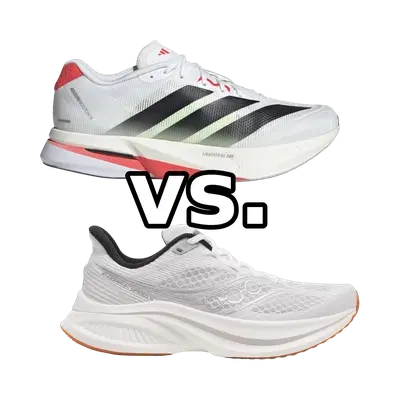
Adidas Adizero Boston 13 vs Saucony Endorphin Speed 5
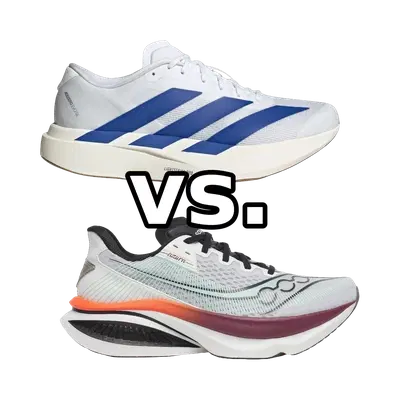
Adidas Adizero Evo SL vs Saucony Endorphin Azura
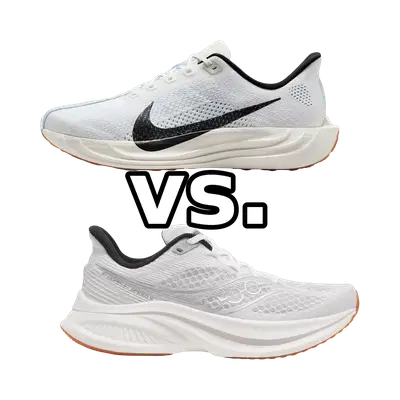
Nike Pegasus Plus vs Saucony Endorphin Speed 5
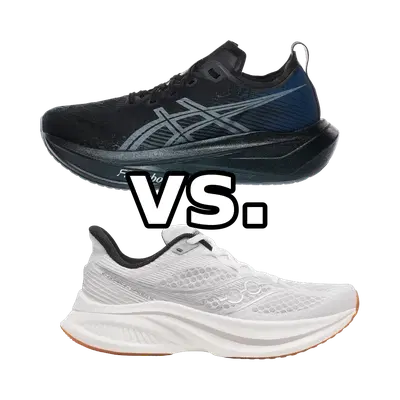
Asics Megablast vs Saucony Endorphin Speed 5
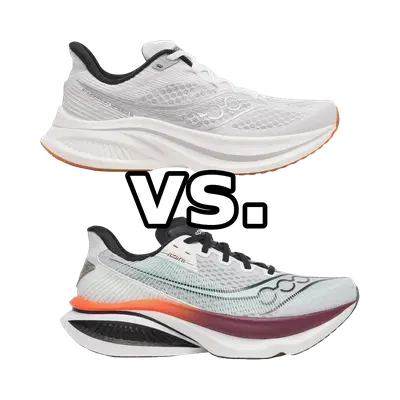
Saucony Endorphin Speed 5 vs Saucony Endorphin Azura
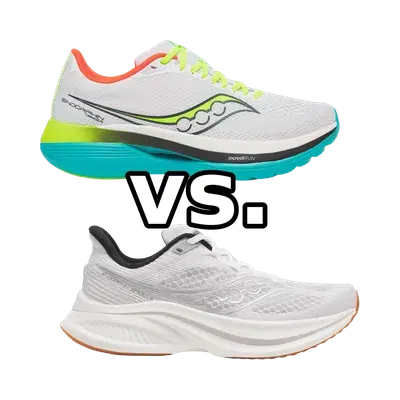
Saucony Endorphin Trainer vs Saucony Endorphin Speed 5
© 2026 longrunshoes.ai | All rights reserved.
Use of materials from this site is permitted only with proper attribution and a link to longrunshoes.ai.