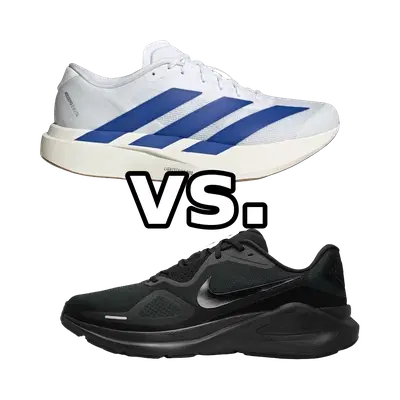
Adidas Adizero Evo SL vs Asics Magic Speed 4:
Which to Choose
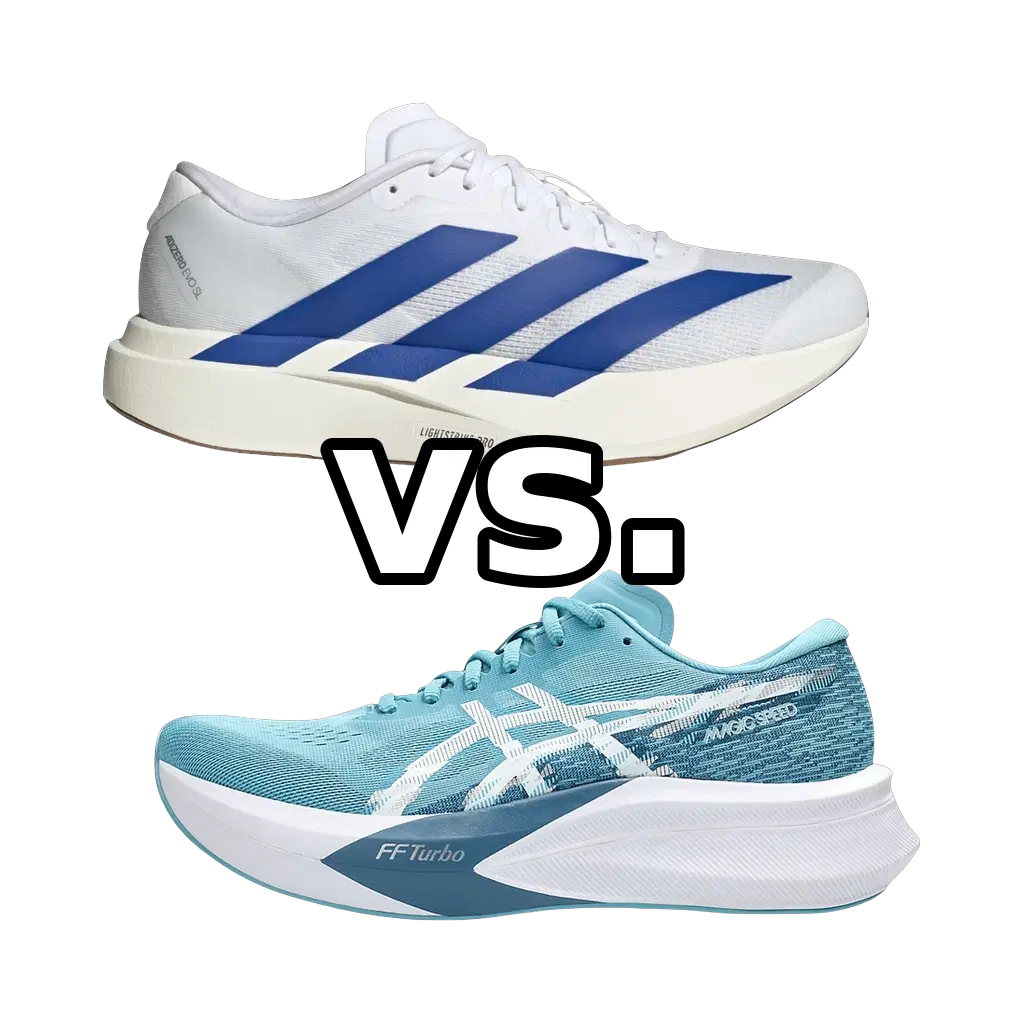
Verdict
The decision hinges on your race distance and your preferred ride feel. For 5K–10K racing and speed-focused training, the Evo SL's lighter weight and PEBA bounce give it the edge. For the half marathon and beyond, the Magic Speed 4's carbon plate earns its keep through compounding efficiency that matters most when you're deep into a longer effort. Both are genuine fast shoes — pick the one that matches where you're actually racing.
Pace
5 of 6
Cushioning
5 of 6
Responsiveness
5 of 6
Stability
3 of 6
Drop
6 mm
Support
Neutral
Plate
None
Distances
5K10KHalf
Pace
5 of 6
Cushioning
5 of 6
Responsiveness
5 of 6
Stability
3 of 6
Drop
7 mm
Support
Neutral
Plate
Carbon
Distances
10KHalfMarathon
At a Glance
Adidas Adizero Evo SLAsics Magic Speed 4
Who Should Choose Each Shoe
Choose
Adidas Adizero Evo SL
The Evo SL is the better pick for runners whose primary targets are 5K and 10K races, or who use a fast trainer mainly for tempo intervals and speed sessions rather than marathon buildups. Its lighter weight and PEBA foam's forgiving bounce suit runners who want a lively, energetic shoe that doesn't demand the mechanical commitment of a plated ride. Experienced recreational runners logging regular fast-finish workouts will find it the more versatile and less fatiguing daily driver in that shorter-distance context.
Choose
Asics Magic Speed 4
The Magic Speed 4 is the right call for runners targeting the half marathon or marathon, where the carbon plate's rolling efficiency pays dividends across miles rather than just laps. It suits intermediate to experienced runners who want one shoe capable of handling both hard workout days and race day over longer distances, and who prefer a firm, planted ride over a softer, bouncier one. Runners already comfortable in plated shoes — and willing to accept a heavier shoe in exchange for structured long-distance support — will find the Magic Speed 4 the more capable tool.
Head-to-Head
The sharpest dividing line is the plate. The Magic Speed 4 carries a full-length carbon plate that creates a stiff, rockered forward roll — the kind of geometry that compounds in efficiency over longer distances, particularly from the half marathon through the marathon. The Evo SL has no plate at all; its Lightstrike Pro foam (a PEBA-class compound) handles energy return on its own, producing a softer, bouncier rebound rather than a rolling push. Because PEBA outperforms EVA-based foams in raw snap and resilience, the Evo SL manages to match the Magic Speed 4's responsiveness rating without a plate — but the character of that responsiveness is genuinely different: springy and forgiving on the Evo SL, firmer and more mechanically purposeful on the Magic Speed 4.
Weight is a real separator. The Evo SL is meaningfully lighter than the Magic Speed 4, a gap you notice at the end of a hard interval session or late in a race. The 1mm drop difference (6mm vs 7mm) is minor and unlikely to be felt, though both shoes share a similar midfoot-forward geometry and neither suits a heavy heel-striker well.
Distance range is where the split becomes clearest. The Evo SL excels from 5K through the half marathon, with the 10K as its true sweet spot and an optimal pace band starting around 3:45 min/km — it's built for shorter, sharper efforts. The Magic Speed 4 is the one you reach for from the 10K through the full marathon, with the half as its sweet spot and an efficiency window that stretches further into longer race durations; the carbon plate justifies itself precisely because the compounding efficiency advantage grows the farther you run. Both shoes feel slightly awkward at true easy-jog paces — they want a committed stride to feel at home — and neither offers meaningful pronation control, so moderate overpronators should look elsewhere.

© 2026 longrunshoes.ai | All rights reserved.
Use of materials from this site is permitted only with proper attribution and a link to longrunshoes.ai.