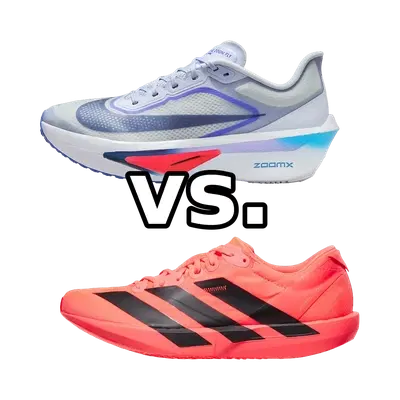
Nike Zoom Fly 6 vs Asics Magic Speed 4:
Which to Choose
Verdict
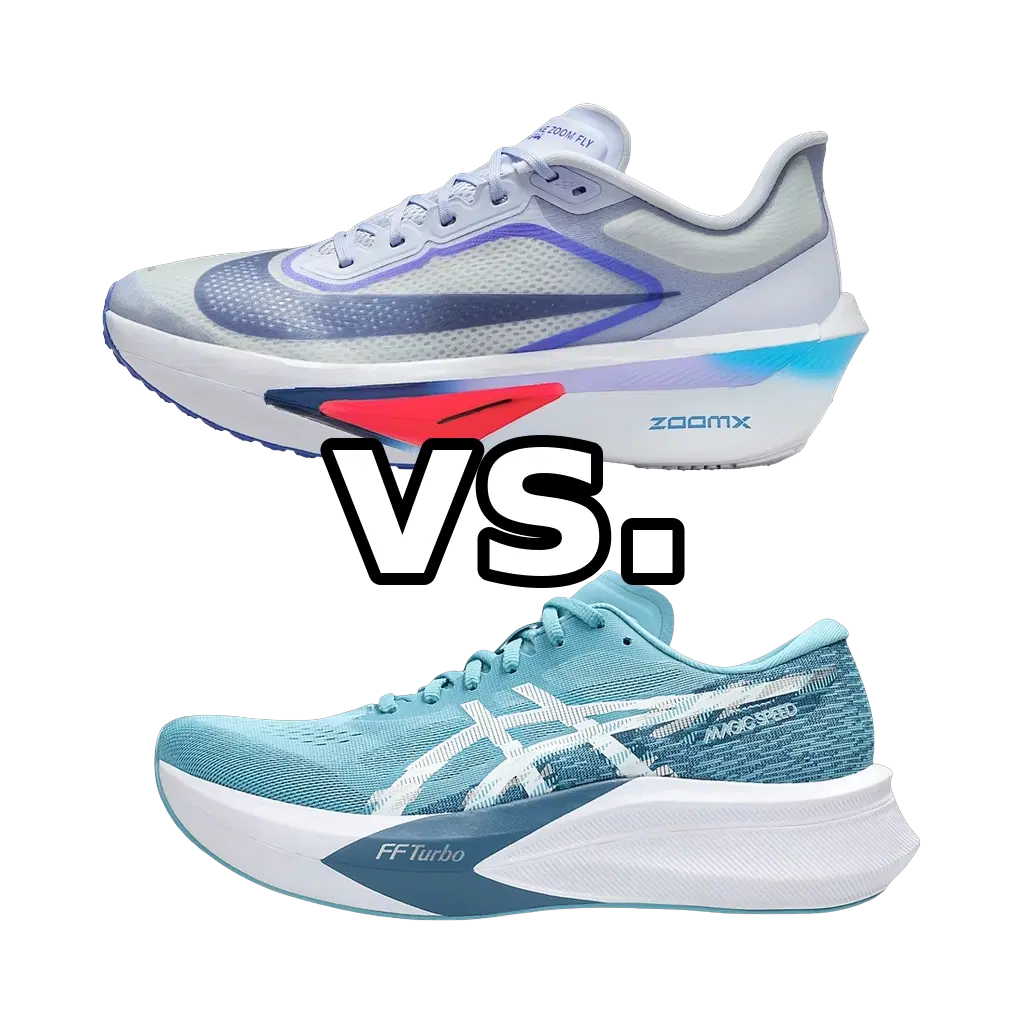
These two are genuinely interchangeable in purpose, so pick on feel: go Zoom Fly 6 for a taller, bouncier, more racer-like ZoomX ride, or Magic Speed 4 for a lighter, firmer, more planted ride with a smooth carbon roll. If you can, run in both — the foam character and the weight difference are what you'll actually feel, and everything else is a wash.
Pace
5 of 6
Cushioning
5 of 6
Responsiveness
5 of 6
Stability
3 of 6
Drop
8 mm
Support
Neutral
Plate
Carbon
Distances
10KHalfMarathon
Pace
5 of 6
Cushioning
5 of 6
Responsiveness
5 of 6
Stability
3 of 6
Drop
7 mm
Support
Neutral
Plate
Carbon
Distances
10KHalfMarathon
At a Glance
Nike Zoom Fly 6Asics Magic Speed 4
Who Should Choose Each Shoe
Choose
Nike Zoom Fly 6
Choose the Zoom Fly 6 if you want the ride that most resembles a carbon race shoe — a tall, springy ZoomX platform with real bounce that rewards leaning into a rhythm on tempo days and uptempo long runs. It's the pick for the runner chasing 10K-to-marathon goals who prizes that energetic, propulsive pop and doesn't mind carrying a bit more weight to get it.
Choose
Asics Magic Speed 4
Choose the Magic Speed 4 if you'd rather have the lighter, firmer, more composed shoe — a lively but controlled roll that stays planted and efficient when you commit to a pace. It suits the intermediate-to-experienced runner who wants a snappy carbon trainer for fast workouts and longer races and prefers a connected, grounded feel over maximum bounce.
Head-to-Head
Spec-for-spec these two are matched on pace, cushioning, responsiveness, and stability (all 5/6, 5/6, 5/6, 3/6 neutral), and the drops are a hair apart — 8mm for the Zoom Fly 6, 7mm for the Magic Speed 4, close enough that you won't feel the difference. Both are tall shoes sitting in the ~40mm heel-stack range, so neither is short on protection for long efforts. The decisive split is the midsole compound. Nike uses ZoomX, a PEBA-based superfoam (in a firmer, more durable training formulation), which gives the Zoom Fly 6 a genuinely bouncy, springy "pop" and a more energetic toe-off — it rides like a toned-down racer. The Magic Speed 4 runs on FF Blast Plus Eco, an EVA-based foam: lively and moderately firm with a strong rebound, but it stops short of the elastic, bouncy character of a true superfoam, trading some pop for a composed, controlled roll. The other meaningful difference is weight: the Magic Speed 4 is the lighter of the two, while the Zoom Fly 6 is one of the heavier plated trainers in this class, which you notice most when the pace drops. Both share the same personality quirk — the tall, plated setup feels stiff and awkward at jog pace and only earns its keep when you run with intent — and both have only a moderately wide neutral base, so each asks for a little attention in hard corners. Underfoot, then: the Nike feels taller and springier with more outright bounce; the Asics feels firmer, lighter, and more planted.
© 2026 longrunshoes.ai | All rights reserved.
Use of materials from this site is permitted only with proper attribution and a link to longrunshoes.ai.