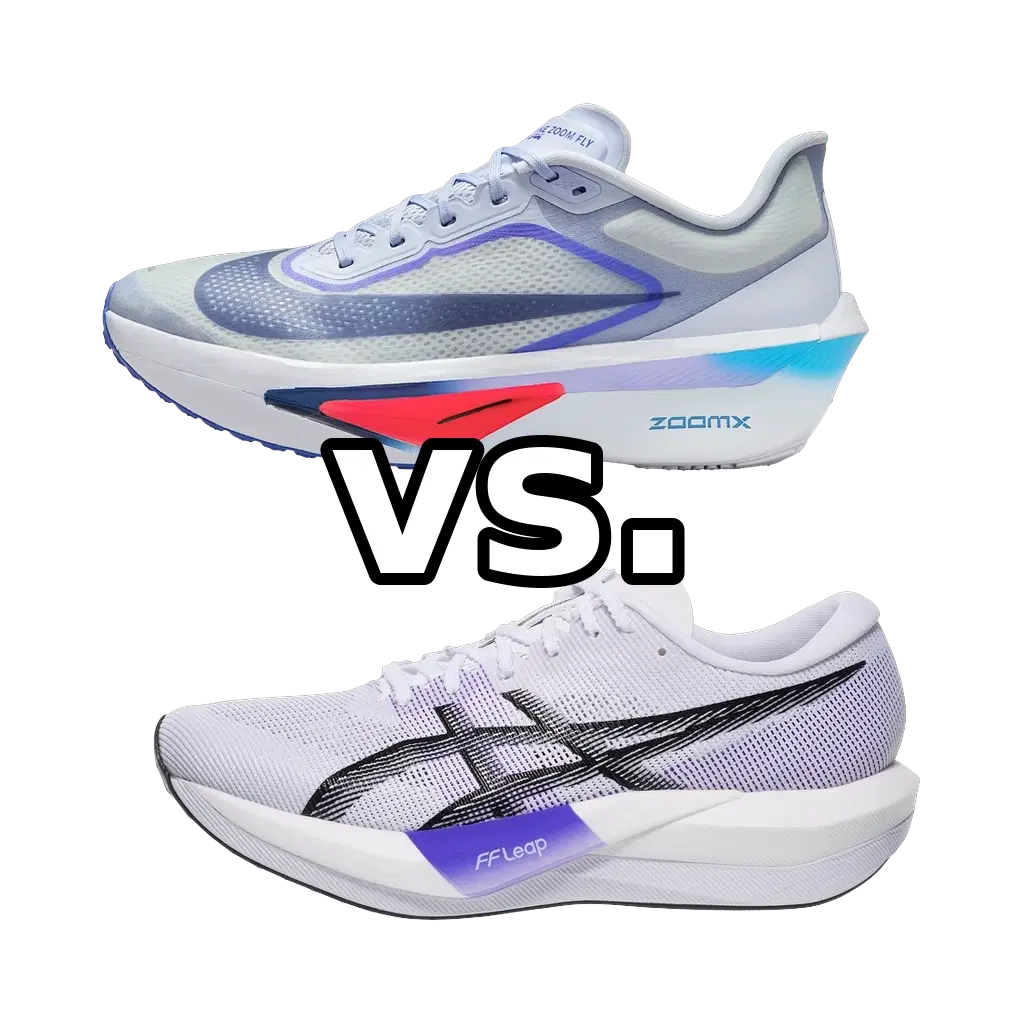
Nike Zoom Fly 6 vs Asics Magic Speed 5:
Which to Choose
Verdict
It genuinely depends — on race distance and ride preference, not on which is "better." Go Zoom Fly 6 if you're racing half to full marathon and want a taller, softer, fully propulsive ZoomX-and-full-carbon ride with more cushioning; go Magic Speed 5 if you're racing 5K to half and want a lighter, firmer, snappier shoe that's built for fast, short efforts. Both share an 8mm drop and neutral, speed-oriented character, so the deciding factors are how far you go and whether you prefer bounce and protection (Nike) or a leaner, grounded, quick-turnover feel (Asics).
Pace
5 of 6
Cushioning
5 of 6
Responsiveness
5 of 6
Stability
3 of 6
Drop
8 mm
Support
Neutral
Plate
Carbon
Distances
10KHalfMarathon
Pace
5 of 6
Cushioning
4 of 6
Responsiveness
5 of 6
Stability
3 of 6
Drop
8 mm
Support
Neutral
Plate
Carbon
Distances
5K10KHalf
At a Glance
Nike Zoom Fly 6Asics Magic Speed 5
Who Should Choose Each Shoe
Choose
Nike Zoom Fly 6
Choose the Zoom Fly 6 if your goals run long — half marathons and marathons, plus uptempo long runs where a taller, softer, full-carbon ride pays off over the back half. It's the better pick for the runner who wants one plated shoe that can both train and race from 10K up, values cushioning and bounce for protection, and doesn't mind carrying a bit more weight to get a more forgiving, propulsive roll. If you're coming from a soft daily trainer and want race-day pop without a harsh landing, this is the friendlier transition.
Choose
Asics Magic Speed 5
Choose the Magic Speed 5 if your racing centers on 5K to the half and you value a light, firm, quick-reacting shoe for intervals, tempo sessions, and shorter races where turnover matters more than plush cushioning. At 201g it's the livelier, more agile option, and its firmer FF Blast+ base and forked plate suit a midfoot or slightly heel-biased striker who likes to feel the ground and push the pace. It's ideal for an improving runner who wants a plated trainer that sharpens speedwork rather than a maximal marathon cruiser.
Head-to-Head
Start with what's identical: both run an 8mm drop, both are neutral with a moderately stable (3/6) but not supportive platform, and both share the same tempo comfort zone around 4:00–4:45 min/km. Past that they diverge in ways that decide the purchase. The Zoom Fly 6 is the bigger shoe in every sense — a taller stack (roughly 40mm heel / 32mm forefoot) built on Nike's ZoomX foam, a resilient PEBA-based midsole that delivers genuine bounce and energy return, wrapped around a full-length carbon Flyplate. The Magic Speed 5 is lower and firmer at 35mm heel / 27mm forefoot, with a dual-layer FF Leap top sheet over an EVA-based FF Blast+ base and only a partial (~70%, forefoot-forked) carbon plate. That foam-and-plate difference is the crux: the Nike's full plate and springier foam load and release for a smooth, propulsive roll that holds up over long miles, whereas the Asics gives a snappier, more grounded, quick-off-the-ground feel that rewards fast turnover but won't match a full PEBA racer for return at marathon distance — a limit Asics itself is candid about. Weight reinforces the split: the Magic Speed 5 is notably lighter at 201g (men's US 9) versus roughly 245g for the Zoom Fly 6, so the Asics feels friskier underfoot while the Nike feels more planted and cushioned. Their best-distance ranges tell the same story — the Zoom Fly 6 stretches from 10K to the full marathon with the half as its sweet spot, while the Magic Speed 5 covers 5K to half with the 10K as its home base. Cushioning follows suit (5/6 for the Nike, 4/6 for the Asics): the Nike protects more over distance, the Asics keeps you closer to the road for sharper efforts.
Similar Comparisons
Asics Metaspeed Sky Paris vs Asics Magic Speed 5
Nike Zoom Fly 6 vs Asics Magic Speed 4
Asics Magic Speed 4 vs Asics Magic Speed 5
Nike Zoom Fly 6 vs Saucony Kinvara Pro
Nike Zoom Fly 6 vs Adidas Adizero Evo SL
Nike Zoom Fly 6 vs Adidas Adizero Boston 13
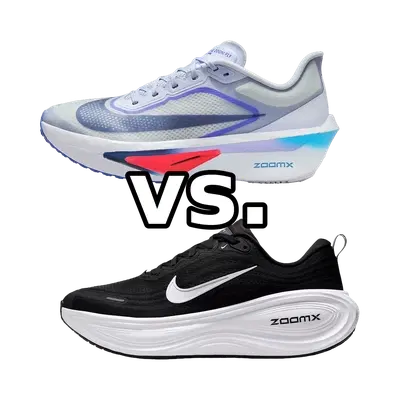
Nike Zoom Fly 6 vs Nike Vomero Plus
© 2026 longrunshoes.ai | All rights reserved.
Use of materials from this site is permitted only with proper attribution and a link to longrunshoes.ai.