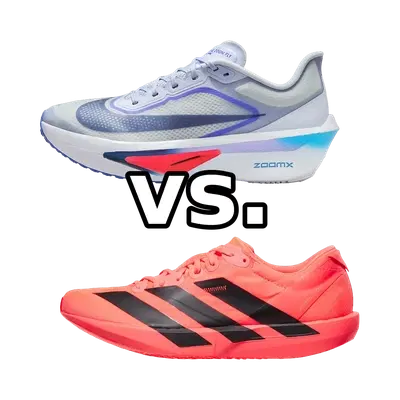
Nike Zoom Fly 6 vs Nike Vomero Plus:
Which to Choose
Verdict
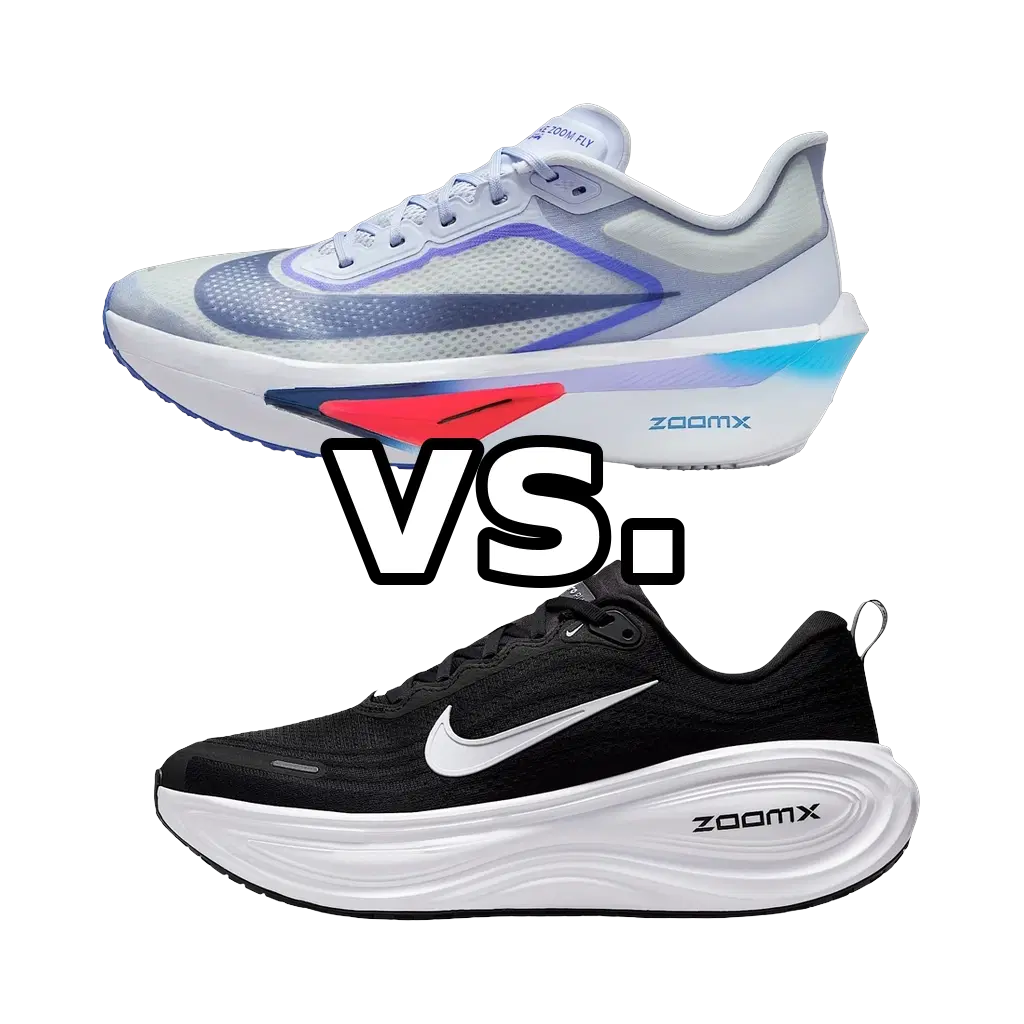
It genuinely depends — not on which is "better," but on what you need the shoe to do. If your training includes workouts and you want propulsion and versatility up to the marathon, the lighter, plated Zoom Fly 6 is the clear call. If you want a plush, forgiving cruiser for easy and long miles and speed isn't the point, the Vomero Plus is the one. They share a foam, a stack height, and a brand, so the honest tiebreaker is simple: plate and pace, or softness and comfort.
Pace
5 of 6
Cushioning
5 of 6
Responsiveness
5 of 6
Stability
3 of 6
Drop
8 mm
Support
Neutral
Plate
Carbon
Distances
10KHalfMarathon
Pace
3 of 6
Cushioning
6 of 6
Responsiveness
5 of 6
Stability
4 of 6
Drop
9 mm
Support
Neutral
Plate
None
Distances
10KHalf
At a Glance
Nike Zoom Fly 6Nike Vomero Plus
Who Should Choose Each Shoe
Choose
Nike Zoom Fly 6
Choose the Zoom Fly 6 if you're an experienced recreational runner who actually does workouts — tempo runs, uptempo long runs, and 10K-to-marathon race efforts — and wants the forward propulsion of a carbon plate without the fragility of a pure racer. It's the pick if you run with intent most days and want one shoe that can handle a quick long run and double as a race-day option. Skip it if most of your miles are easy, because the stiff plate feels clunky and the tall platform wobbles at shuffle pace.
Choose
Nike Vomero Plus
Choose the Vomero Plus if you're a neutral runner who wants plush, protective cushioning for easy days, recovery jogs, and long comfortable miles at a conversational effort. It's the better daily workhorse for anyone who prioritizes a soft, forgiving, stable-for-its-height ride over speed, and who has a separate shoe (or doesn't care) for fast sessions. Don't buy it expecting race-day pop — with no plate and the heavier weight, it resists surges and wants a steady rhythm.
Head-to-Head
On paper these two sit almost on top of each other: both ride on a 42 mm heel stack of Nike's ZoomX foam, with the Zoom Fly 6 at 42/34 mm (8 mm drop) and the Vomero Plus at 42/33 mm (9 mm drop) — within a millimeter of each other at both ends. The decisive difference is what's inside that stack. The Zoom Fly 6 sandwiches a full-length carbon Flyplate between ZoomX and a firmer carrier foam, giving a stiff, forward-tipping ride that rewards picking up the pace and feels snappy through transitions. The Vomero Plus deliberately omits any plate — it's single-minded max cushioning, softer and more forgiving underfoot, tuned for a relaxed roll rather than a propulsive toe-off. That shows up in their comfort zones: the Zoom Fly 6 comes alive around 3:50–4:15 min/km and holds a tempo rhythm, while the Vomero Plus is happiest cruising at 5:15–5:45 min/km and exposes its weight when you push quicker. Weight reinforces the split — the Zoom Fly 6 is the lighter shoe at roughly 265 g versus 285 g for the Vomero Plus (men's US 9), and that 20-odd grams compounds with the plate to make it the faster-feeling shoe by a wide margin. Stability is a mild trade in the Vomero's favor: both are neutral with no pronation support, but the Vomero's softer, plateless platform (4/6) tracks a touch more settled at slow speeds than the tall, plated Zoom Fly 6 (3/6), which can wobble slightly at a jog. In short, same foam, same stack, same brand — but a plate versus no plate makes them genuinely different tools. They overlap only at 10K and the half; the Zoom Fly 6 extends to the marathon, while the Vomero Plus caps out well before race pace.
Similar Comparisons
Nike Invincible 3 vs Nike Vomero Plus
Nike Zoom Fly 6 vs Asics Magic Speed 4
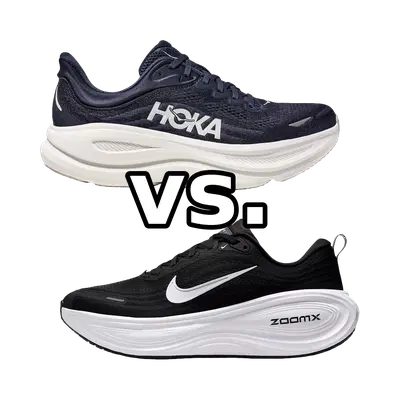
Hoka Bondi 9 vs Nike Vomero Plus
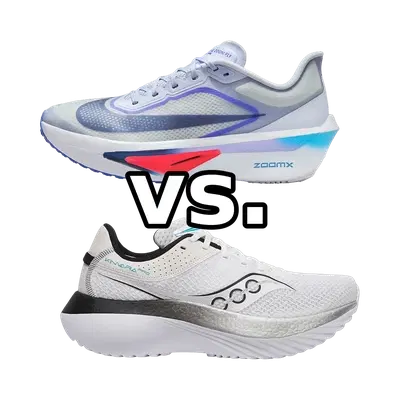
Nike Zoom Fly 6 vs Saucony Kinvara Pro
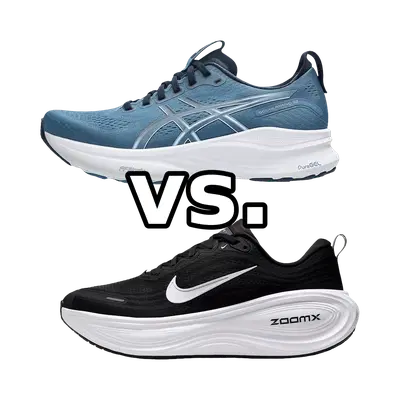
Asics Gel-Kayano 32 vs Nike Vomero Plus
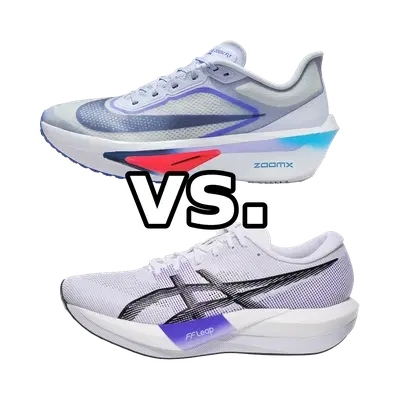
Nike Zoom Fly 6 vs Asics Magic Speed 5
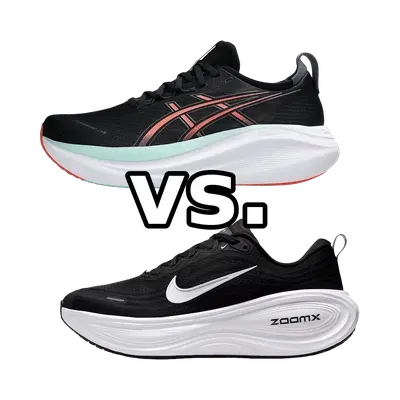
Asics Gel-Nimbus 27 vs Nike Vomero Plus
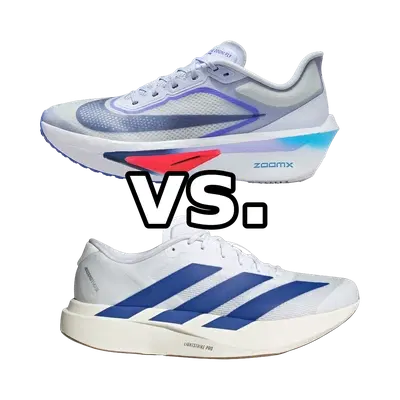
Nike Zoom Fly 6 vs Adidas Adizero Evo SL
© 2026 longrunshoes.ai | All rights reserved.
Use of materials from this site is permitted only with proper attribution and a link to longrunshoes.ai.