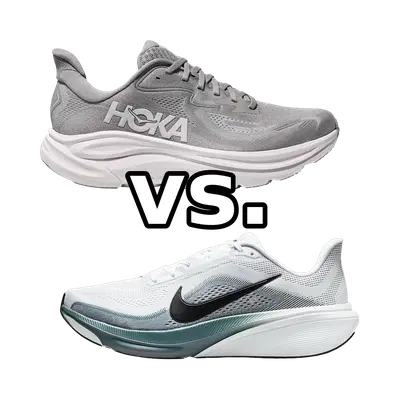
Hoka Clifton 10 vs Hoka Arahi 8:
Which to Choose
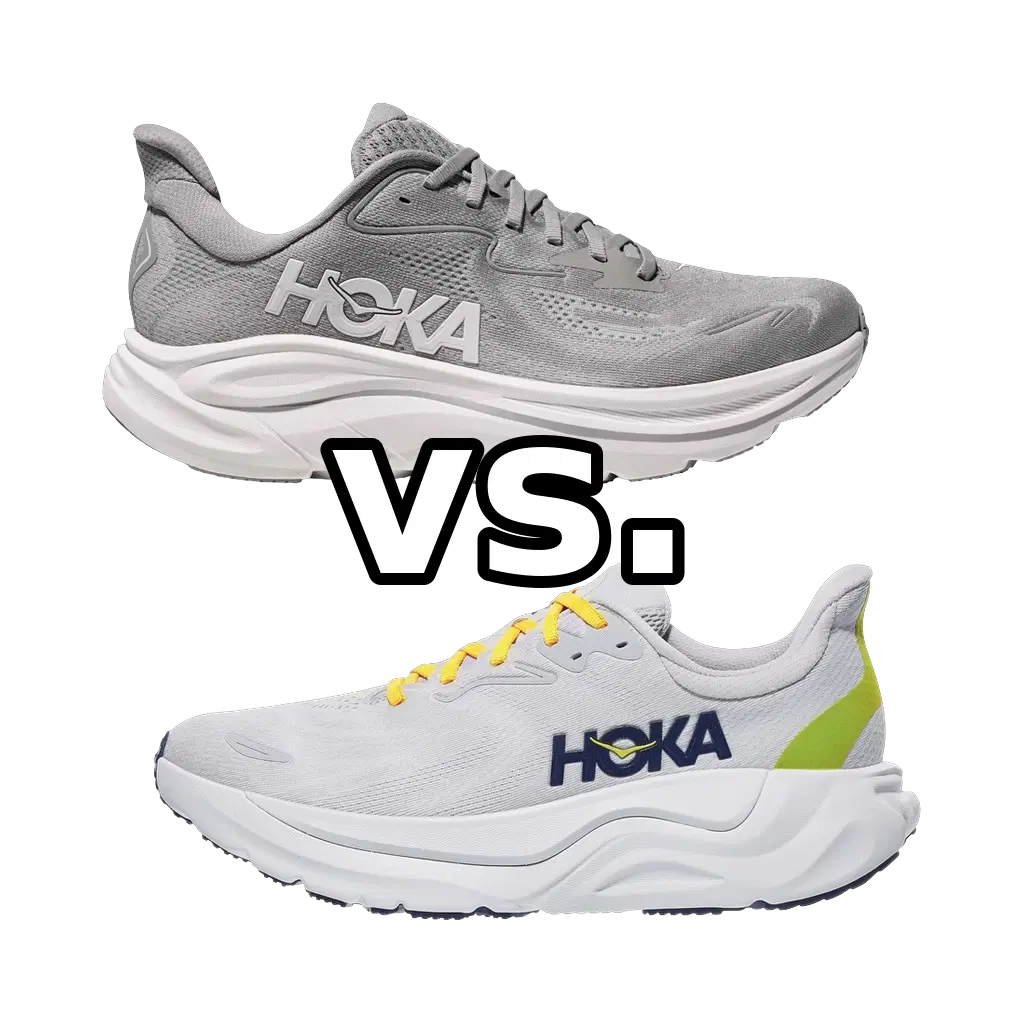
Verdict
It comes down to one question: do you need stability? If you overpronate or want a firm, guided, planted ride, the Arahi 8 is the clear choice — and it delivers that structure while staying lighter and lower to the ground. If your gait is neutral and you're after the softest, deepest, most protective cushioning for easy and long runs, the Clifton 10 wins. Both are steady daily-mileage trainers for 10K to marathon, not speed tools, so pick on support and ride feel, not pace.
Pace
3 of 6
Cushioning
5 of 6
Responsiveness
3 of 6
Stability
4 of 6
Drop
8 mm
Support
Neutral
Plate
None
Distances
10KHalfMarathon
Pace
3 of 6
Cushioning
4 of 6
Responsiveness
3 of 6
Stability
6 of 6
Drop
11 mm
Support
Stability
Plate
None
Distances
10KHalfMarathon
At a Glance
Hoka Clifton 10Hoka Arahi 8
Who Should Choose Each Shoe
Choose
Hoka Clifton 10
Choose the Clifton 10 if you're a neutral runner — beginner or experienced recreational — who wants the softest, most protective daily trainer for easy miles and long runs, and who values a plush, forgiving landing over a firm, controlled one. It's the better pick if you don't need pronation support and want the deepest cushioning for high-mileage marathon buildups, and you're happy to accept a touch more weight to get it. Runners who like that cushioned-tank Hoka feel and log steady aerobic kilometers rather than intervals will be at home here.
Choose
Hoka Arahi 8
Choose the Arahi 8 if you overpronate or simply want structure — a heel striker chasing consistent, injury-free volume who wants their foot guided straight through every transition. Its H-Frame gives genuine stability control that the neutral Clifton can't match, and the firmer, planted CMEVA and higher 11 mm offset reward runners who prefer a controlled, predictable ride over a plush one. It's also the lighter shoe, so runners who want support without the clunk of a heavier stability trainer should look here first.
Head-to-Head
Start with what they share: neither has a plate, both lean on compression-molded EVA, and both offer moderate rather than snappy rebound — push past roughly 4:45 min/km and each one's foam runs out of pop. From there they diverge. The Clifton 10 is the plusher, taller shoe: its EVA is soft and deep (cushioning 5/6), and it carries the bigger platform, measuring around 44 mm heel and 32 mm forefoot versus the Arahi's roughly 39 mm and 28 mm — so it feels more forgiving and protective underfoot, at the cost of getting vague when you press the pace. The Arahi 8 goes the other way: its CMEVA is firmer and only moderately cushioned (4/6), which reads as planted and controlled rather than plush, and its firmer-EVA H-Frame actively keeps the foot tracking straight for a maximum stability rating (6/6) against the Clifton's above-average-for-neutral 4/6. Stability is the headline gap — the Clifton earns its calm passively from a broad rocker base with no pronation correction, while the Arahi is purpose-built to control overpronation. Two smaller differences round it out: the Arahi rides on a higher measured offset (11 mm vs the Clifton's 8 mm), which suits committed heel strikers, and despite being the more structured shoe it is actually the lighter of the two, at about 259 g versus roughly 275 g for the Clifton in a men's US 9. So the Clifton trades a little weight for more cushioning; the Arahi trades a little softness for guidance and a slightly leaner, firmer ride.
Similar Comparisons
Hoka Arahi 7 vs Hoka Arahi 8
Hoka Clifton 10 vs Saucony Endorphin Azura
Asics Gel-Kayano 32 vs Hoka Arahi 8
Hoka Clifton 10 vs Hoka Clifton 11
Asics Gel-Kayano 33 vs Hoka Arahi 8
Hoka Clifton 10 vs Hoka Clifton Pro

Hoka Bondi 9 vs Hoka Arahi 8
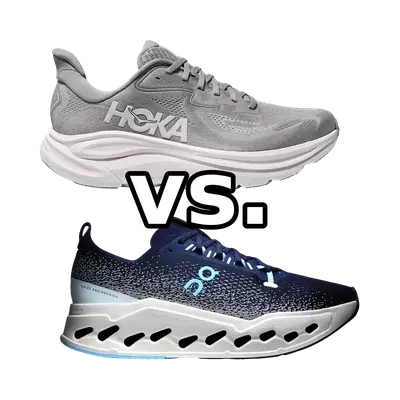
Hoka Clifton 10 vs On Cloudsurfer Max
© 2026 longrunshoes.ai | All rights reserved.
Use of materials from this site is permitted only with proper attribution and a link to longrunshoes.ai.