
Hoka Arahi 7 vs Hoka Arahi 8:
Which to Choose
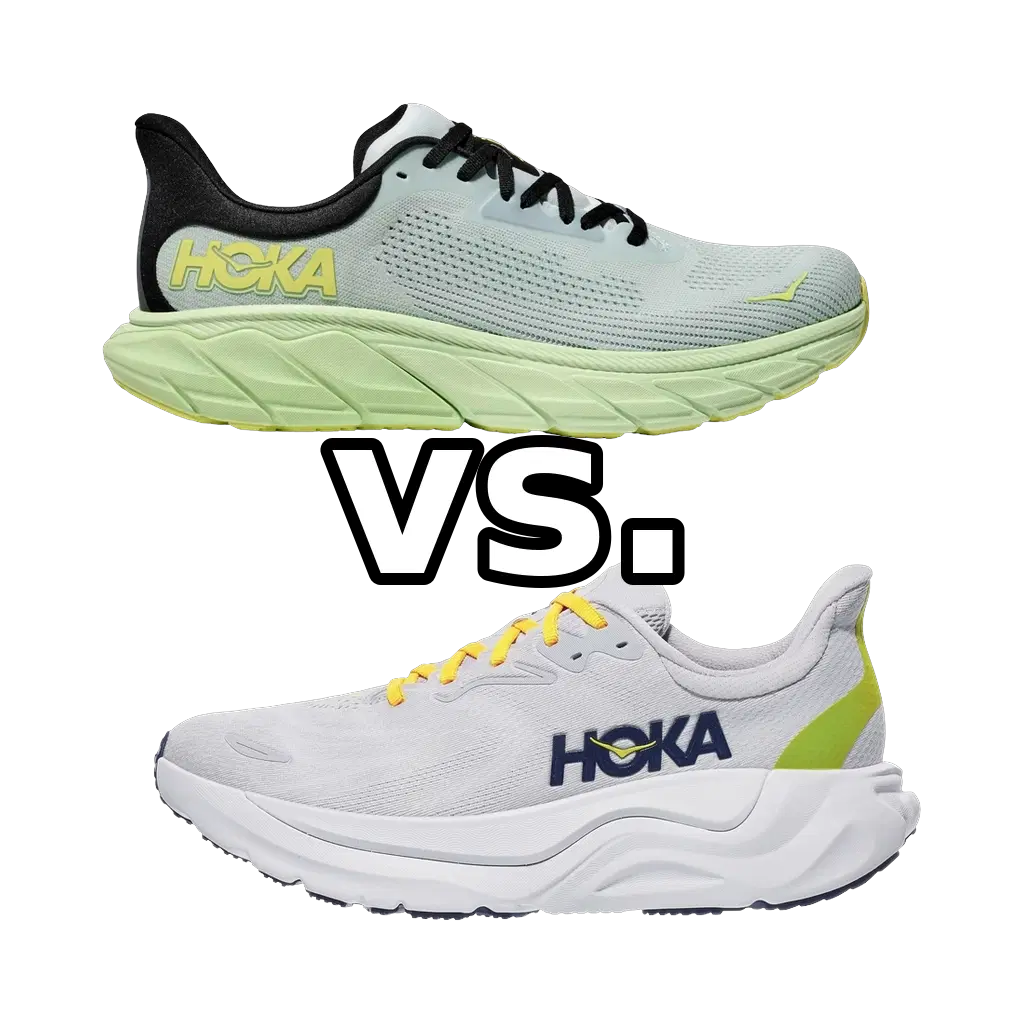
Verdict
For most Arahi 7 owners the 8 is a genuine upgrade rather than a cosmetic refresh: it's lighter, softer, roomier through the forefoot, and its H-Frame spreads support across both sides of the foot. The main reasons to stay on the 7 — or hunt down remaining stock — are if you prefer its lower 5mm drop, its firmer and more ground-connected feel, or its snug narrow fit; if none of those describe you, upgrade to the 8.
Pace
3 of 6
Cushioning
4 of 6
Responsiveness
3 of 6
Stability
6 of 6
Drop
5 mm
Support
Stability
Plate
None
Distances
10KHalfMarathon
Pace
3 of 6
Cushioning
4 of 6
Responsiveness
3 of 6
Stability
6 of 6
Drop
11 mm
Support
Stability
Plate
None
Distances
10KHalfMarathon
At a Glance
Hoka Arahi 7Hoka Arahi 8
Who Should Choose Each Shoe
Choose
Hoka Arahi 7
Choose the Arahi 7 if you specifically like a lower 5mm drop and a firmer, more ground-connected ride, or if you're a midfoot striker who found the 8's higher offset unnecessary. Its snugger, narrower midfoot lockdown also suits runners with lower-volume feet who want the foot held tightly in place, and existing Arahi 7 owners who are perfectly happy with the current fit and feel have little reason to change.
Choose
Hoka Arahi 8
Choose the Arahi 8 if you're a heel striker who'll benefit from the higher 8mm drop, or if you want the same dependable pronation control in a lighter, softer, smoother-riding package. The roomier forefoot makes it the better pick for runners who found the 7 too tight, and the dual-sided H-Frame is worth it for anyone who wants guidance that supports the whole foot rather than leaning on the medial side alone — making it the natural upgrade for most Arahi 7 owners logging daily and long-run miles.
Head-to-Head
The headline change is the guidance system: the 7's J-Frame — a firmer-density foam bracket that reinforces mainly the medial (inner) side — is replaced by the 8's H-Frame, which wraps firmer EVA around both sides of the foot for more symmetrical, accommodating support. Alongside that, Hoka raised the heel-to-toe offset from 5mm on the Arahi 7 to 8mm on the Arahi 8, nudging the ride toward heel strikers, and the stack shifts slightly (roughly 37mm heel / 32mm forefoot on the 7 versus about 39mm heel / 31mm forefoot on the 8). The 8 is also the lighter shoe — about 259g in a men's US 9 against roughly 272g for the 7 — and its compression-molded CMEVA foam runs a touch softer and smoother than the firmer, more ground-connected compressed EVA of the 7, so landings feel a little more forgiving without losing the planted, controlled character. Fit changes too: the 8's double-layer jacquard mesh upper is roomier, especially through the forefoot, where the 7 was notably snug and narrow. What doesn't change is the core mission — neither shoe has a plate, neither delivers real pop when you push the pace, and both remain steady stability workhorses rather than snappy racers or plush recovery cushions.




© 2026 longrunshoes.ai | All rights reserved.
Use of materials from this site is permitted only with proper attribution and a link to longrunshoes.ai.