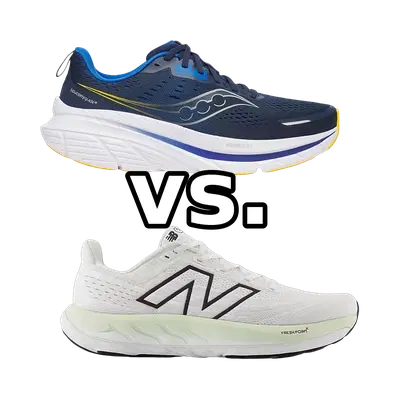
New Balance Fresh Foam X Vongo v6 vs Hoka Arahi 7:
Which to Choose
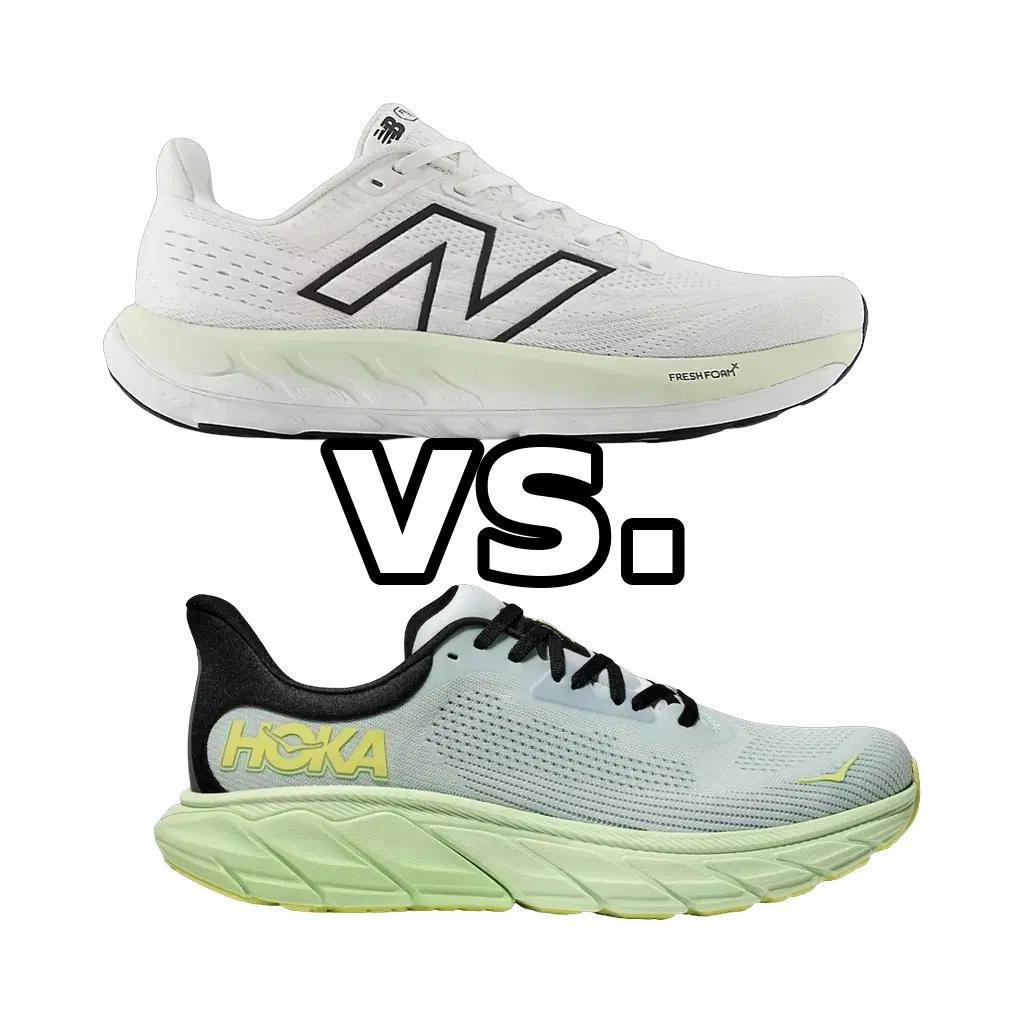
Verdict
It genuinely depends — but on feel, not quality, because these are near-twins in purpose and spec. Go Arahi 7 if you want firmer foam, stronger pronation correction, a smooth rocker, and a lighter shoe; go Vongo v6 if you want a softer, plushier, more forgiving ride and don't need the Arahi's maximum level of guidance. Both will carry you comfortably from 10K to the marathon at steady efforts; pick the underfoot character that matches how you like to run.
Pace
3 of 6
Cushioning
4 of 6
Responsiveness
3 of 6
Stability
5 of 6
Drop
6 mm
Support
Stability
Plate
None
Distances
10KHalfMarathon
Pace
3 of 6
Cushioning
4 of 6
Responsiveness
3 of 6
Stability
6 of 6
Drop
5 mm
Support
Stability
Plate
None
Distances
10KHalfMarathon
At a Glance
New Balance Fresh Foam X Vongo v6Hoka Arahi 7
Who Should Choose Each Shoe
Choose
New Balance Fresh Foam X Vongo v6
Choose the New Balance Fresh Foam X Vongo v6 if you want the softer, more cushioned-feeling ride of the two and value all-day comfort on steady mileage over outright guidance. It's the better pick for beginner-to-intermediate runners who mildly overpronate, prefer a forgiving underfoot sensation to a firm one, and are happy with a stable, planted trainer that doesn't force a correction on every step. If you run mostly conversational half- and marathon-paced miles and like a slightly higher, plusher heel, the Vongo fits.
Choose
Hoka Arahi 7
Choose the Hoka Arahi 7 if you want the firmest, most actively guided ride and the lighter shoe on your foot. Its J-Frame delivers maximum pronation control, so it's the stronger choice for runners who need — or simply prefer — assertive stability and a firm, ground-connected platform, and the rocker geometry plus lower weight make it the smoother-rolling option for long, controlled efforts. If you cruise steady miles and want support that holds you honest without feeling mushy, the Arahi is the one.
Head-to-Head
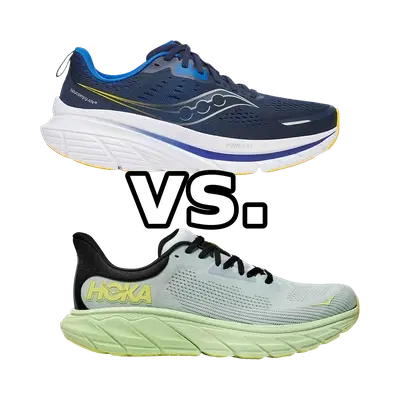
On paper these two are strikingly close: both are 10K-to-marathon stability trainers, both score 4/6 cushioning and 3/6 responsiveness, both run with a low-ish drop (6mm for the Vongo, 5mm for the Arahi) and neither uses a plate. The meaningful splits are in weight, foam character, and how hard they push your foot back to center. The Arahi 7 is the lighter shoe — about 9.9 oz (281g) in a men's sample versus roughly 10.6 oz (300g) for the Vongo v6 — and it carries a touch less heel stack (37mm vs 38mm) while matching the Vongo's 32mm forefoot. That weight gap, combined with Hoka's pronounced rocker geometry, gives the Arahi a smoother, more rolling turnover, whereas the Vongo sits a little more grounded and workmanlike. Underfoot, the feel diverges most clearly: the Vongo's Fresh Foam X is the softer, more forgiving, more cushioned-feeling platform — "soft-but-controlled" rather than firm — while the Arahi's compressed EVA reads firm and ground-connected, protective over plush. Stability is the other real difference: the Arahi earns a maximum 6/6 thanks to its J-Frame, a firmer-density bracket that actively corrects pronation, making it the more assertively guided shoe; the Vongo's 5/6 comes from a wide base and integrated medial support that steadies you without feeling as insistent. Both top out as steady-effort shoes — neither has the rebound to reward hard surges — but the Arahi's rocker and lower weight make it the slightly more willing cruiser, while the Vongo trades a little of that for plush, planted comfort.
© 2026 longrunshoes.ai | All rights reserved.
Use of materials from this site is permitted only with proper attribution and a link to longrunshoes.ai.