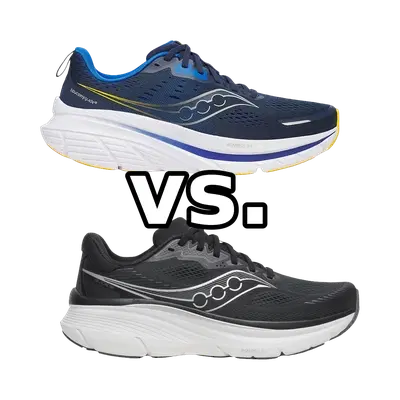
Saucony Guide 18 vs Hoka Arahi 7:
Which to Choose
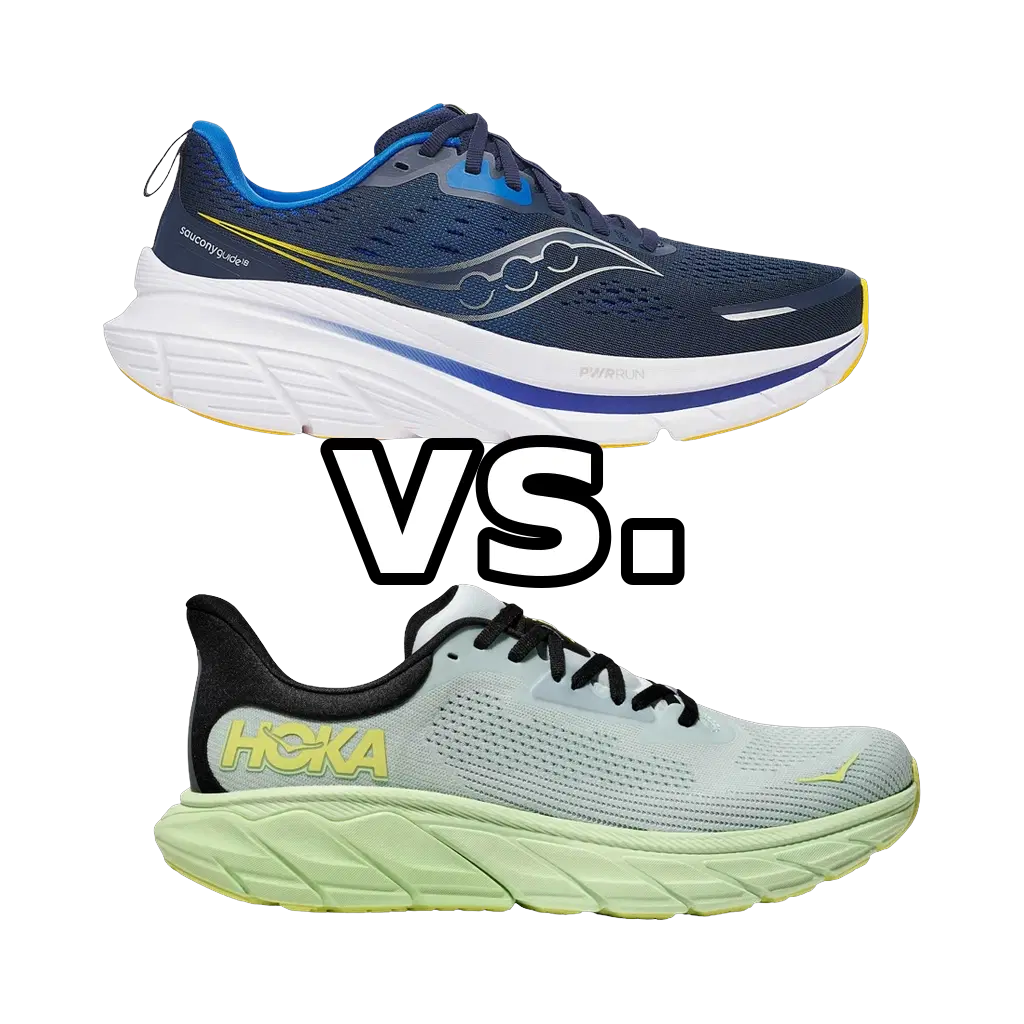
Verdict
These are genuinely close shoes for the same runner and the same distances, so the choice hinges on fit and how much guidance you want. Go Arahi 7 for maximum, actively-corrective stability, a taller rockered ride, and a snug midfoot; go Guide 18 for gentler support, a roomier fit, and a lower, more neutral-friendly feel. If your feet are narrow and your pronation is pronounced, the Arahi; if you want support that stays out of the way, the Guide.
Pace
3 of 6
Cushioning
4 of 6
Responsiveness
3 of 6
Stability
5 of 6
Drop
6 mm
Support
Stability
Plate
None
Distances
10KHalfMarathon
Pace
3 of 6
Cushioning
4 of 6
Responsiveness
3 of 6
Stability
6 of 6
Drop
5 mm
Support
Stability
Plate
None
Distances
10KHalfMarathon
At a Glance
Saucony Guide 18Hoka Arahi 7
Who Should Choose Each Shoe
Choose
Saucony Guide 18
Choose the Guide 18 if you want stability that supports without taking over — it's ideal for mild-to-moderate overpronators and even neutral runners who just like a centered, planted platform for daily volume. Its roomier, more forgiving fit and slightly lower, firmer ride suit runners who found aggressive medial-post shoes too corrective or who want one shoe to cover easy days through marathon-pace long runs. If a 6mm drop and a smooth-but-grounded transition sound right, this is the more versatile, less opinionated pick.
Choose
Hoka Arahi 7
Choose the Arahi 7 if you want the firmest, most actively guided ride of the two — the J-Frame genuinely corrects stronger overpronation and keeps you upright and honest on long, fatigue-prone efforts. Its taller, more rockered geometry rewards runners who like to be rolled through each stride, and the snug, secure fit will appeal to narrower feet or anyone who wants a locked-in midfoot. It's the better call for the runner whose priority is maximum structure and support over roominess or a softer hand.
Head-to-Head
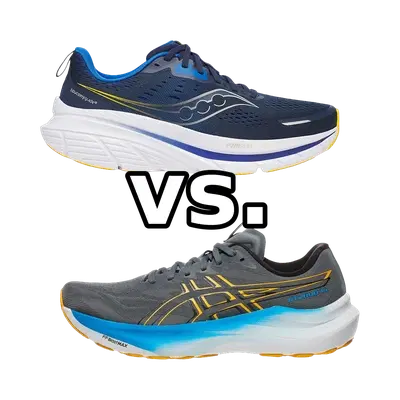
Start with how close these two really are: both weigh about 272g (9.6 oz) in a men's 9, both use a firmer, controlled EVA-based foam with no plate, and both roll best over long, steady efforts at roughly 5:00–6:30 min/km rather than fast tempo work. The headline difference is the character of the stability. The Arahi 7 is the more assertive corrector — its J-Frame wraps a firmer-density foam around the foot and actively pushes back against pronation, which is why it earns the maximum stability mark and leans slightly motion-control. The Guide 18 takes a softer-handed approach: CenterPath geometry and a broad, sidewall-supported platform keep you centered without a rigid medial post, so it reads as supportive but more neutral-friendly, forgiving enough for runners who don't want to feel steered. Geometry diverges too. The Arahi sits a touch taller and more rockered — 37mm heel / 32mm forefoot at a 5mm drop — and that pronounced rocker does most of the work moving you through the stride. The Guide is a hair lower and firmer-feeling at 35mm / 29mm and 6mm, with a transition that's smooth and planted rather than rocker-driven. Fit is the other real separator: the Arahi runs on the snug, narrow side with a locked-down midfoot, while the Guide's engineered-mesh upper is the more accommodating, roomier daily-trainer fit. Neither has any pop — both are honest workhorses that go flat if you ask them to sprint — so you're really choosing a guidance philosophy and a last, not a performance tier.
© 2026 longrunshoes.ai | All rights reserved.
Use of materials from this site is permitted only with proper attribution and a link to longrunshoes.ai.