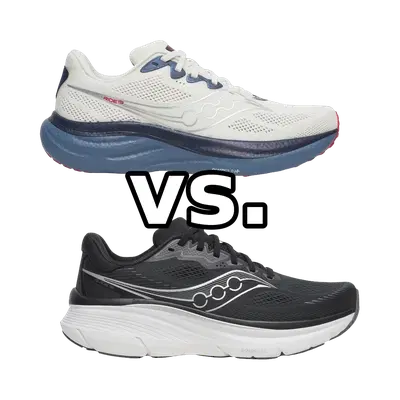
Saucony Guide 18 vs Saucony Guide 19:
Which to Choose
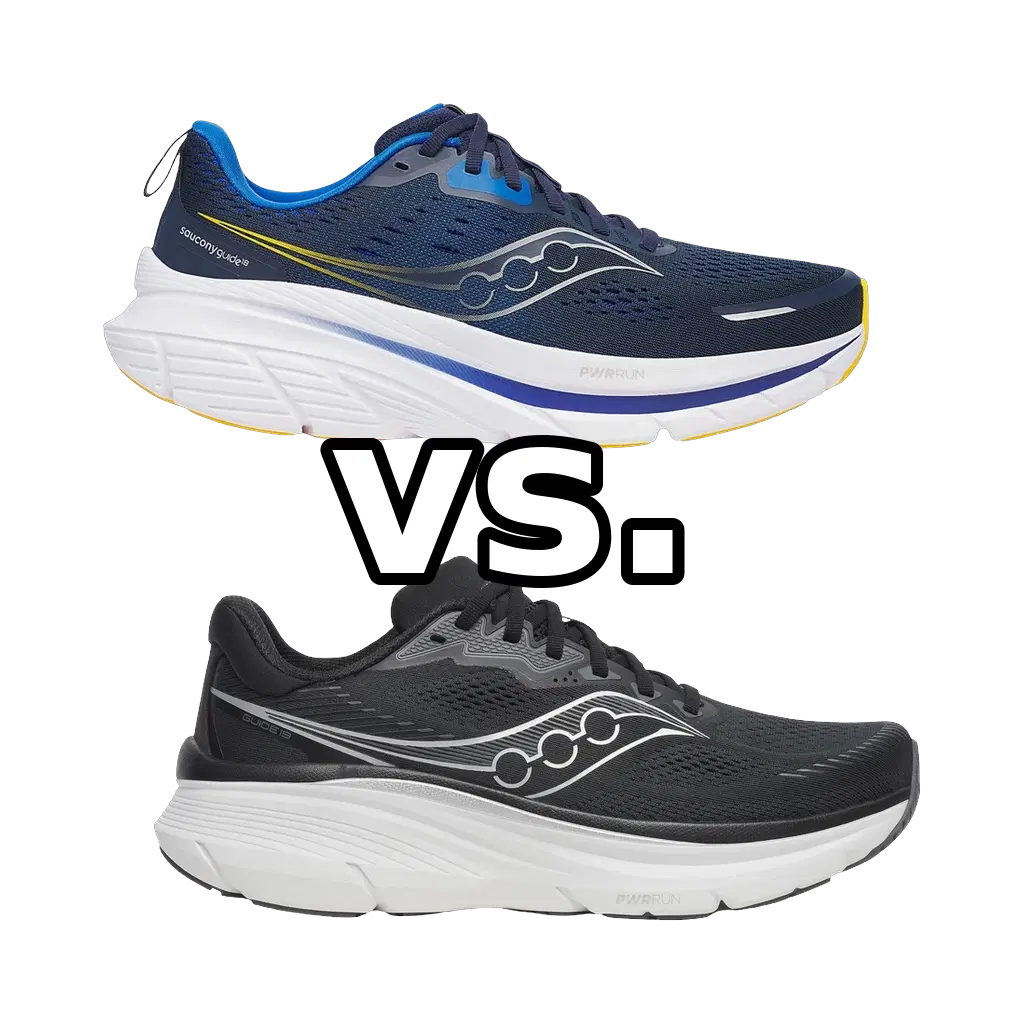
Verdict
This is an incremental successor, not a reinvention, so it comes down to what you want from the foam. If you're a happy Guide 18 owner, there's no urgency to upgrade — the 19 is softer and heavier, which is an improvement only if you actually wanted more plushness; if you love the 18's firmer, controlled ride, stick with it. Move to the Guide 19 if you're after a cushier, more forgiving long-run feel and better outsole durability, and accept the added weight as the price of that comfort.
Pace
3 of 6
Cushioning
4 of 6
Responsiveness
3 of 6
Stability
5 of 6
Drop
6 mm
Support
Stability
Plate
None
Distances
10KHalfMarathon
Pace
3 of 6
Cushioning
5 of 6
Responsiveness
3 of 6
Stability
5 of 6
Drop
6 mm
Support
Stability
Plate
None
Distances
10KHalfMarathon
At a Glance
Saucony Guide 18Saucony Guide 19
Who Should Choose Each Shoe
Choose
Saucony Guide 18
Choose the Guide 18 if you already own it and like it, or if you value a firmer, more controlled, better-connected ride and want to keep weight down. It's the pick for the runner who logs steady 10K-to-marathon miles at moderate effort and prefers a planted, predictable platform that stays composed under tempo over an outright cushioned one — the crisper, more workmanlike of the two.
Choose
Saucony Guide 19
Choose the Guide 19 if you want more plush, forgiving cushioning underfoot for easy days and long training runs, and you don't mind carrying extra weight to get it. It's the better fit for beginners building a base, higher-mileage runners who want a softer landing, and anyone who found the 18 a little firm — plus it adds a more durable outsole that should hold up longer over the miles.
Head-to-Head
Structurally these are close cousins: identical 6 mm heel-to-toe drop, the same plateless PWRRUN EVA midsole concept, the same CenterPath guidance (a broad base and tall sidewalls in place of a firm medial post), and the same high stability rating and best-distance profile — 10K, half, and full marathon, with the half as the sweet spot for both. Where they genuinely part ways is the foam and the feel. The Guide 18 runs firmer and more controlled: a balanced, planted landing and a smooth, predictable, workmanlike roll-through that rewards steady tempo but goes flat if you try to push past roughly 5:15 min/km. The Guide 19 retunes that same PWRRUN into a softer, plusher, more forgiving compound, so even with near-identical geometry the ride feels deeper and more cushioned (cushioning steps up from above-average to high), trading a touch of the 18's crisp, locked-down control for comfort on easy and long runs. That plushness and a beefed-up, more durable outsole come at a weight cost — the Guide 19 comes in at 298 g and feels notably heavy, measurably more than the lighter 18 — and both shoes turn leaden if asked to run fast, topping out in the same low-5:00s min/km range. Neither is responsive in a springy, energetic sense; without a plate, rebound in both is pleasant rather than propulsive.
© 2026 longrunshoes.ai | All rights reserved.
Use of materials from this site is permitted only with proper attribution and a link to longrunshoes.ai.