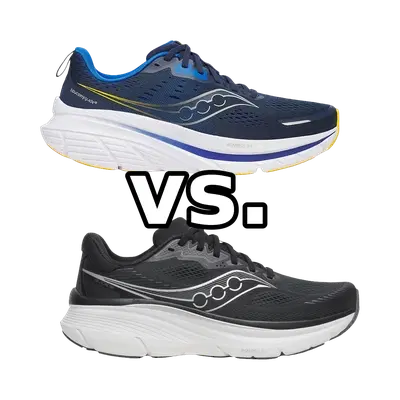
Saucony Guide 19 vs Brooks Ghost Max 4:
Which to Choose
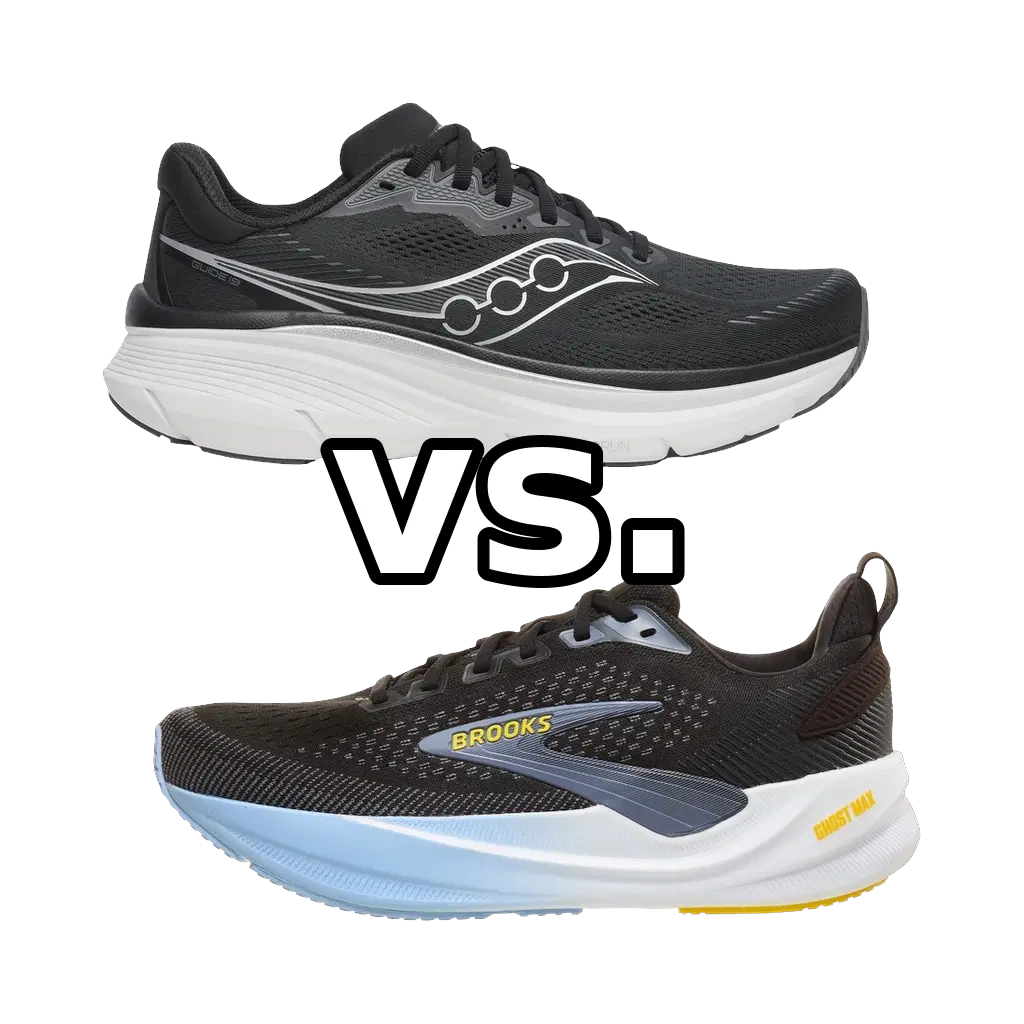
Verdict
These shoes are close enough that there's no wrong answer for easy daily mileage — so decide on three things. Pick the Guide 19 if you want actual stability support, a flatter forefoot-friendly feel, and the range to train for a marathon. Pick the Ghost Max 4 if you're neutral, prefer a tall heel-biased rocker that does the rolling for you, and your longest efforts stay around the half. Support need and drop preference are the real deciders here, not cushioning or weight, which are essentially the same.
Pace
3 of 6
Cushioning
5 of 6
Responsiveness
3 of 6
Stability
5 of 6
Drop
6 mm
Support
Stability
Plate
None
Distances
10KHalfMarathon
Pace
3 of 6
Cushioning
5 of 6
Responsiveness
3 of 6
Stability
5 of 6
Drop
9 mm
Support
Stable Neutral
Plate
None
Distances
10KHalf
At a Glance
Saucony Guide 19Brooks Ghost Max 4
Who Should Choose Each Shoe
Choose
Saucony Guide 19
Choose the Saucony Guide 19 if you mildly overpronate, or simply prefer a planted, actively supportive platform, and want one shoe that can cover everything from easy 10Ks up to full marathon training at a relaxed pace. Its lower, more level 6mm drop suits runners who like a flatter, forefoot-friendly stance and a smooth, continuous transition rather than a strong rocker. It's the better pick for a beginner building a base who wants gentle guidance, or an experienced runner who logs genuine long runs and wants the distance headroom.
Choose
Brooks Ghost Max 4
Choose the Brooks Ghost Max 4 if you're a neutral runner who doesn't need pronation correction and loves a tall, rockered ride that rolls you through each step with minimal effort on easy aerobic miles. Its steeper measured 9mm drop and taller heel stack favor heel-strikers and anyone who wants maximum impact protection on relaxed runs up to the half marathon. It's ideal if your mileage centers on comfortable cruising and recovery days rather than marathon-length long runs.
Head-to-Head
The single most important difference is support type. The Guide 19 is a genuine stability shoe — it uses Saucony's CenterPath geometry (a wide base and tall sidewalls, no medial post) to gently correct mild overpronation — whereas the Ghost Max 4 is stable-neutral: its wide, tall platform offers guidance and a planted feel but does nothing to steer an overpronating foot. If you need pronation support, that alone settles it in the Guide's favor. The two midsoles also feel different despite landing in the same cushioning bracket: the Guide's softer PWRRUN EVA-blend gives a smooth, unhurried, forgiving transition, while the Ghost Max's DNA Loft v3 sits on a pronounced rockered platform that rolls you heel-to-toe and rewards a relaxed, steady cadence more than any kind of push-off. Geometry is where the numbers diverge most. Measured drop is 6mm on the Guide versus 9mm on the Ghost Max (Brooks advertises 6mm, but the shoe actually rides steeper), so the Guide feels flatter and more forefoot-friendly underfoot while the Ghost Max has a more traditional heel-biased ramp that leans into its rocker. Stack reflects that too — the Guide measures 37mm heel / 31mm forefoot, the Ghost Max 39mm heel / 30mm forefoot — so the Brooks is taller and more aggressively ramped at the heel, the Saucony more level front-to-back. Weight is effectively a wash: 298g for the Guide and 292g for the Ghost Max in men's US 9, both on the heavier side and both admittedly leaden if you try to run fast. The last real difference is intended range: the Guide 19 is rated comfortably to the marathon at a steady effort, while the Ghost Max 4's comfortable ceiling is the half marathon — past that its plush foam runs out of support for most runners.
Similar Comparisons
Brooks Ghost Max 3 vs Brooks Ghost Max 4
Saucony Ride 19 vs Saucony Guide 19
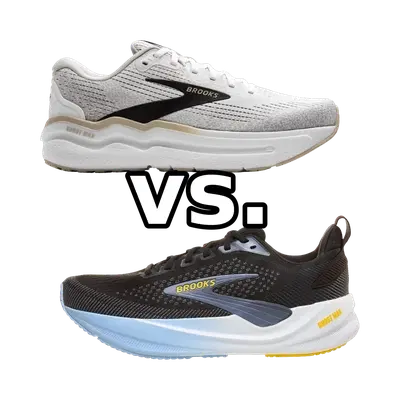
Brooks Ghost Max 2 vs Brooks Ghost Max 4
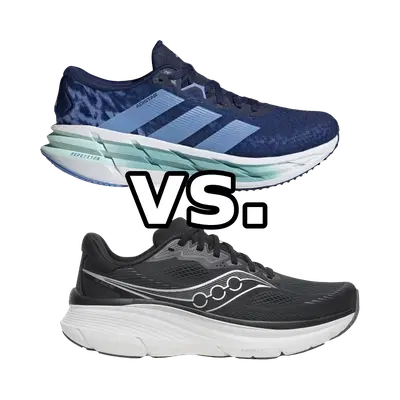
Adidas Adistar 4 vs Saucony Guide 19
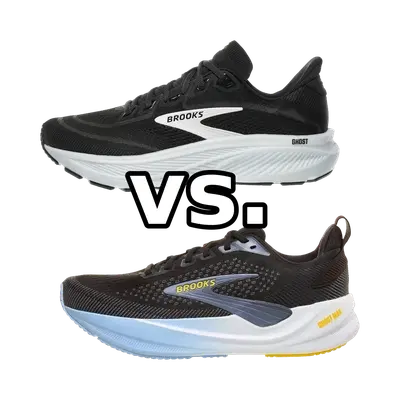
Brooks Ghost 18 vs Brooks Ghost Max 4
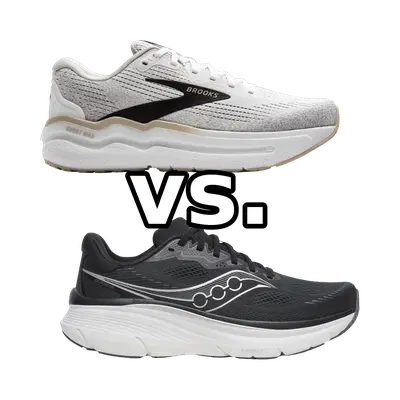
Brooks Ghost Max 2 vs Saucony Guide 19
Adidas Adistar 4 vs Brooks Ghost Max 4
Hoka Skyflow vs Saucony Guide 19
© 2026 longrunshoes.ai | All rights reserved.
Use of materials from this site is permitted only with proper attribution and a link to longrunshoes.ai.