
Brooks Ghost Max 3 vs Brooks Ghost Max 4:
Which to Choose
Verdict
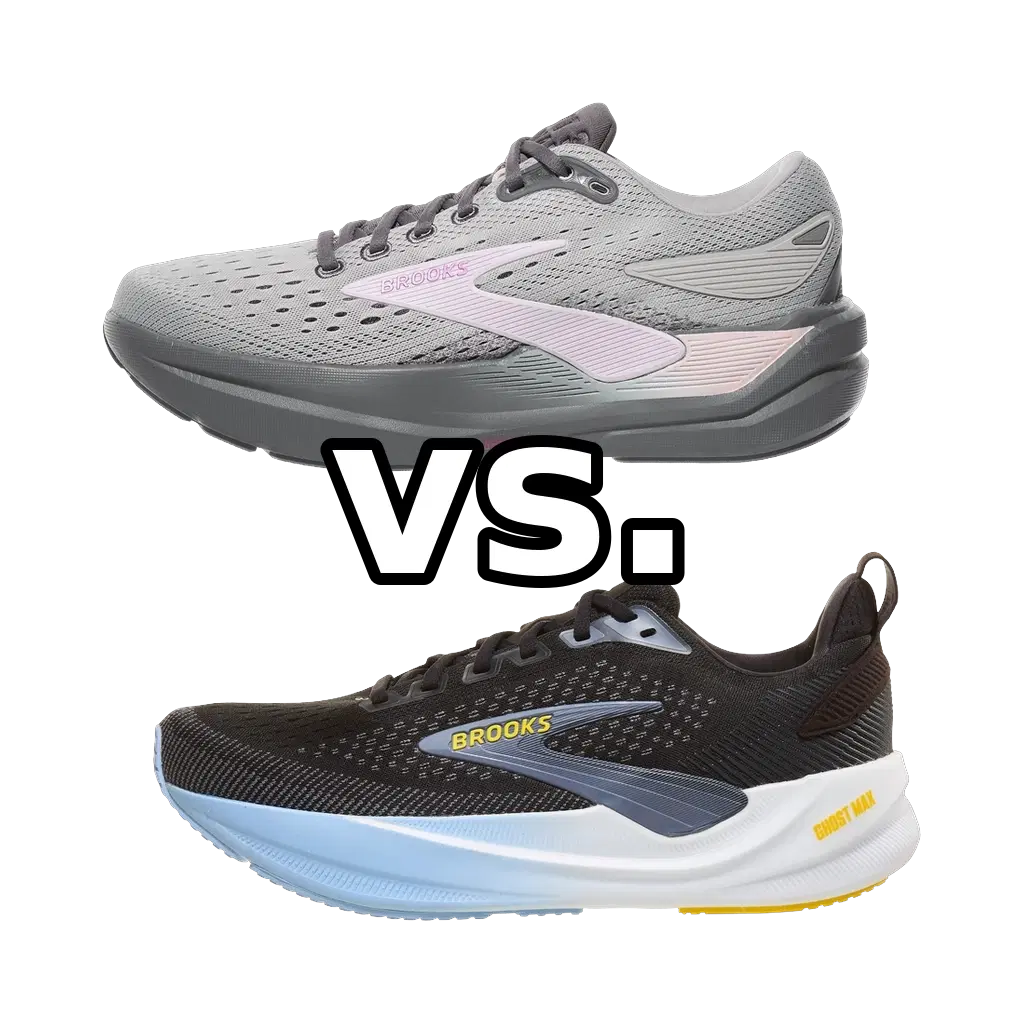
These are two generations of the same shoe, and the differences are refinements rather than a reinvention — both are soft, stable, plate-free daily protectors that cap out at the half marathon run easy. Buy the Ghost Max 4 if you're new to the line or want the lighter, smoother-rolling ride; stick with the Ghost Max 3 if you already own it and love its extra forefoot plushness, since the upgrade isn't dramatic enough to retire a pair you're still enjoying. The deciding factor is transition feel: the 4 rolls better and weighs less, the 3 is a touch softer up front.
Pace
2 of 6
Cushioning
5 of 6
Responsiveness
3 of 6
Stability
5 of 6
Drop
7 mm
Support
Stable Neutral
Plate
None
Distances
10KHalf
Pace
3 of 6
Cushioning
5 of 6
Responsiveness
3 of 6
Stability
5 of 6
Drop
9 mm
Support
Stable Neutral
Plate
None
Distances
10KHalf
At a Glance
Brooks Ghost Max 3Brooks Ghost Max 4
Who Should Choose Each Shoe
Choose
Brooks Ghost Max 3
The Ghost Max 3 still makes sense for the runner who prizes maximum pillowy softness underfoot, particularly through the forefoot, and spends most of their time at a genuinely easy, conversational shuffle — recovery jogs, relaxed base miles, walking, and long hours on the feet. If you already own a pair you're happy with, there's no urgent reason to replace them; the ride character is fundamentally the same, and the 3's slightly plusher forefoot may even suit you better. It's also a fine pick for beginners and heavier runners who want deep protection and don't care about a snappy transition.
Choose
Brooks Ghost Max 4
Choose the Ghost Max 4 if you want the same protective, plush cruiser but with a smoother, more natural rocker and a bit less weight to lug around — it feels less clunky through the transition and handles a slightly wider range of easy-to-steady paces. It's the better call for a Ghost Max 3 owner who has ever found the older shoe a touch ponderous or awkward rolling to toe-off, or for a new buyer entering the line fresh, since it's the more polished version of the same idea. The marginally firmer forefoot and taller-feeling 9 mm ramp suit heel and midfoot strikers logging easy and long aerobic mileage.
Head-to-Head
On paper these two are near-twins: identical cushioning (5/6), responsiveness (3/6), and stability (5/6) ratings, the same DNA Loft v3 foam, the same plate-free, stable-neutral setup with a wide guiding base rather than a medial post, and the same breathable engineered mesh upper. The differences are real but incremental. The Ghost Max 4 is lighter — about 292 g in a men's US 9 versus roughly 303 g for the Ghost Max 3 — and Brooks refined the rocker geometry, adding a slightly more pronounced midsole cutout and a marginally steeper toe curve so the heel-to-toe roll feels smoother and less clunky through toe-off. Stack heights are effectively unchanged (roughly 39 mm heel / 30 mm forefoot on the 4 versus 38 mm / 31 mm on the 3), but that 1 mm shift front-and-back nudges the measured drop up: the Ghost Max 4 rides at about 9 mm heel-to-toe (Brooks advertises 6 mm) against the 3's 7 mm. One trade-off comes with the smoother ride: the Ghost Max 4 has a touch less soft padding directly under the ball of the foot, so the forefoot feels a hair firmer even as the transition improves. Neither shoe is springy — both use comfort-tuned foam that goes flat when you push, with an effective ceiling around 5:30 min/km — but the 4's lighter build and cleaner rocker earn it a slightly broader everyday pace window (its 3/6 pace rating and 5:30–6:30 min/km sweet spot versus the 3's 2/6 and more relaxed 6:00–7:00 zone).




© 2026 longrunshoes.ai | All rights reserved.
Use of materials from this site is permitted only with proper attribution and a link to longrunshoes.ai.