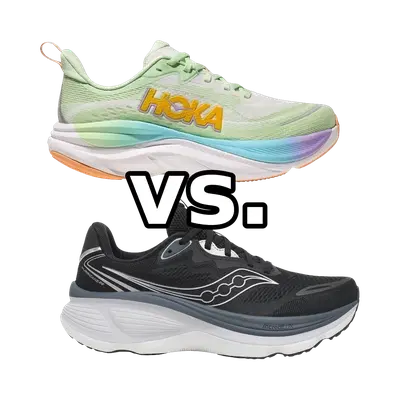
Hoka Skyflow vs Saucony Guide 19:
Which to Choose
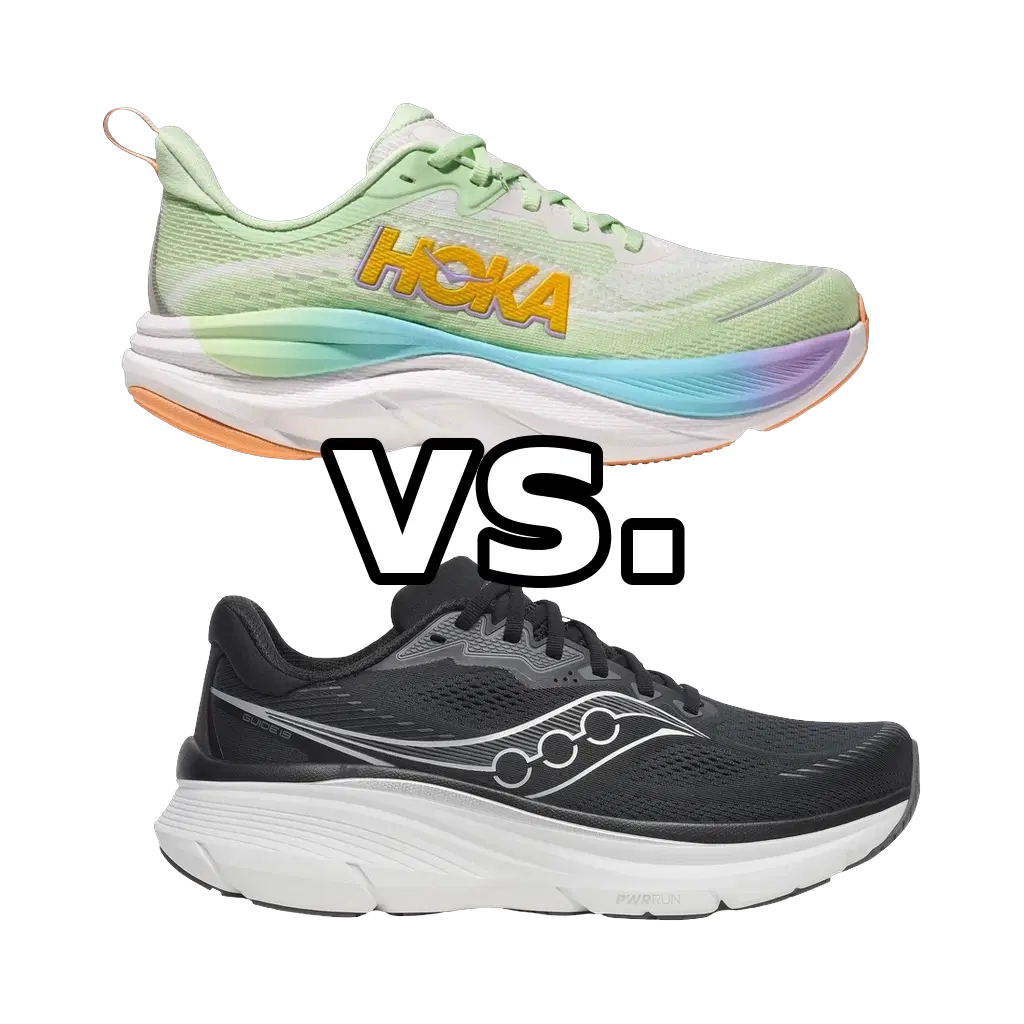
Verdict
It comes down to support and ride character, not purpose — both do the same daily-trainer job well. Pick the Guide 19 if you want genuine gentle stability and the most secure, forgiving platform; pick the Skyflow if you're neutral and want the lighter, livelier, slightly more responsive cruiser. If you don't need the pronation guidance, the Skyflow's lower weight and springier foam make it the more adaptable of the two.
Pace
3 of 6
Cushioning
5 of 6
Responsiveness
4 of 6
Stability
5 of 6
Drop
5 mm
Support
Stable Neutral
Plate
None
Distances
10KHalfMarathon
Pace
3 of 6
Cushioning
5 of 6
Responsiveness
3 of 6
Stability
5 of 6
Drop
6 mm
Support
Stability
Plate
None
Distances
10KHalfMarathon
At a Glance
Hoka SkyflowSaucony Guide 19
Who Should Choose Each Shoe
Choose
Hoka Skyflow
Choose the Skyflow if you're a neutral runner who wants one dependable trainer for the bulk of your week and would rather have a touch more rebound and a lighter, slightly more versatile feel underfoot. It's the better pick if you don't need pronation control, value a foam that still has some life when the pace creeps up on a long run or steady effort, and want deep cushioning without the ride turning sluggish.
Choose
Saucony Guide 19
Choose the Guide 19 if you mildly overpronate or simply crave the most planted, secure, hugged-in feeling on every run — the wide base and tall sidewalls deliver that without the harsh shove of a medial post. It's ideal for beginners building a base and for experienced runners who log easy and long miles at a steady effort and happily trade a little snap and ~16g of extra weight for a calmer, more supportive platform.
Head-to-Head
On paper these two are close: both score 5/6 for cushioning and 5/6 for stability, both run a low-to-moderate drop (5mm for the Skyflow, 6mm for the Guide 19), both skip a plate, and both are happiest at a 5:30–6:30 min/km daily pace. The stacks are tall and nearly matched — roughly 39mm heel / 31mm forefoot on the Skyflow and 37mm heel / 31mm forefoot on the Guide 19 — so neither is the clearly taller shoe. The differences that actually decide it are support type, ride feel, and weight. The Guide 19 is a true stability shoe: its CenterPath geometry (a wide base and tall foam sidewalls, with no medial post) is tuned to gently guide mild overpronation, and its softer PWRRUN EVA-blend foam gives a calm, forgiving, unhurried ride. The Skyflow is stable-neutral — the wide, framed Hoka geometry keeps it planted and steady, but it's built for neutral runners rather than to correct pronation. Its supercritical foam is also the livelier of the two: responsiveness rates 4/6 versus the Guide's 3/6, so you get a bit more rebound and roll-forward pop, whereas the Guide's rebound is pleasant but flatter. Weight tips the balance further — the Skyflow comes in around 282g against the Guide 19's 298g in a men's US 9, and that ~16g, combined with the springier foam, is why the Skyflow holds together to roughly 5:00 min/km while the Guide starts to feel leaden if you push much past 5:15–5:45 min/km. Both go dull when you genuinely try to open up; the Skyflow just resists that dullness a little longer.
Similar Comparisons
Saucony Guide 18 vs Saucony Guide 19

Adidas Supernova Prima 2 vs Hoka Skyflow
Saucony Ride 19 vs Saucony Guide 19
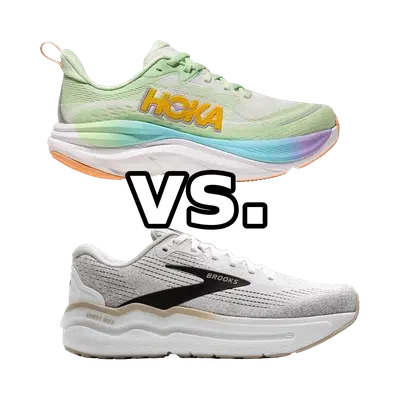
Hoka Skyflow vs Brooks Ghost Max 2
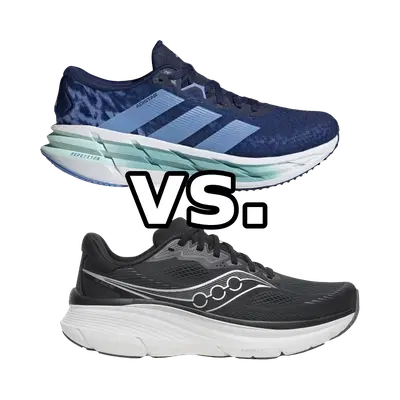
Adidas Adistar 4 vs Saucony Guide 19

Adidas Adistar 4 vs Hoka Skyflow
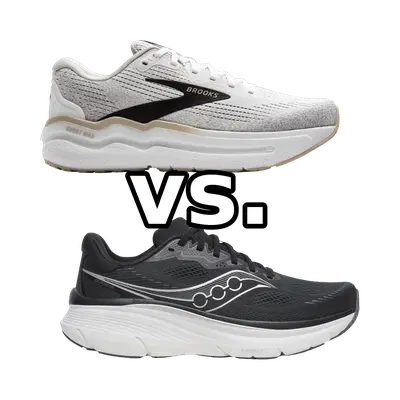
Brooks Ghost Max 2 vs Saucony Guide 19
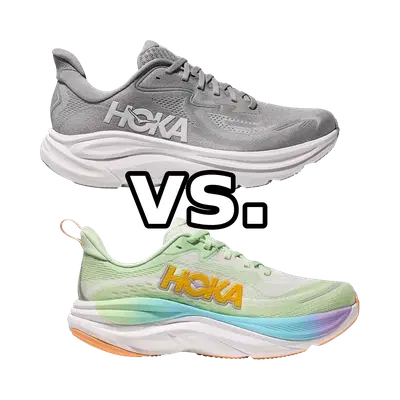
Hoka Clifton 10 vs Hoka Skyflow
© 2026 longrunshoes.ai | All rights reserved.
Use of materials from this site is permitted only with proper attribution and a link to longrunshoes.ai.